

The top trends shaping Australian audiences in 2023 and beyond
Audience behaviour is changing and it’s important to adapt the way we design and market live events.
Based on an August 2023 survey of Australian audiences, we explore 7 key insights, presenting the datapoints you need for strategic planning, forecasting attendances, remodelling subscriptions and targeted marketing in 2023 and beyond.
1. Attendance trajectories
Attendance rates across the country continue their slow recovery since the pandemic, and with a challenging year ahead, it’s wise to set sights on the right targets.
-
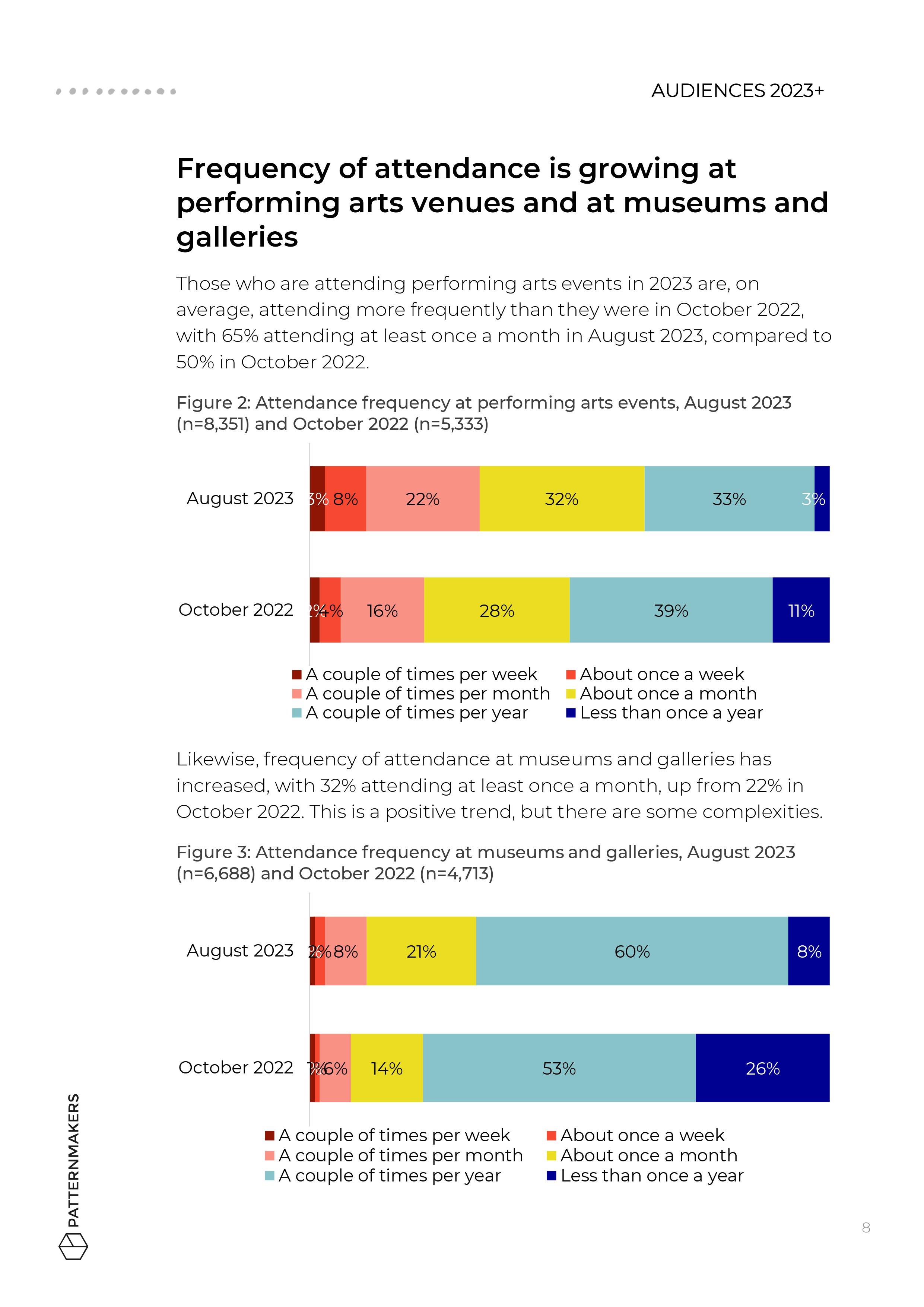
In 2023, attendance is reaching its highest point since 2020, and the frequency of attendance is increasing, but the recovery process continues.
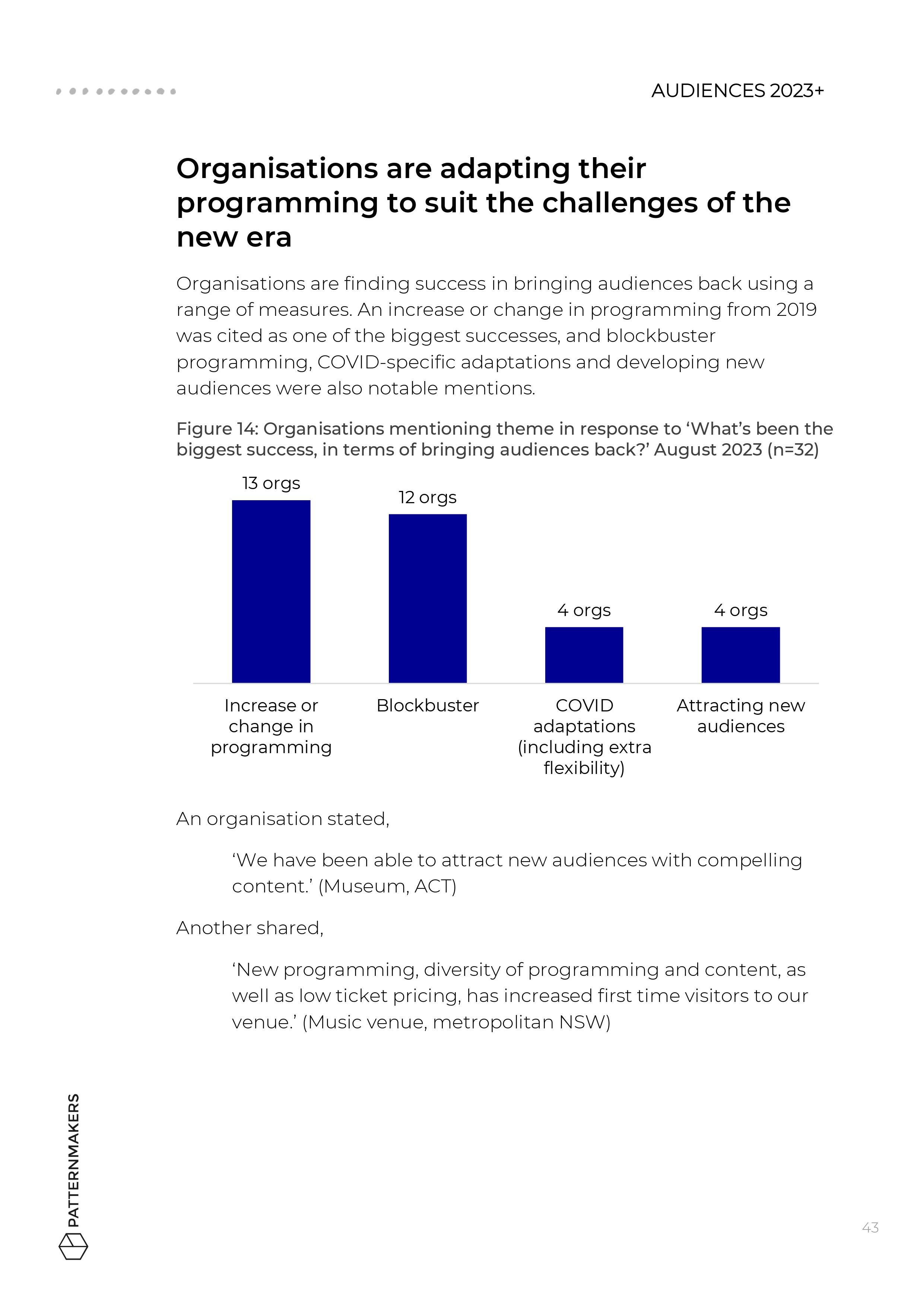
Strategic investment and programming shifts have helped many organisations sustain or increase their capacity in 2022 and 2023, but charting recovery is complex, with mixed attendance results across the market.
Big jumps in attendance appear unlikely in the next 12 months, with 2 in 3 audience members expecting their attendance levels will stay the same amid a challenging economic outlook.
Making space to review measures of success and share learnings – internally and externally – may help organisations focus on the right challenges over the coming year.
Click the buttons below to download the August 2023 Snapshot Report, as a PDF, accessible Word version or RTF, or read on for more of the findings.















2. Inflationary pressures and pricing
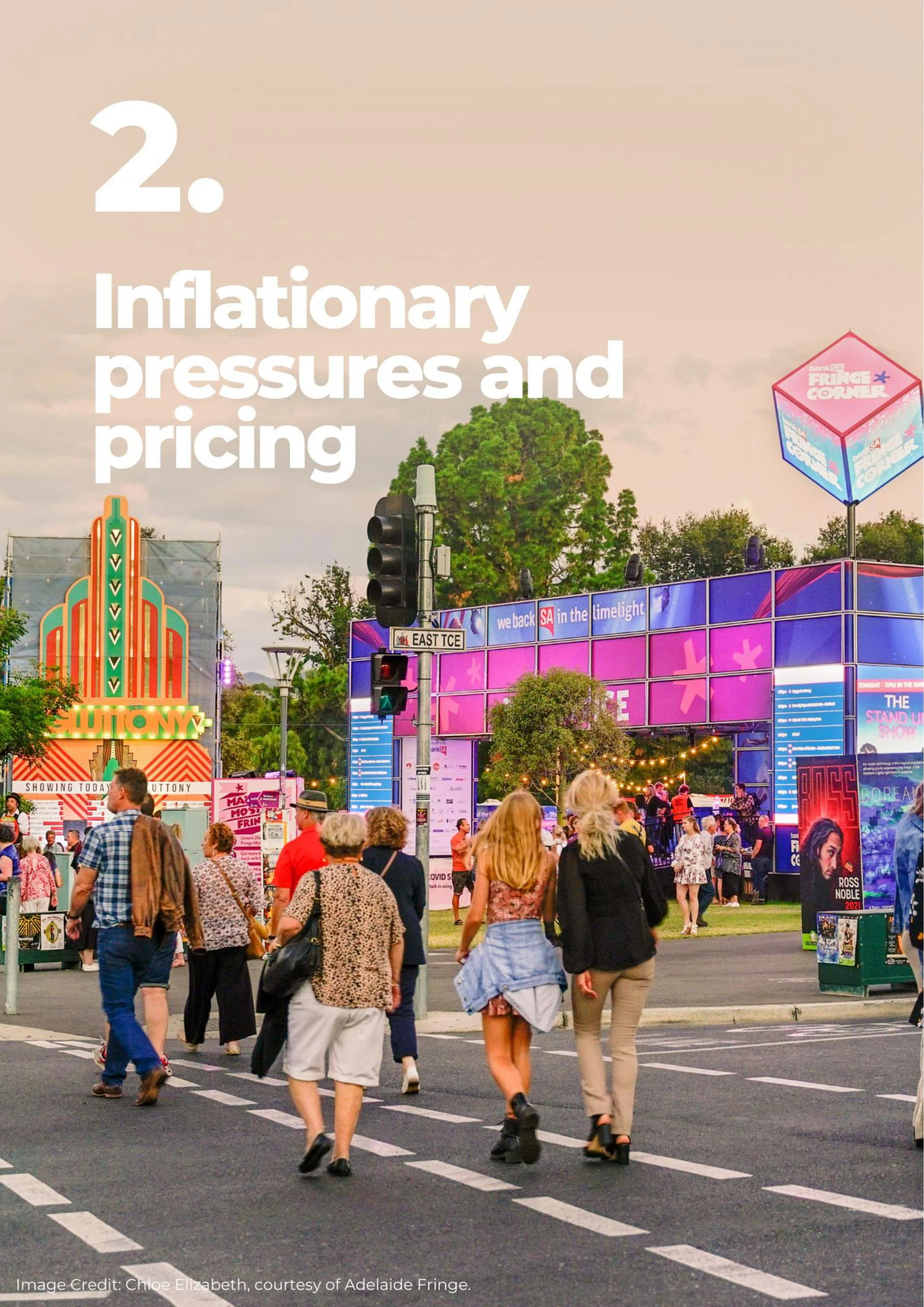
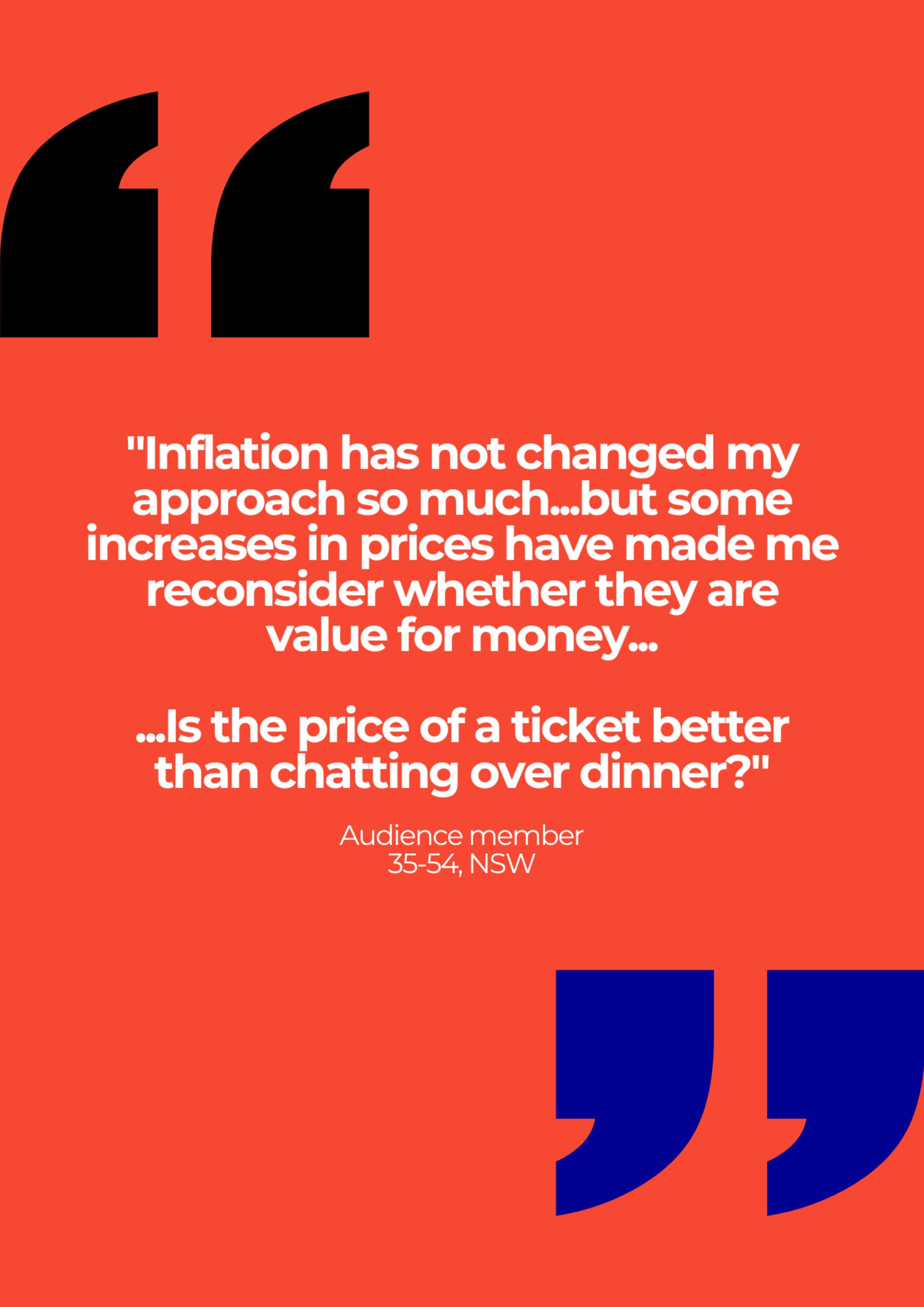
Economic conditions are limiting what Australian audiences can spend on events, and some segments need targeted thinking to ensure access to arts and culture.
-
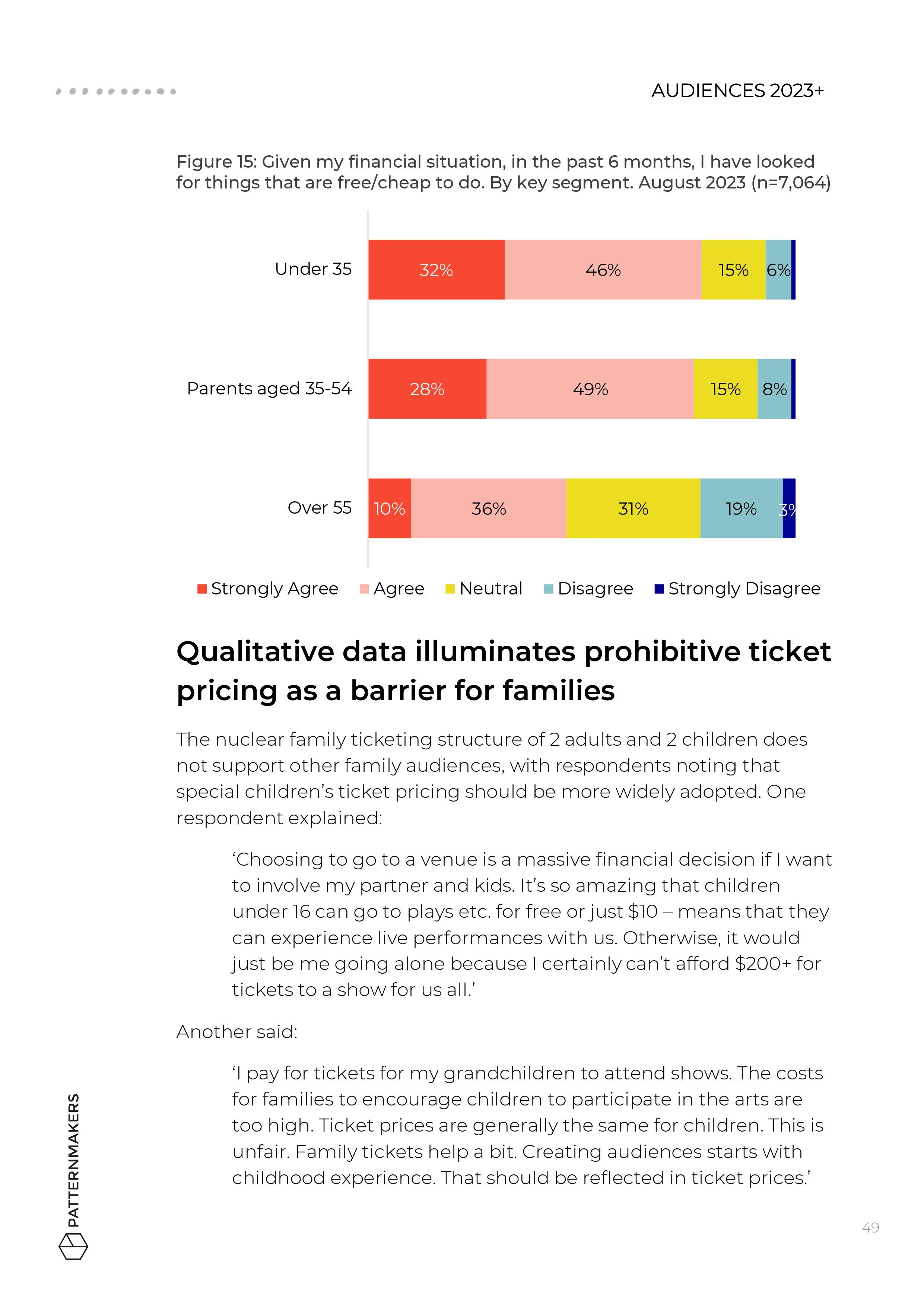
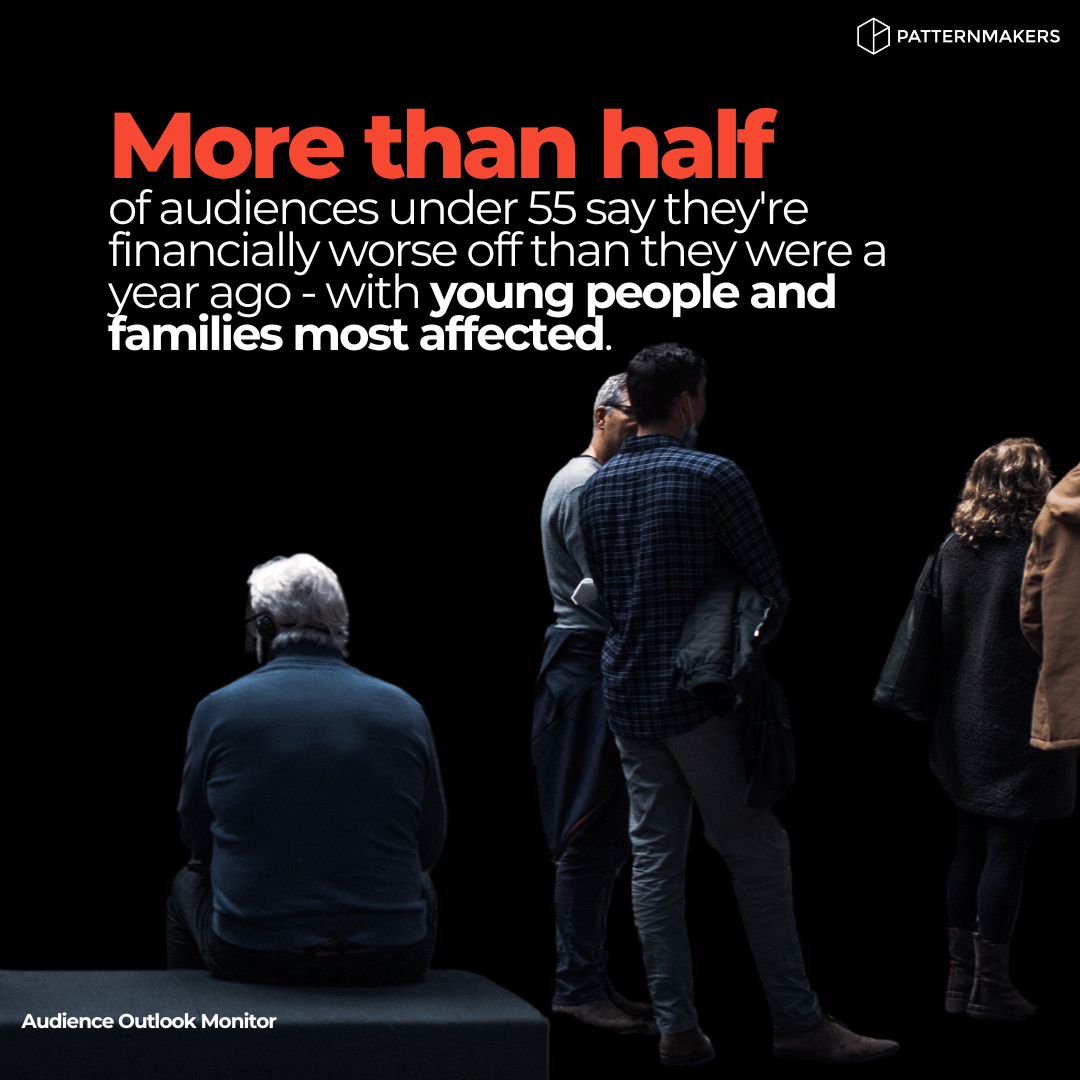
Financial reasons are the top barrier to attendance, and inflationary pressures are expected to continue in 2023 and 2024.
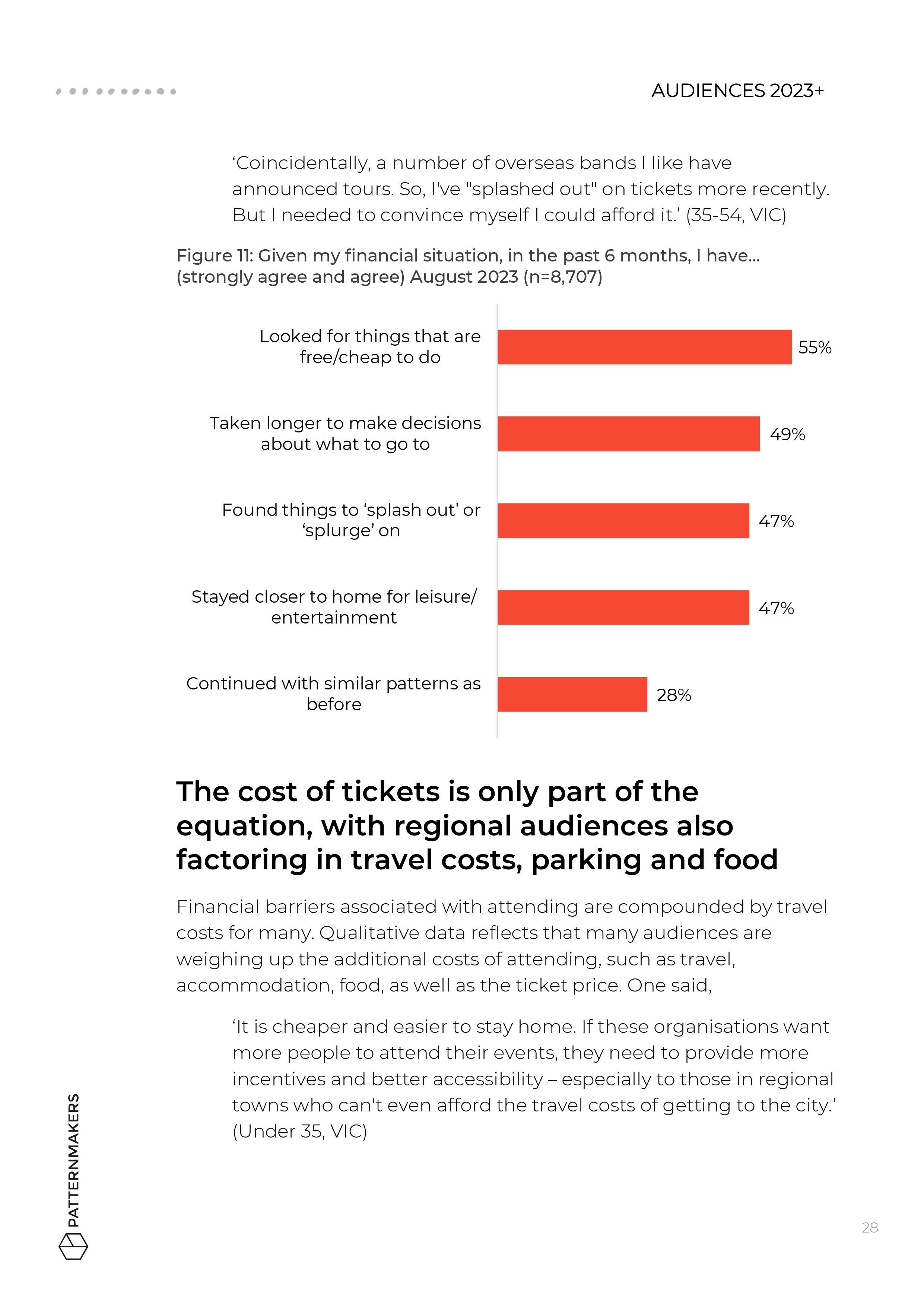
Spending levels at arts and culture events are not growing, as audiences weigh up value for money and take longer to make decisions.
Younger audiences and families continue to be the most impacted.
A key opportunity is developing sustainable strategies for targeting disadvantaged segments.

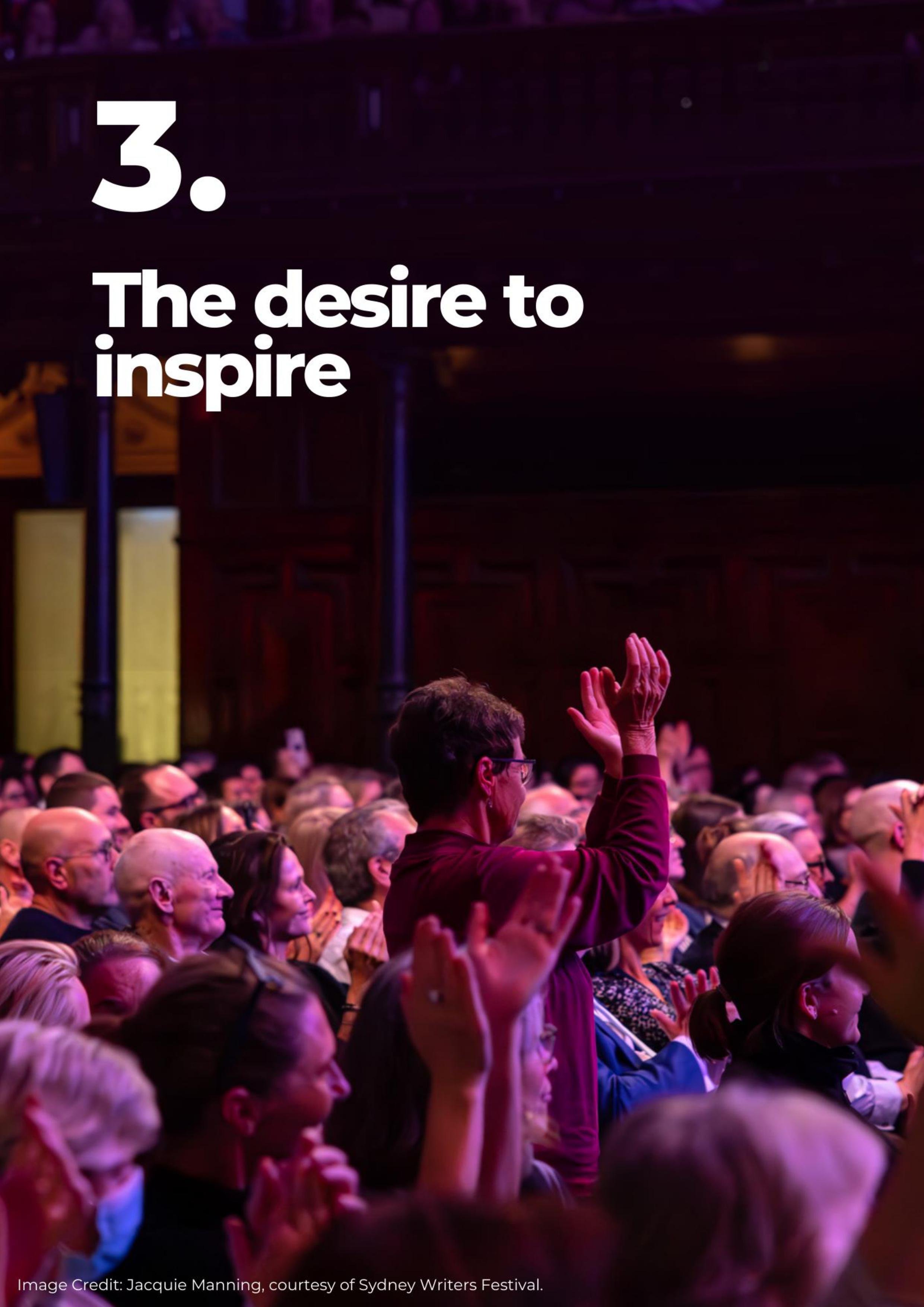
3. The desire to inspire
In the wake of the pandemic, audiences are in the mood for uplifting experiences — requiring event organisers to think strategically about creating meaning and building trust in difficult times.
-
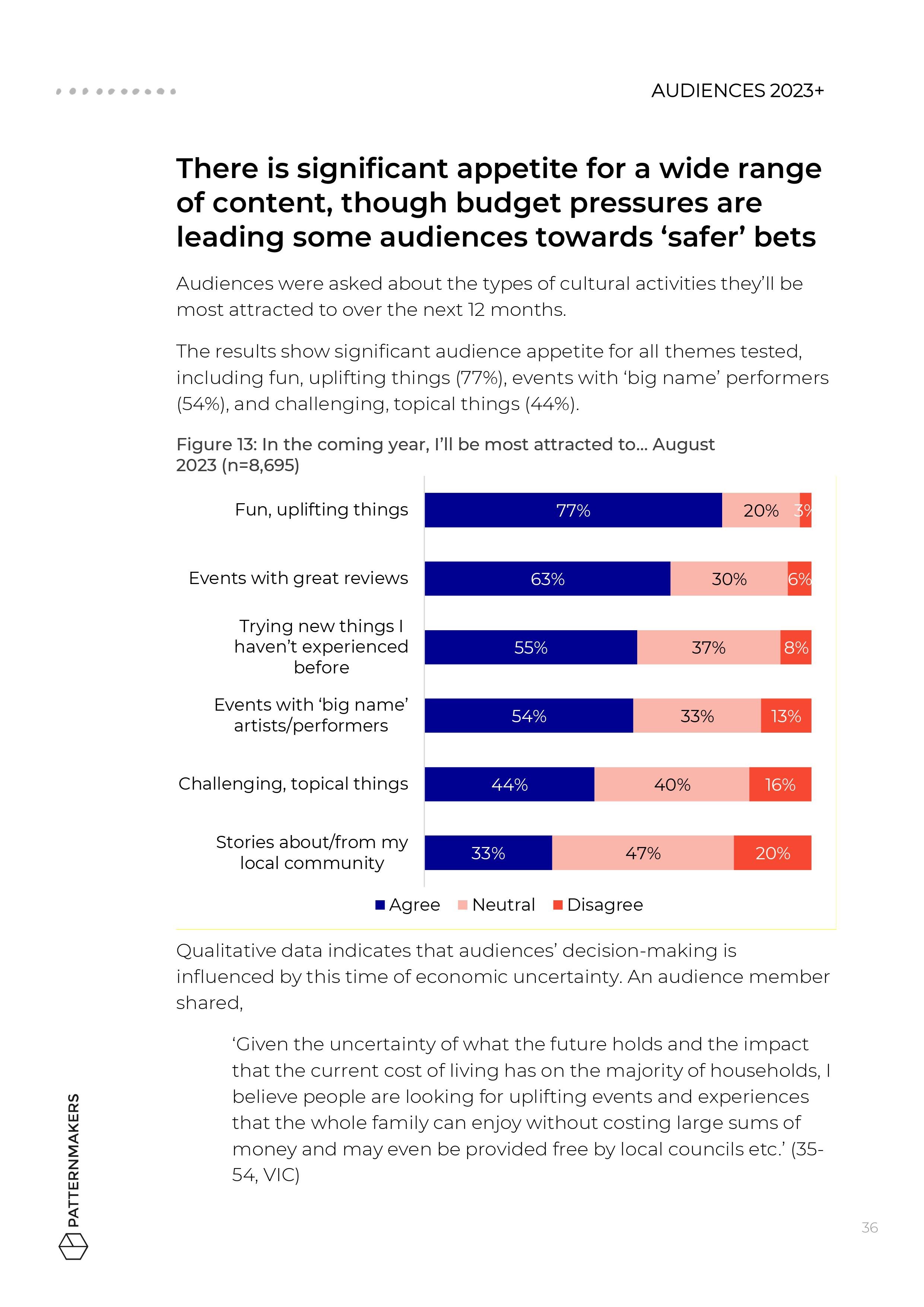
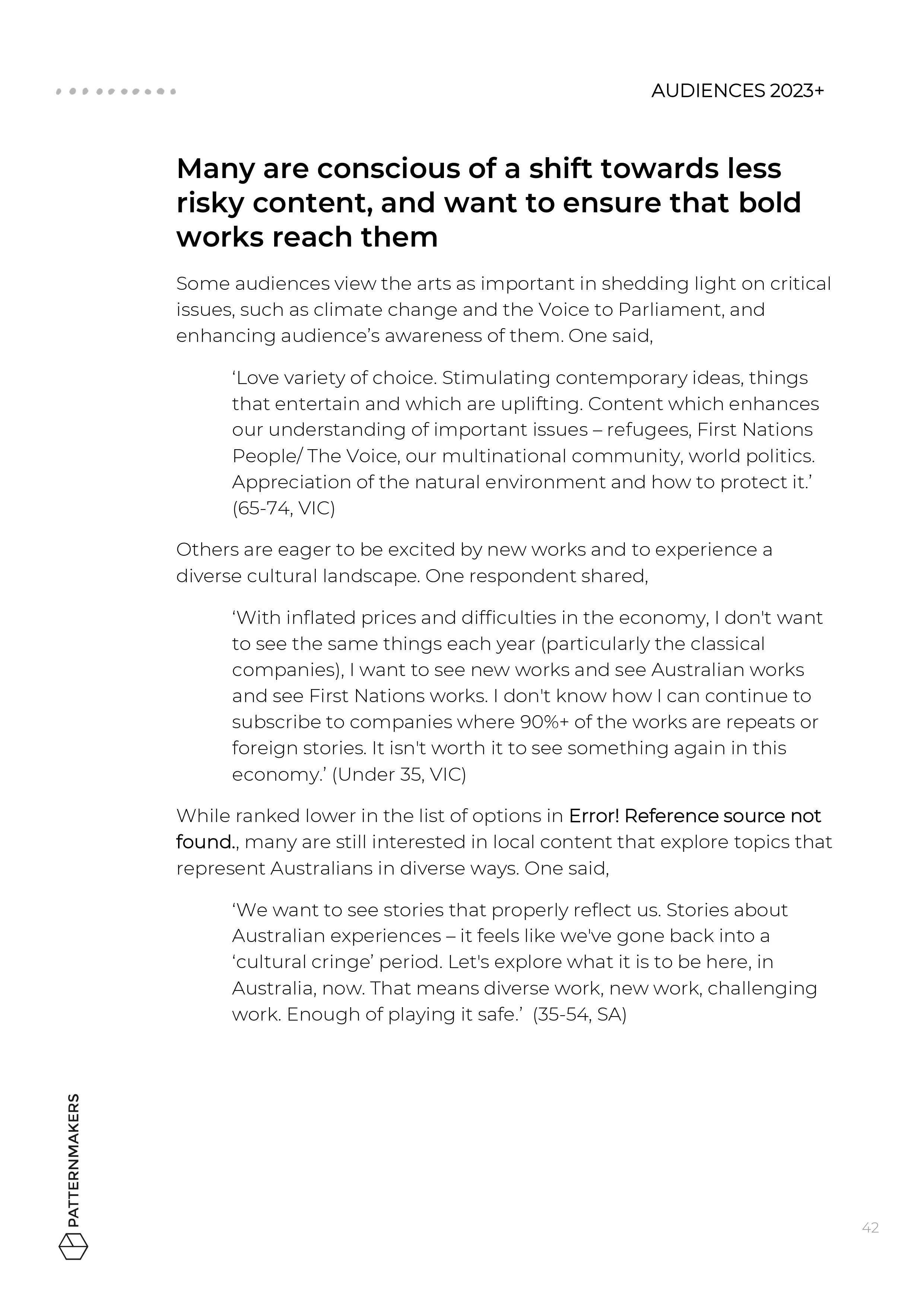
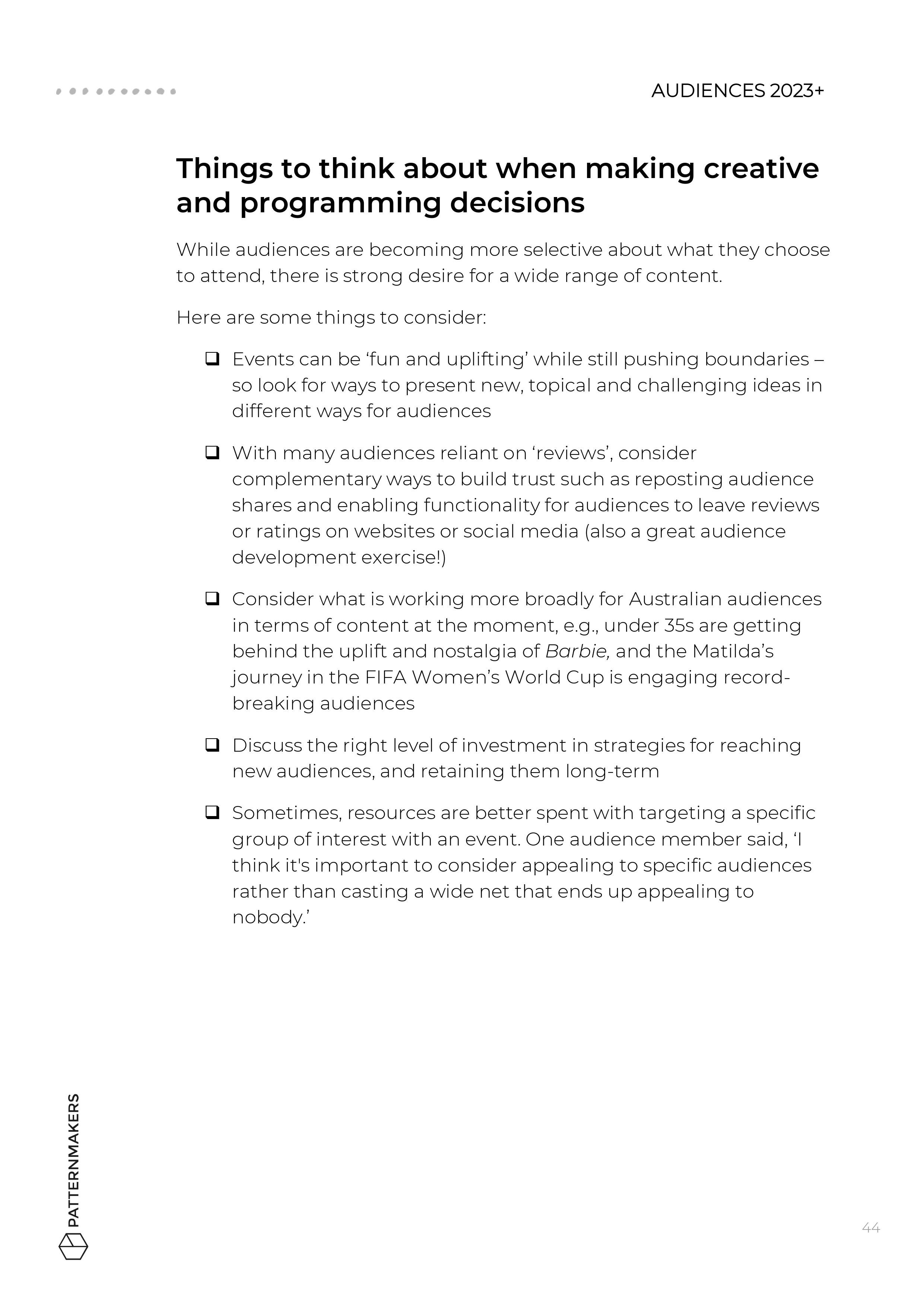
Australian audiences are showing significant appetite for a wide range of content, though budget pressures are leading some audiences towards ‘safer’ bets or ‘guaranteed fun’.
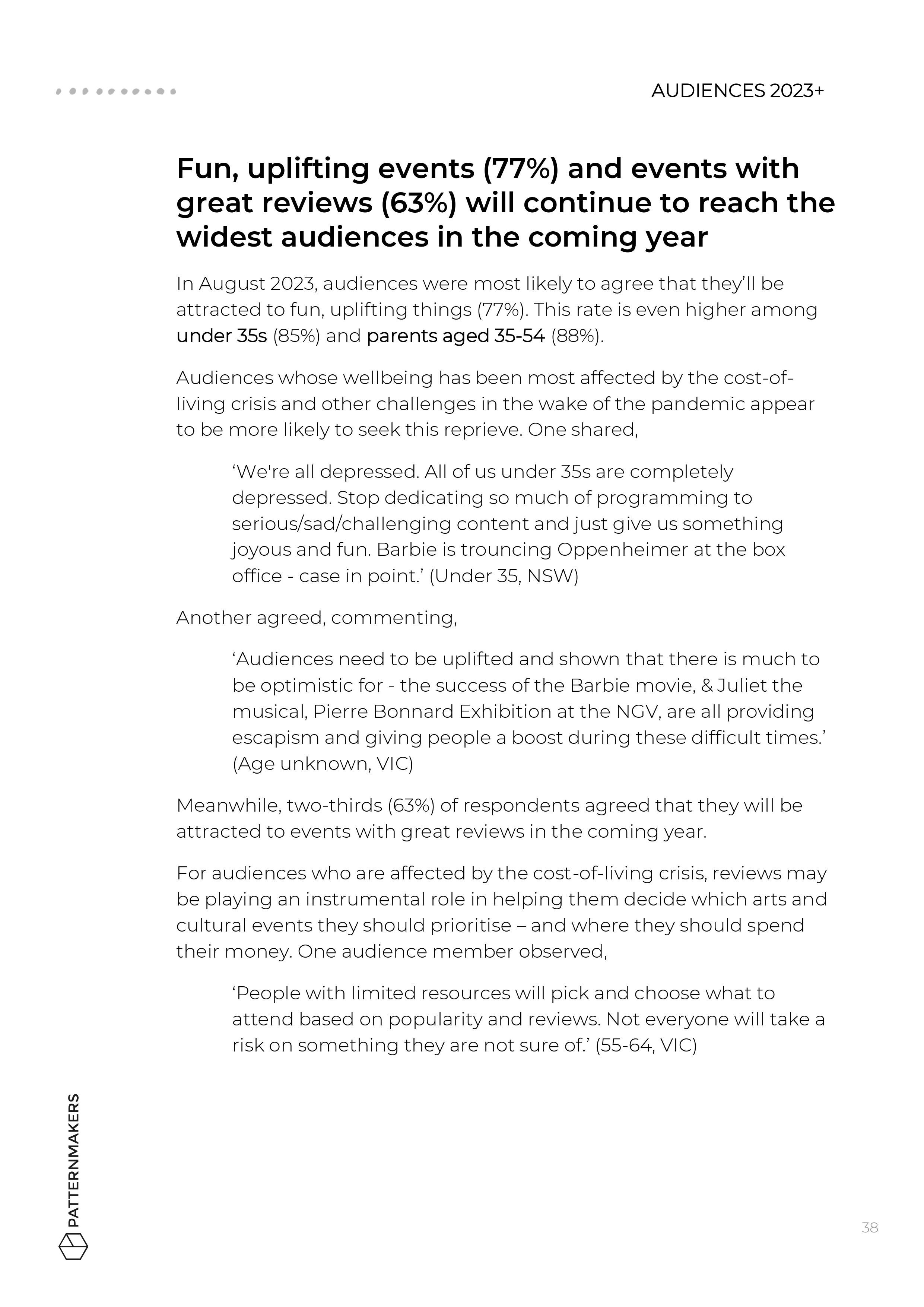
Social, uplifting experiences and events with great reviews will continue to reach the widest audience in the coming year.
Many audiences are hungry for meaning, but care and tact may be needed to when approaching challenging topics.
Organisations that understand the mood can please crowds today while building trust for tomorrow.
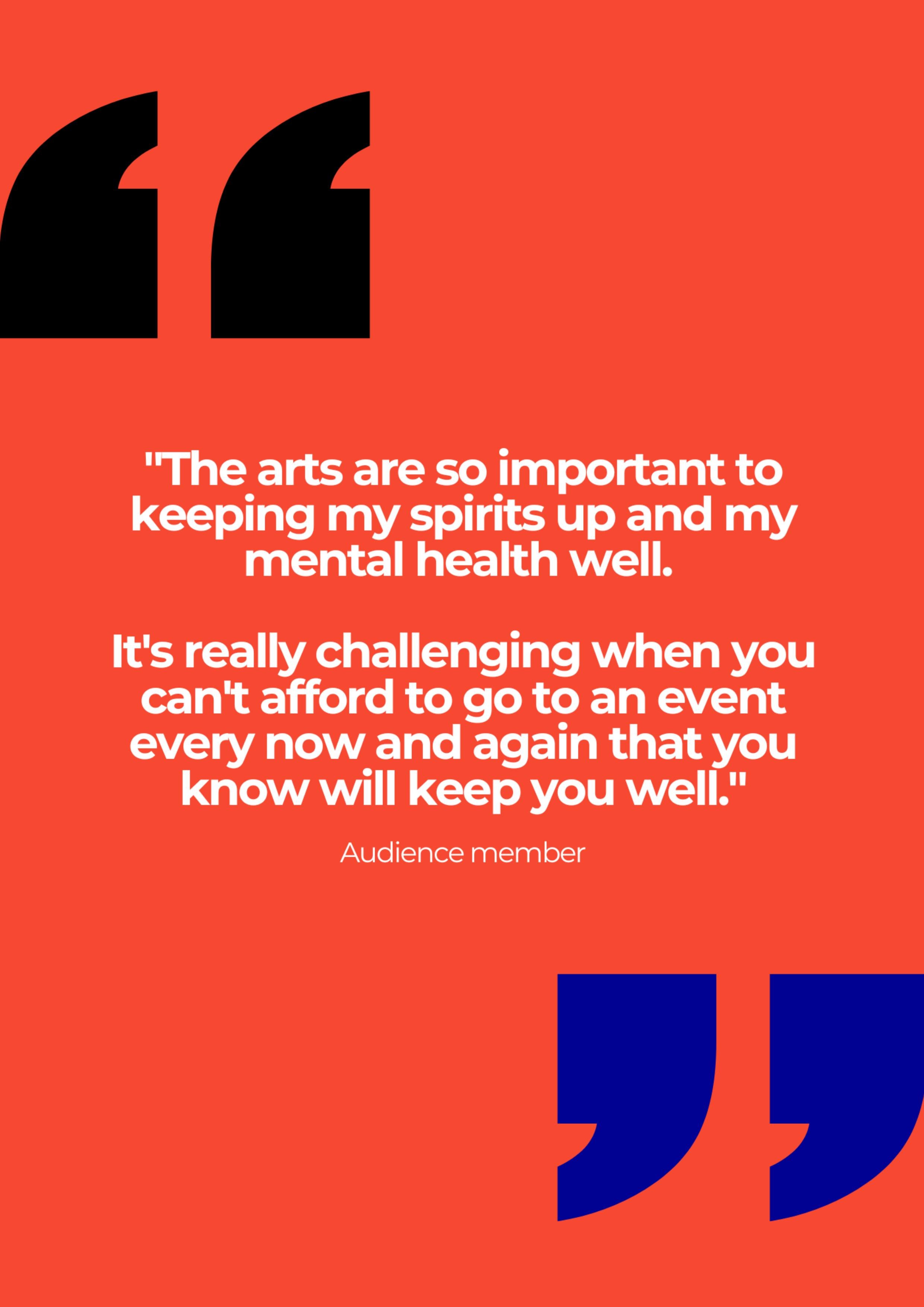
“The arts are so important to keeping my spirits up and my mental health well.
It’s really challenging when you can’t afford to go to an event every now and again that you know will keep you well.”
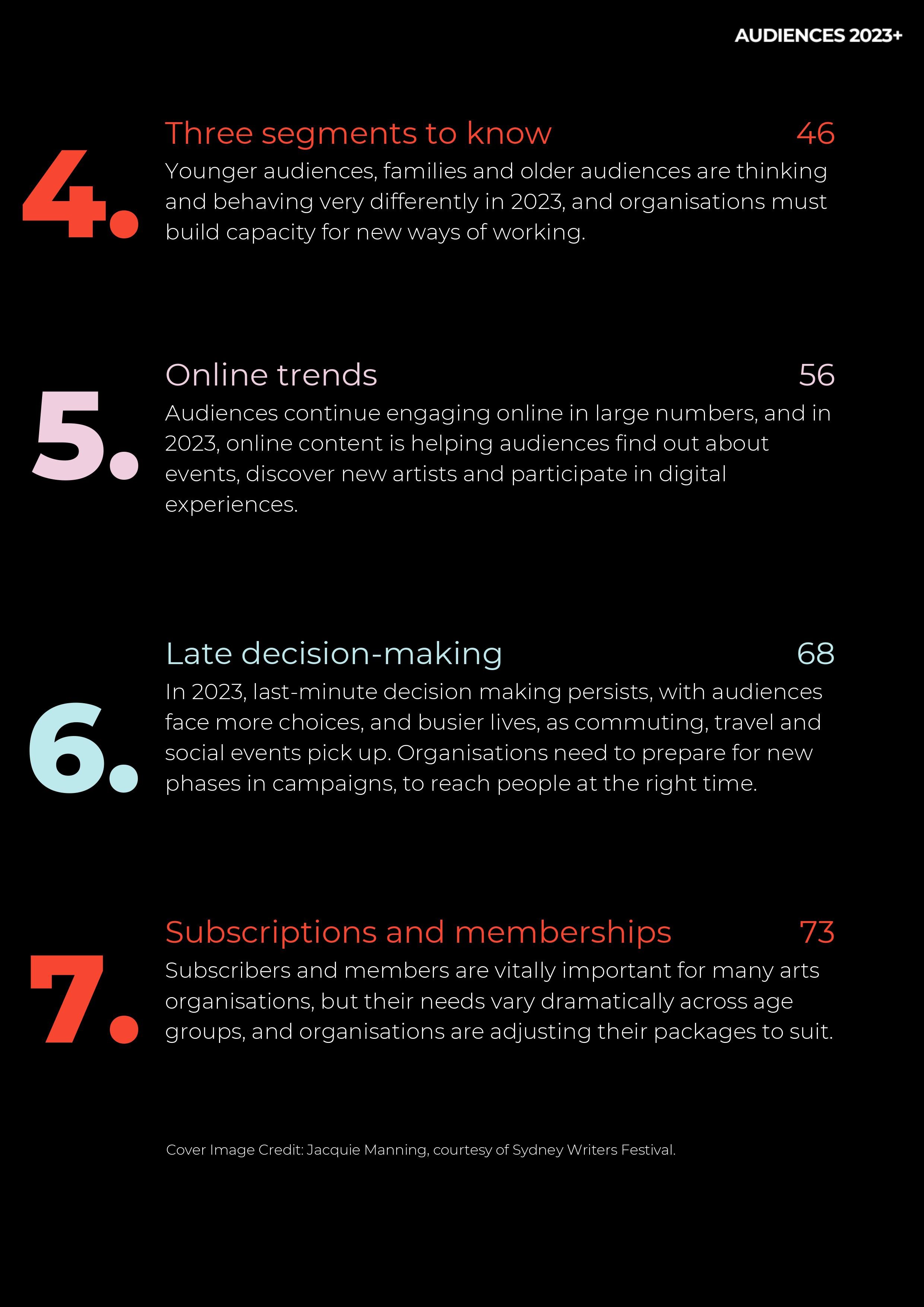
4. Three segments to know
Younger audiences, families and older audiences are thinking and behaving very differently in 2023, and organisations must build capacity for new ways of working.
-
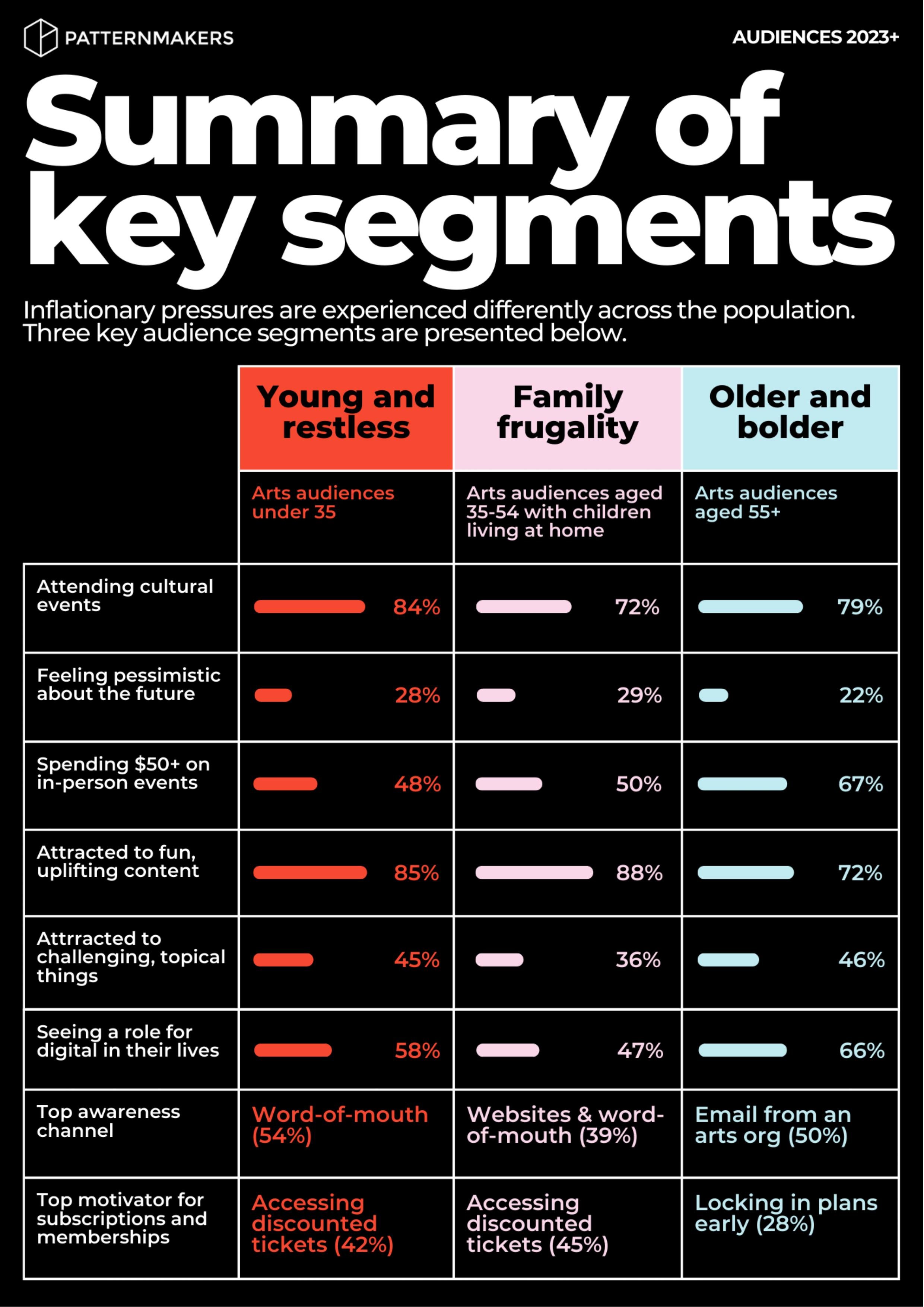
Social and economic pressures impact different generations in different ways, and this is reflected in three key audience segments.
Young people, families and older audiences show stark differences in mood, entertainment priorities, spending patterns and media consumption.
Organisations must consider how to create and execute strategies for different segments and build in flexibility to adapt as conditions evolve.

For easy viewing, click below to download the summary of all three key segments.
5. Online trends
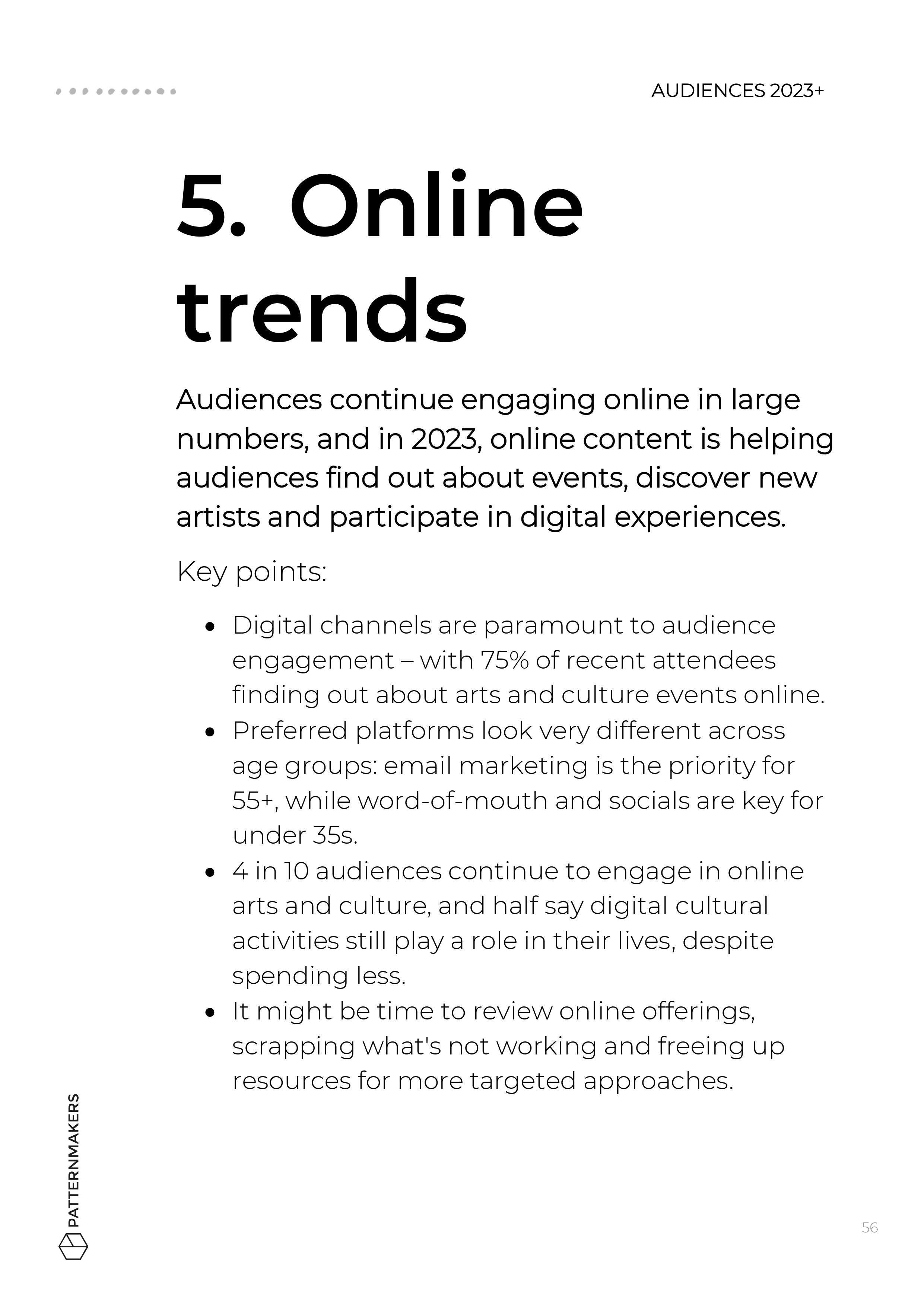
Audiences continue engaging online in large numbers, and in 2023, online content is helping audiences find out about events, discover new artists and participate in digital experiences.
-
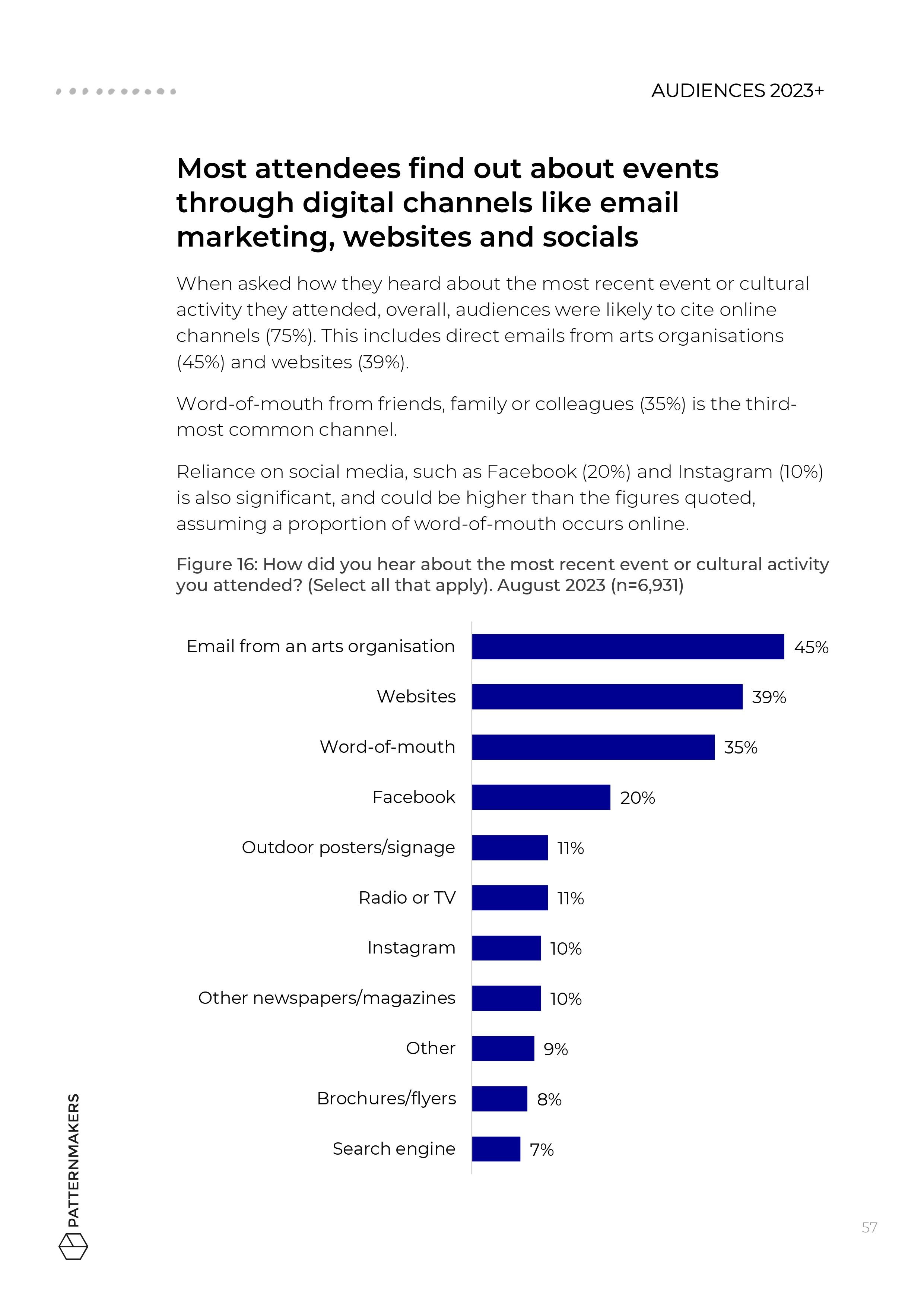
Digital channels are paramount to audience engagement – with 75% of recent attendees finding out about arts and culture events online.
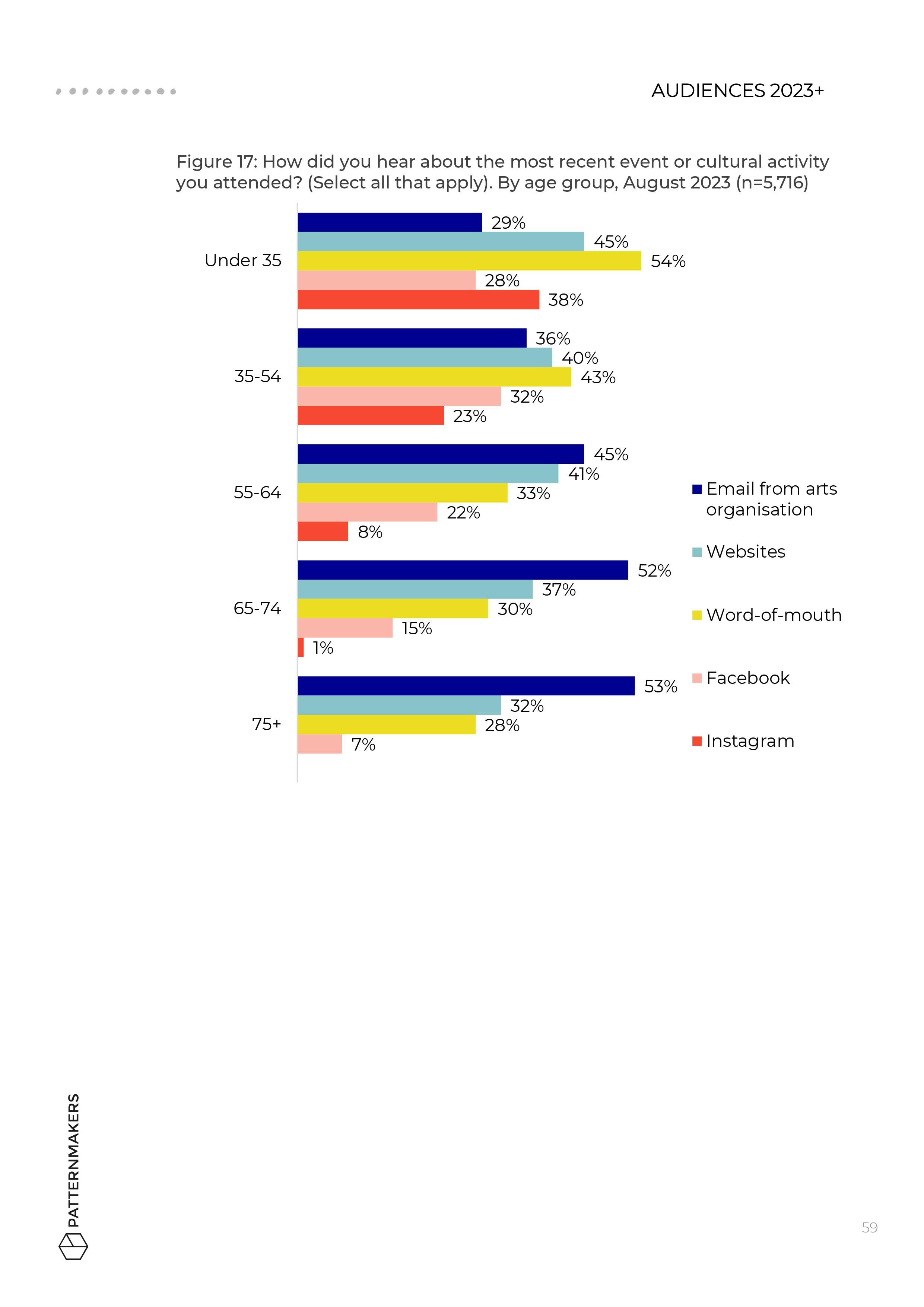
Preferred platforms look very different across age groups: email marketing is the priority for 55+, while word-of-mouth and socials are key for under 35s.
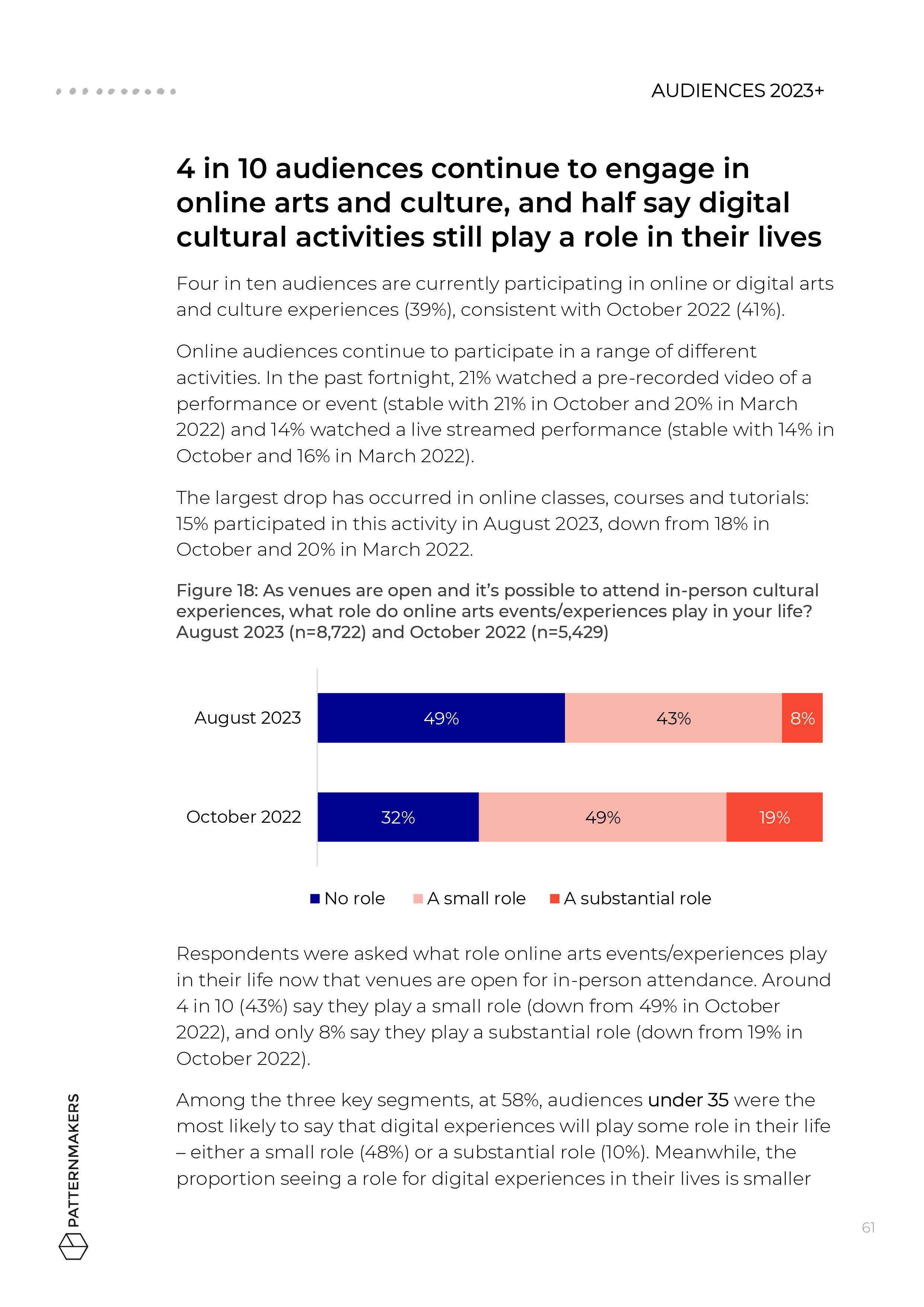
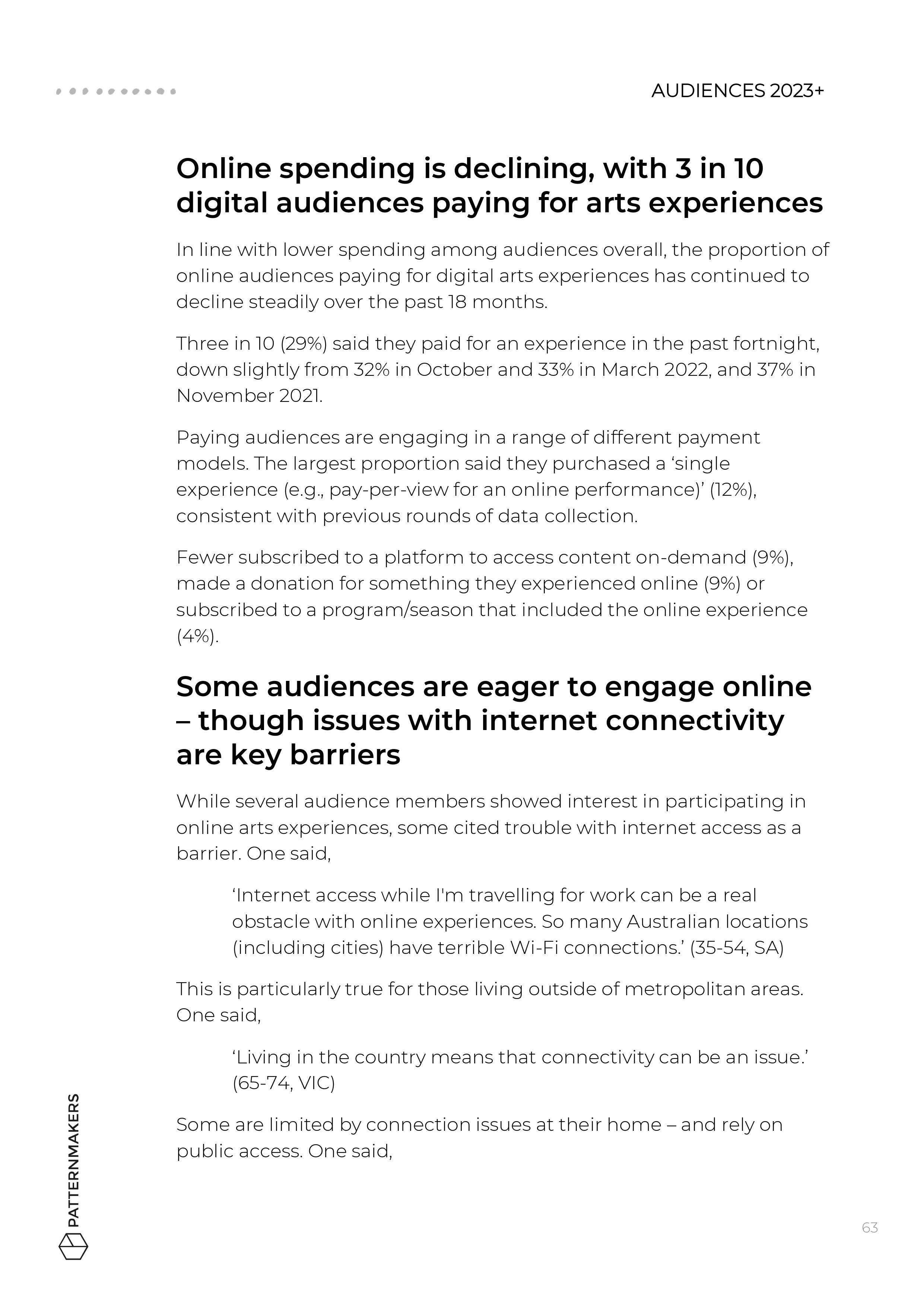
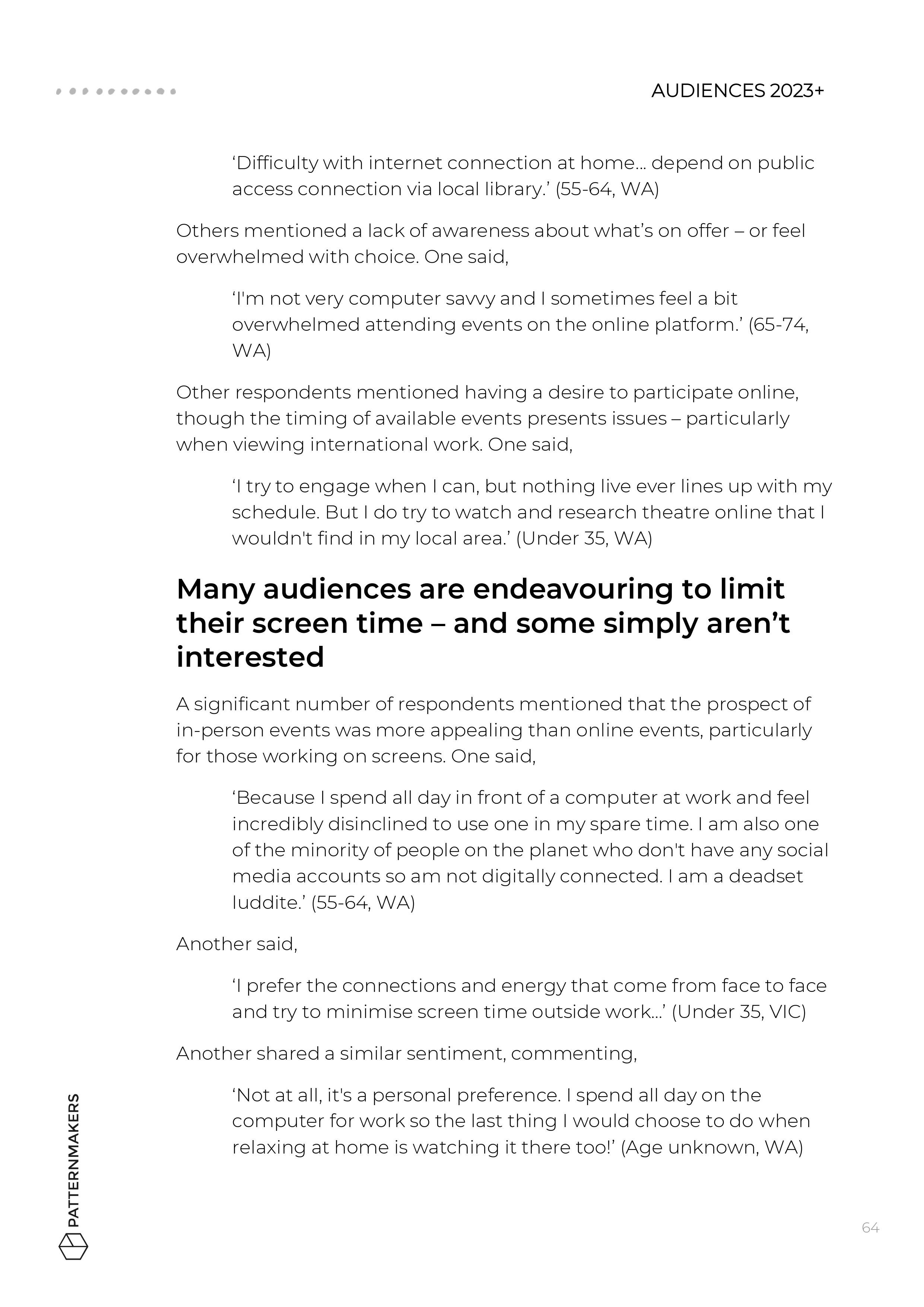
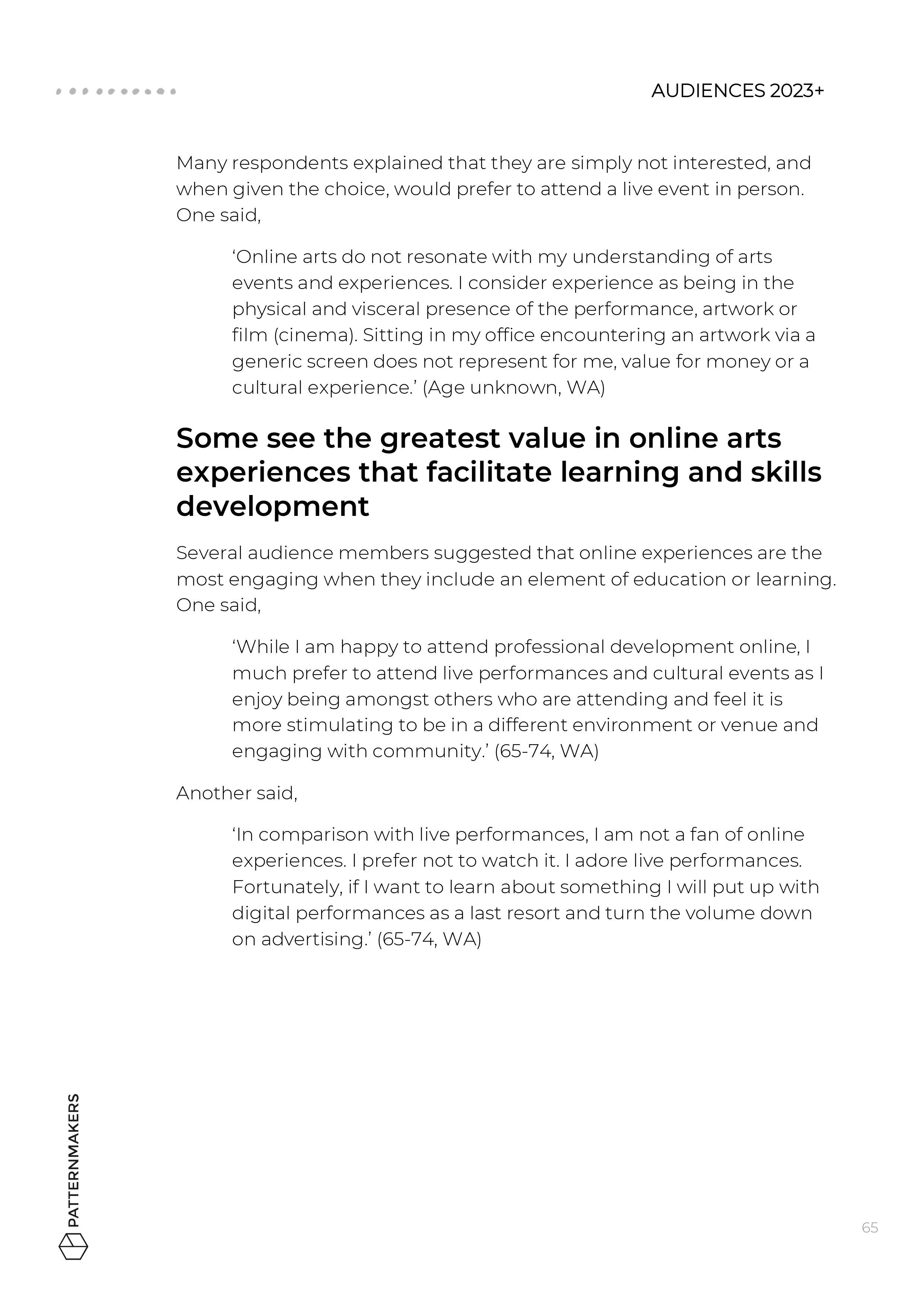
4 in 10 audiences continue to engage in online arts and culture, and half say digital cultural activities still play a role in their lives, despite spending less.
It might be time to review online offerings, scrapping what's not working and freeing up resources for more targeted approaches.
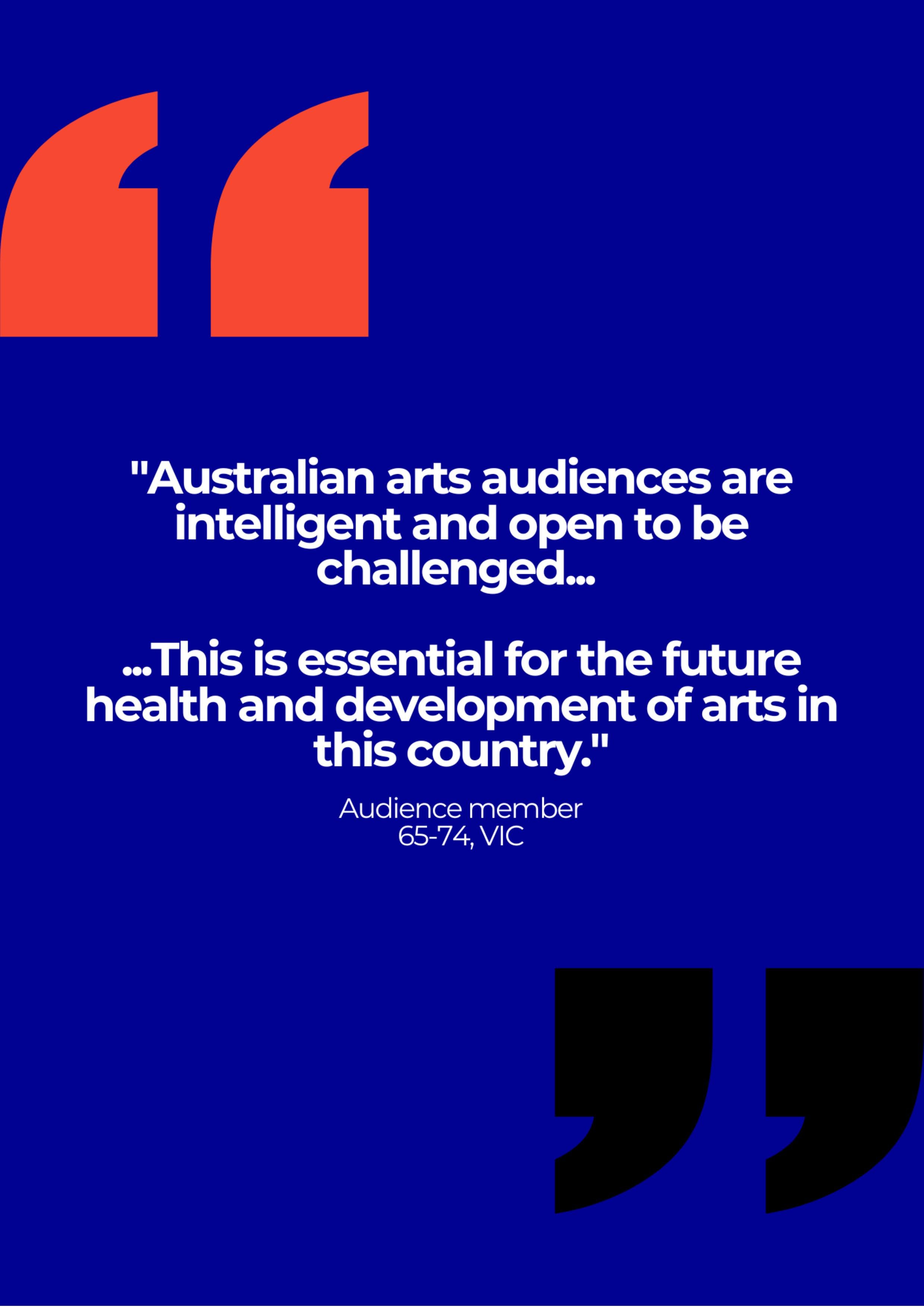
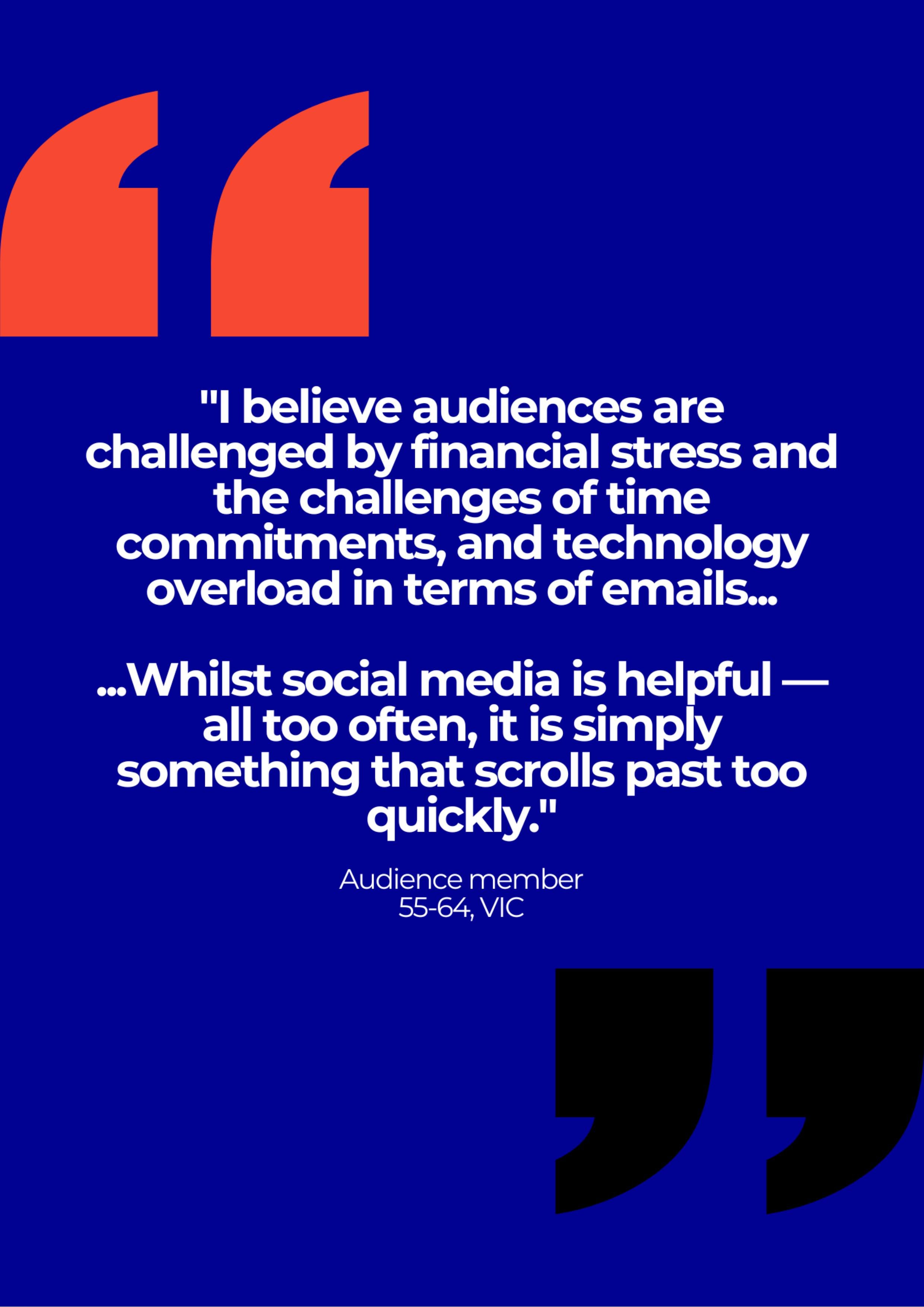
“Australian arts audiences are intelligent and open to be challenged...
...This is essential for the future health and development of arts in this country.”
6. Late decision-making
In 2023, last-minute decision making persists, with audiences facing more choices, and busier lives, as commuting, travel and social events pick up. Organisations need to prepare for new phases in campaigns, to reach people at the right time.
-
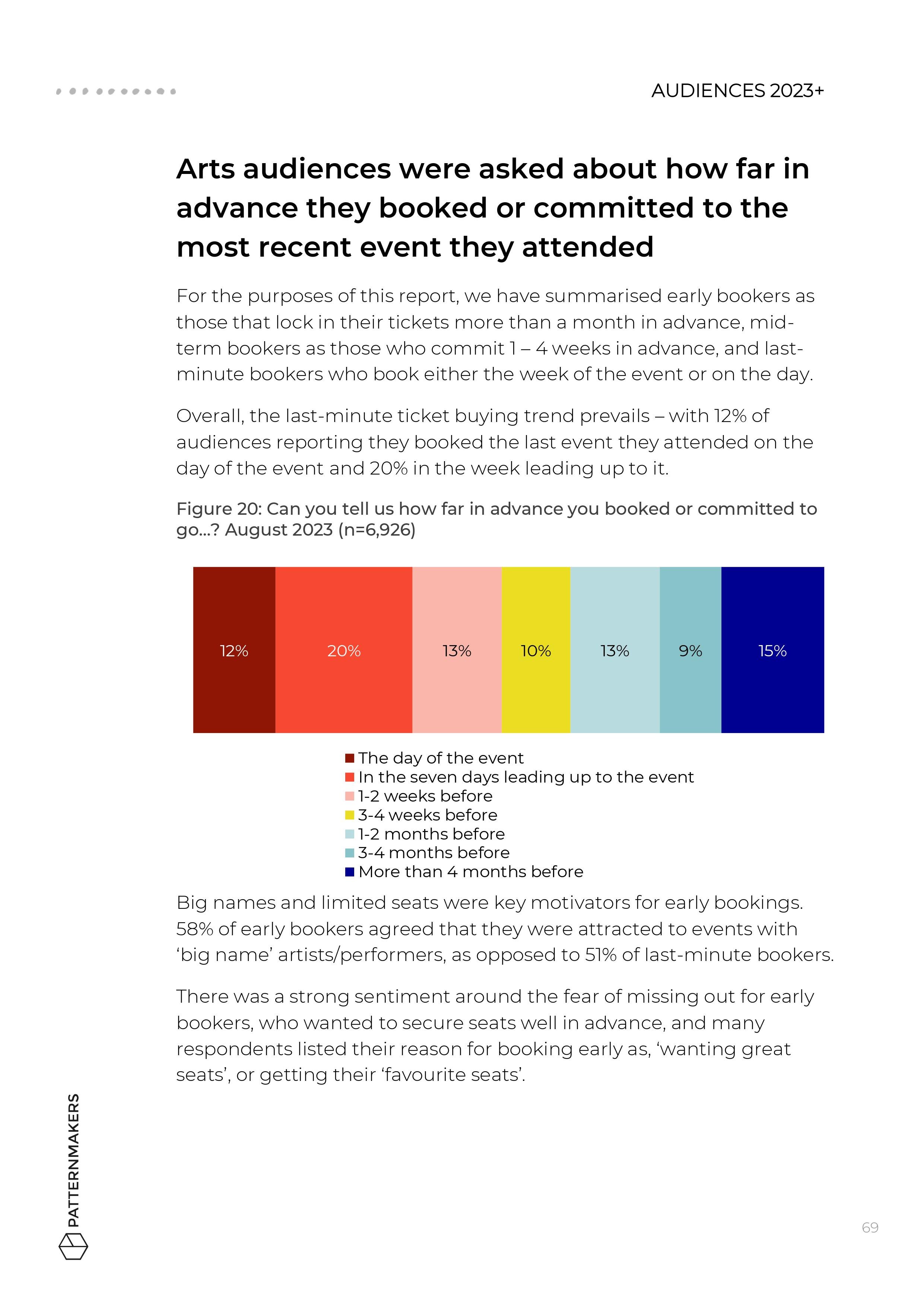
Half are booking less than two weeks out, with 12% on the day of the event
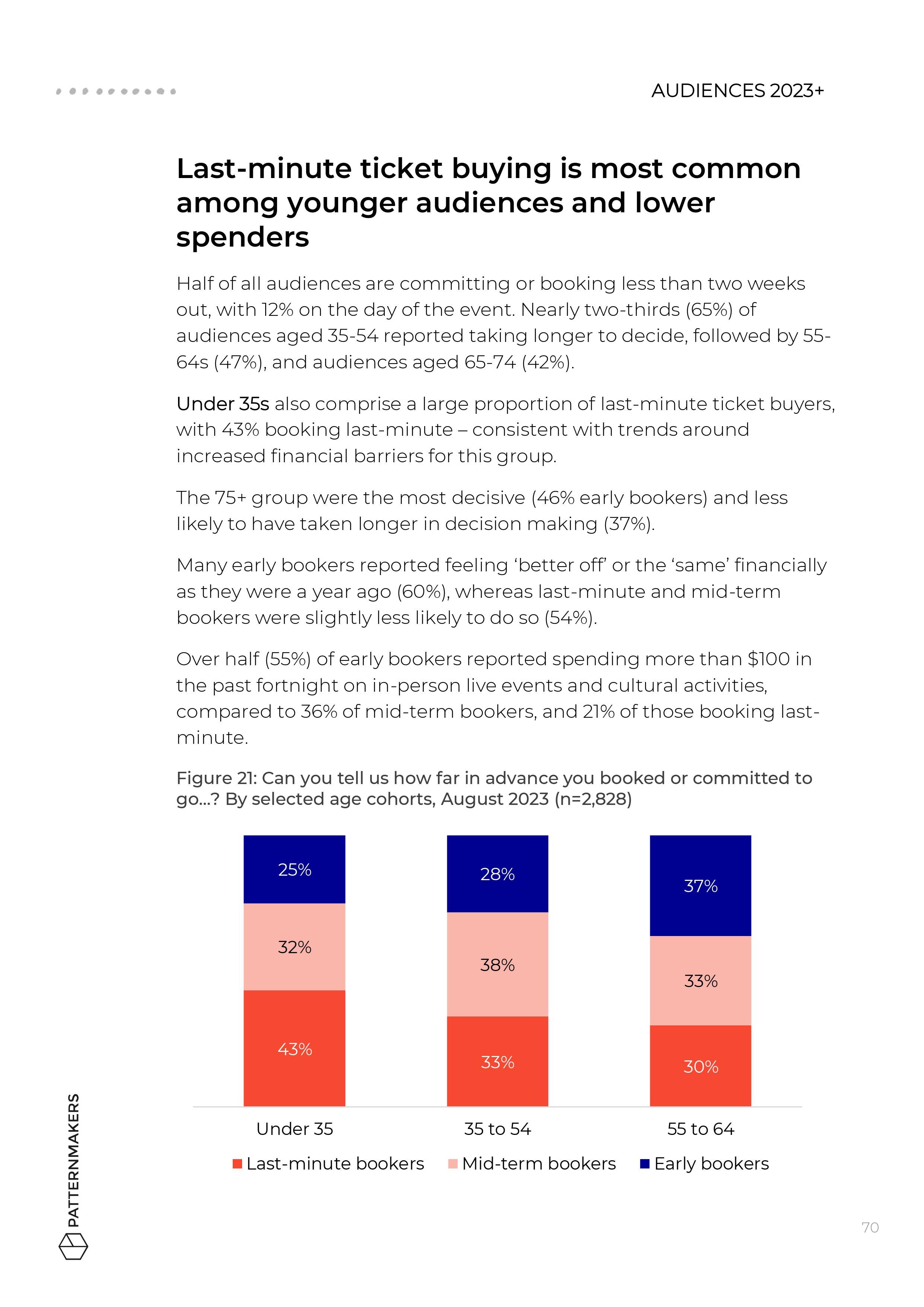
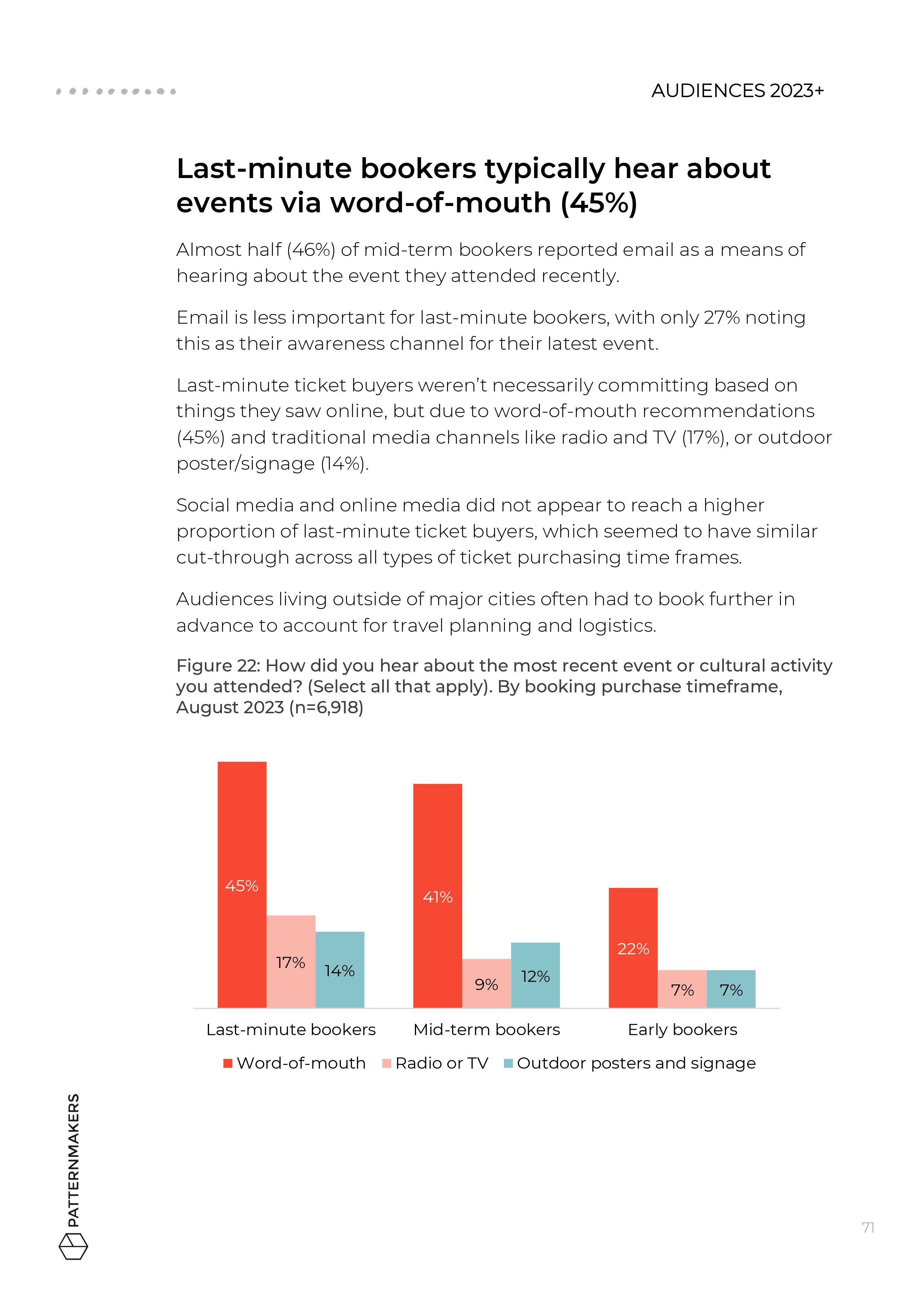
Analysis of ‘early bookers’, ‘mid-term bookers’ and ‘last-minute bookers’ shows that last-minute ticket buying is most common among younger audiences and lower spenders. Those booking later are also more likely to rely on word-of- mouth.
Ticketing initiatives to support more price sensitive audiences are important, but last- minute discounting may not be the answer.


7. Subscriptions and memberships
Subscribers and members are vital for many arts organisations, but their needs vary dramatically across age groups, and organisations are adjusting their packages to suit new needs.
-
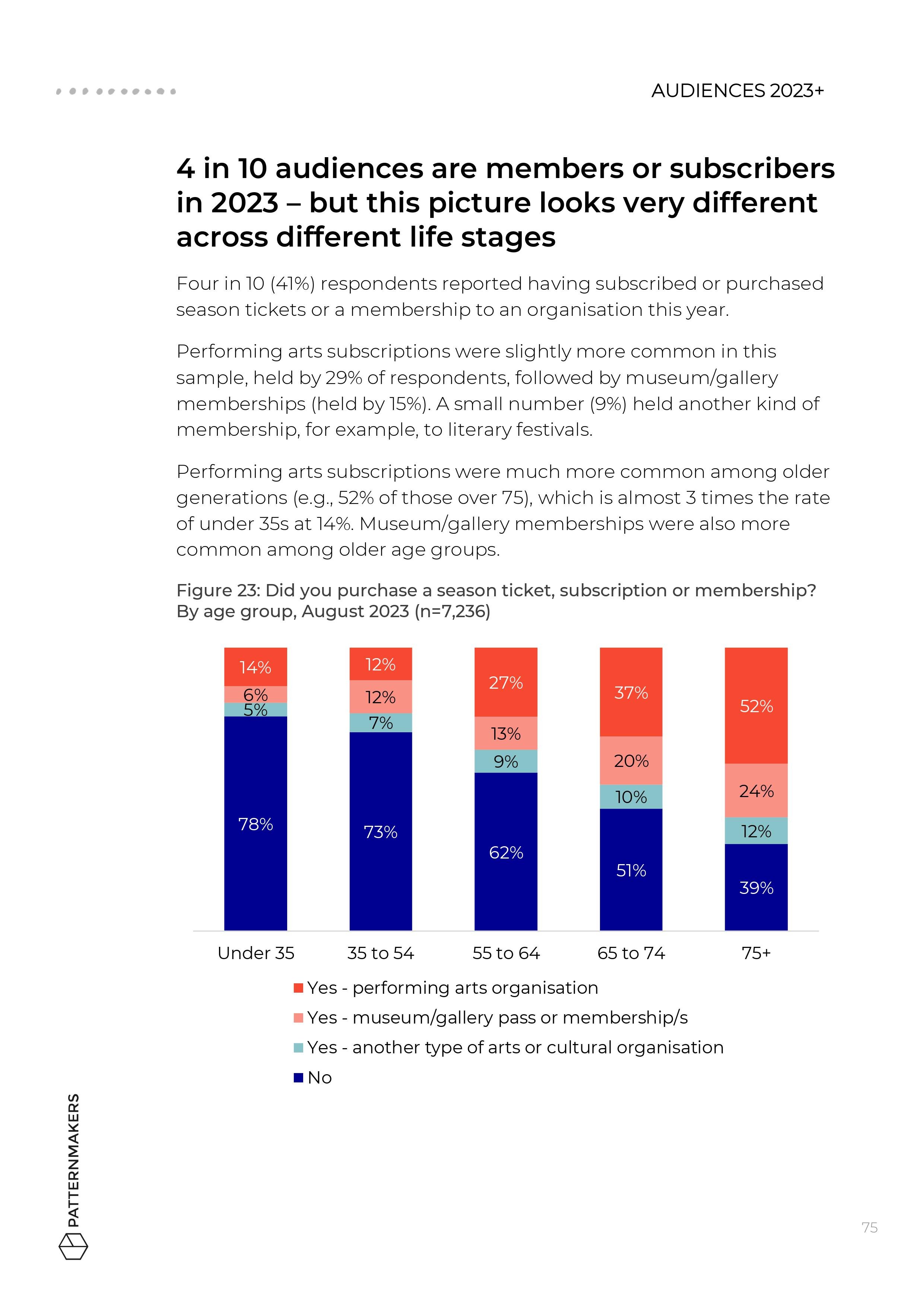
4 in 10 audiences are members or subscribers– with performing arts subscriptions more common than other types.
Subscriptions uptake and motivations are very different across audiences in different stages of life.
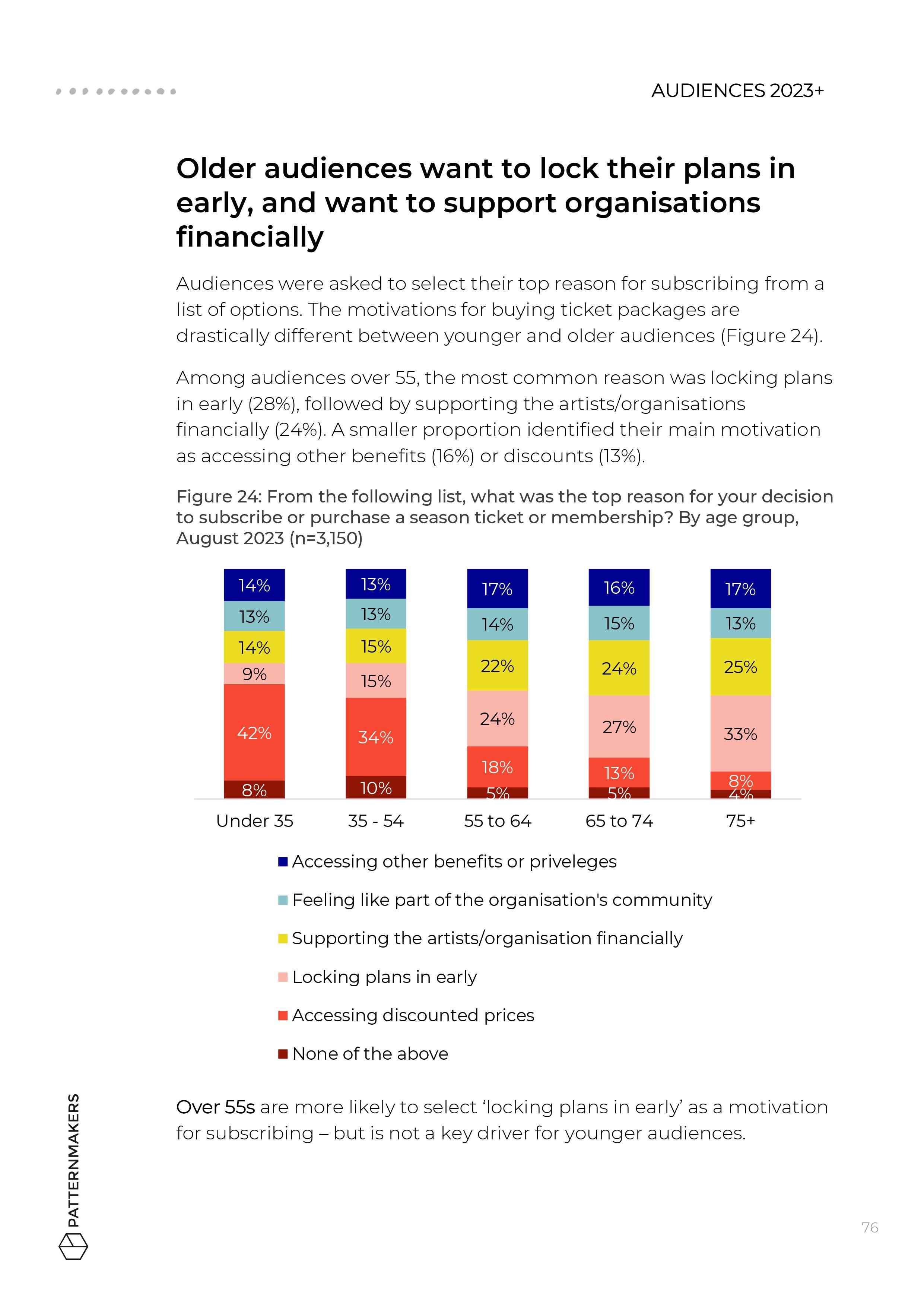
Older audiences want to lock their plans in early and show financial support, while younger audiences are more likely to want access to discounted tickets.
There is a case to test different offers and models, using messaging to target the unique needs of different audience segments.


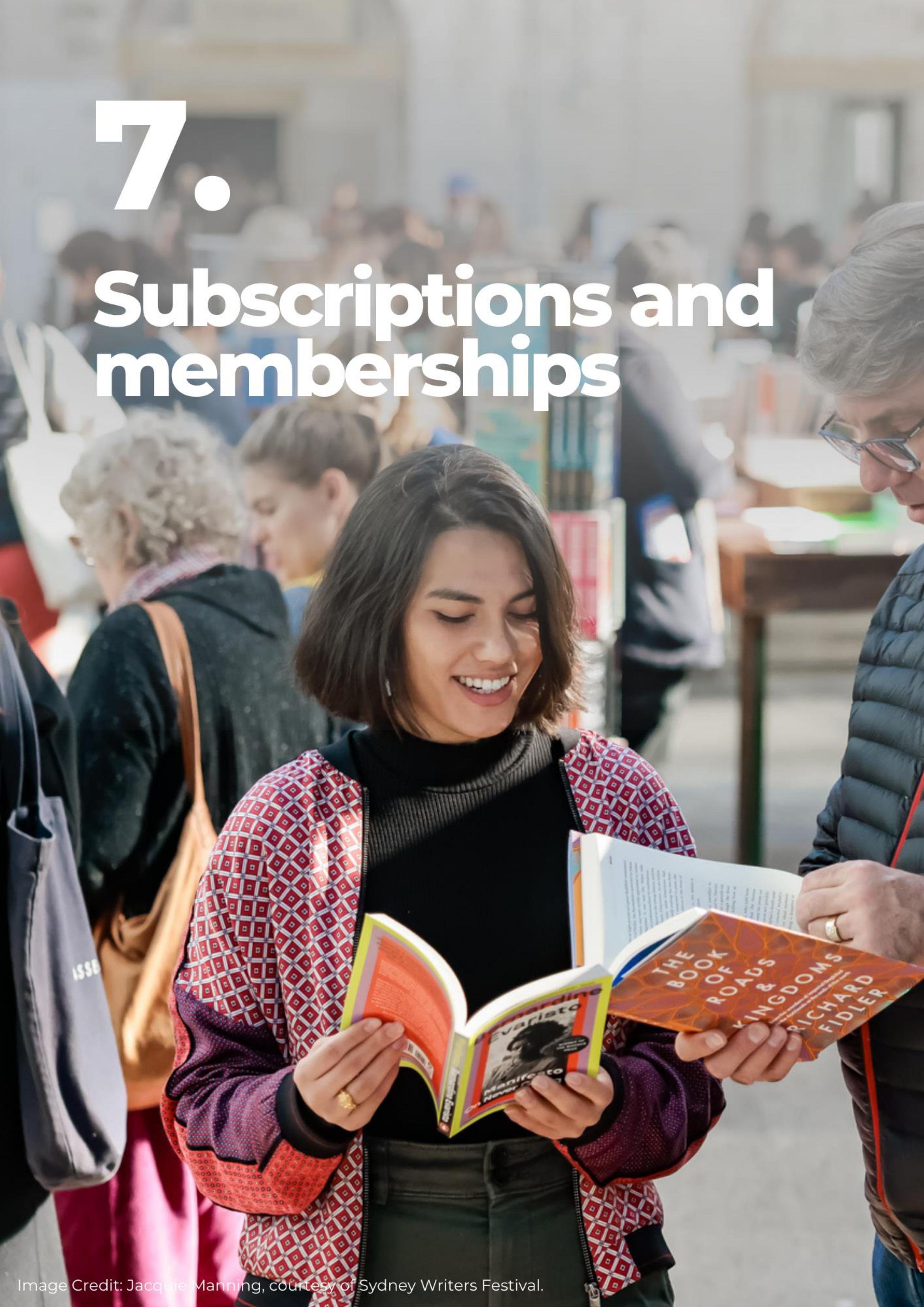
Cover Image Credit: Jacquie Manning, courtesy of Sydney Writers Festival.
Watch us launch the findings at APAX 2023
Our Managing Director, Tandi Palmer Williams, and Research Analyst, Peta Petrakis, travelled to Cairns to present the data from Audiences 2023+ at APAX 2023, PAC Australia’s annual conference.
Click the image below to watch the recording of the livestream. Simply register to make a free account and press play!

Use the dashboard to get results for your artform and region
Survey data from over 8,800 respondents has been uploaded to the dashboard, which now contains insights from over 100,000 Australian participants.
You can use the dashboard to explore the findings by state/territory, artform and audience segment.
It’s freely available to access, just click the image below and use the login details provided on the dashboard page.

About the Audience Outlook Monitor
The Audience Outlook Monitor provides the results of a study that has tracked audience sentiment over the course of the COVID-19 pandemic.
Data was collected in six phases throughout 2020-2022 and is again being tracked in 2023.
Government agencies across Australia are collaborating with research agencies Patternmakers (Sydney) and WolfBrown (USA) to produce this resource. The dashboard is freely accessible and designed to help artists and cultural organisations of all kinds to make the best possible decisions.
How to find out more
To receive new releases directly into your inbox, as soon as they are available, you can opt in to receive Audience Outlook Monitor news below.
Subscribers to our regular Culture Insight & Innovation Updates will need to update their preferences to receive all updates about the Audience Outlook Monitor. Just enter your email below and follow the instructions provided.
If you have a question, or an idea for using this data, please contact Patternmakers at info@thepatternmakers.com.au

About the Author
Bianca Mulet
Senior Research Analyst
Delivery partners


Supporting partners

Past posts on this blog
Archive
- Research 99
- Audience development 79
- Innovation 78
- Evaluation 75
- Arts 73
- Culture 72
- COVID-19 70
- Data culture 69
- About Patternmakers 35
- Project updates 25
- 2022 23
- 2023 21
- Thought leadership 16
- Tips & Tricks 13
- 2018 12
- 2019 11
- Career Advice 9
- 2017 8
- Beyond the Bio 8
- 2021 7
- Tandi Palmer Williams 7
- Privacy 6
- Resources 6
- Year in review 6
- 2016 5
- Performing Arts 5
- Strategic Planning 5
- Toolkit 5
- Accessibility 4
- Digital art 4
- Opportunities 4
- Our services 4
- Visual arts 4
- Youth 4
- 2020 3
- Capacity building 3
- Dance 3
- First Nations 3
- Interviews 3
- Touring 3
- Trends 3
- Case Studies 2
- Coronavirus 2
- Data art 2
- Education 2
- Indigenous 2
- Top 5 2
- 2024 1
- Culture Panel 1
- Manifesto 1

6 audience trends to prepare for in 2023
Audience behaviour is shifting and it can be hard to know what to expect.
Here are six audience behaviour trends to prepare for, according to the data from our October 2022 phase of the Audience Outlook Monitor.
Image Credit: Cecilia Martin, courtesy of National Circus Festival.
Audience behaviour is shifting. Here’s what’s going on - and how to make sure you’re ready.
With the release of our latest phase of the Audience Outlook Monitor, we’ve been looking at the major trends in audience behaviour and how it’s different to what we saw pre-pandemic.
If you’re involved in cultural events, you’ve probably already seen some of these trends firsthand. We’re here to tell you you’re not alone - and that these things aren’t going away any time soon. Here’s what we need to be ready for:


1. Attendance is climbing, but it may be a bit of a rollercoaster.
Half (51%) of audiences expect to attend more often in the next 12 months as they settle into post-COVID life. However, hesitation is still a big issue to contend with and 43% say their frequency of attendance will stay the same.
As shown in the chart below, there are a range of factors that will inhibit attendance over the next year. Some of these have been around for a while (risk of transmission), others are relatively new, and increasing (financial reasons).
A little while ago, we reported on this thing called ‘re-entry anxiety’ and recently, 19% of audiences told us they are simply lacking the energy to go out sometimes.
24% are prioritising other things above attending arts and cultural events, such as social events and travel - a natural response as we enjoy our regained freedom and figure out what our post-COVID world looks like.
The bottom line? We need to be clear-eyed about the targets we set for things like attendance and ticket sales. Some things are likely to go well, other things are just not, and that is just the reality.
You might like to ensure your teams and boards are across this data, and everyone is on the same page about what to expect in the year ahead.

2. Price sensitivity is increasing.
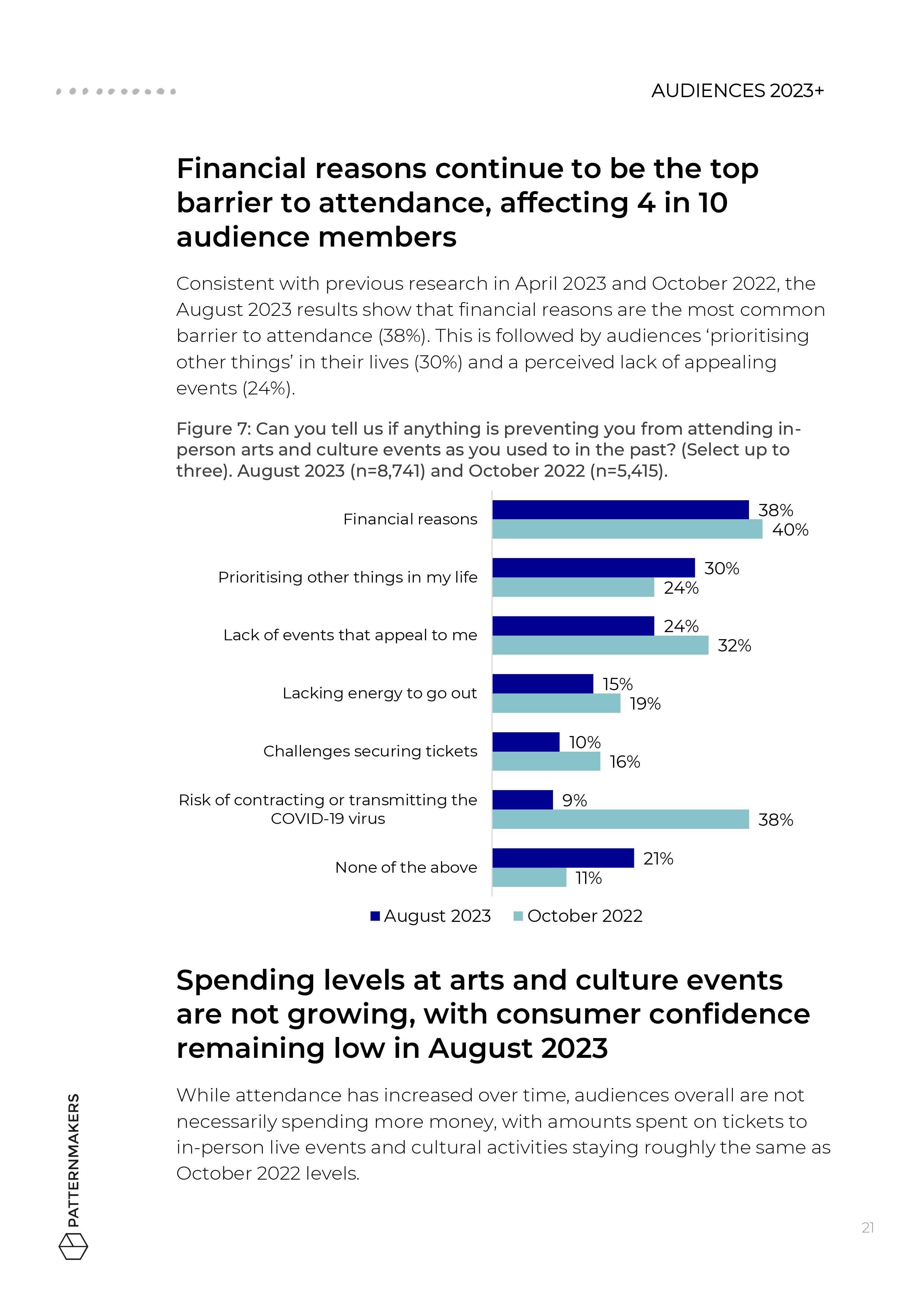
Yes, you read that chart correctly: financial limitations are now the top barrier to attendance, affecting 40% of audiences, up from 24% in August 2022. This means that they have now surpassed the risk of transmission.
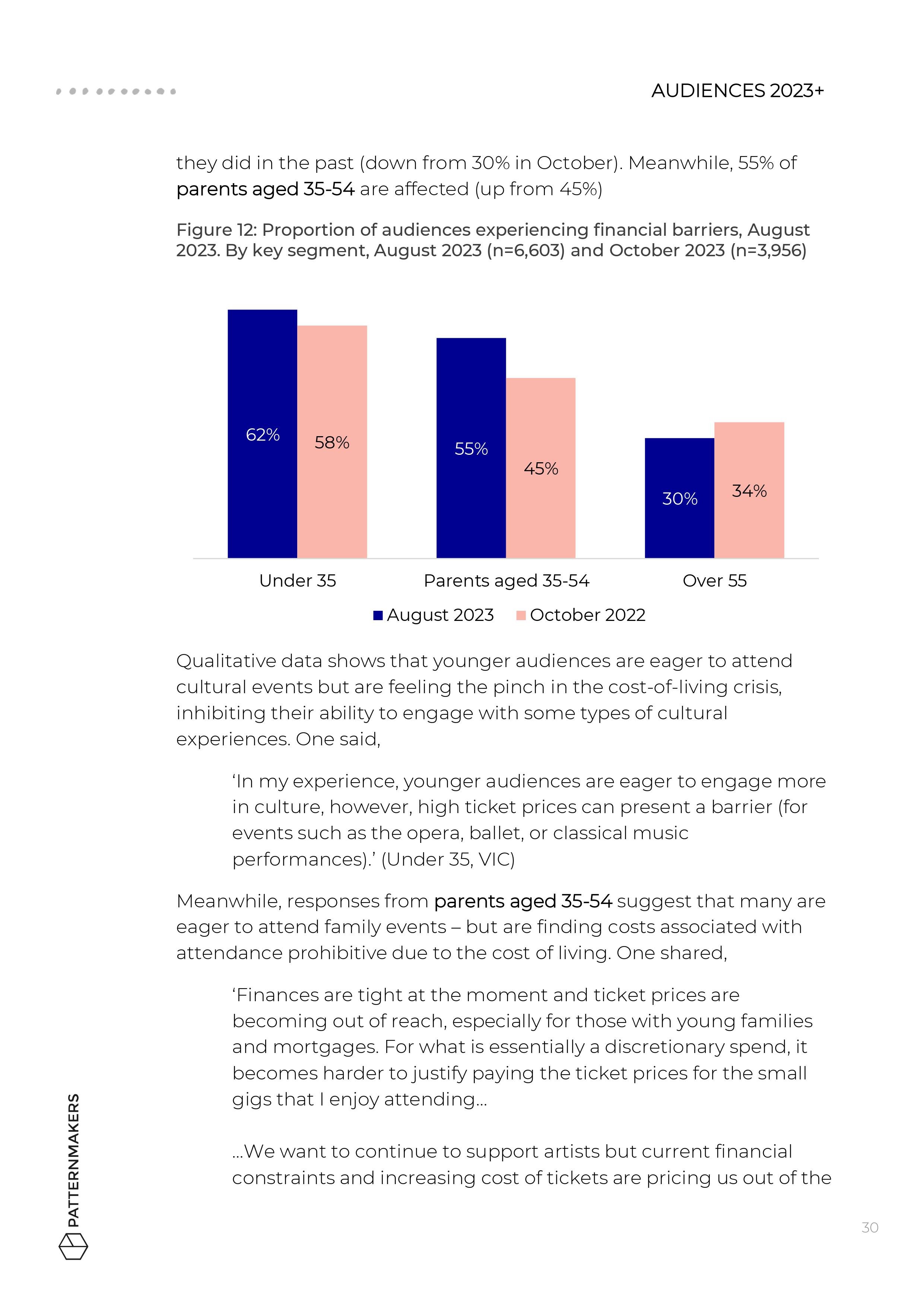
Economic concerns like the rising cost of living and inflation rates are impacting most people, but some groups are likely to be more vulnerable than others, such as lower income earners. And, as you can see in the chart below, young people are almost twice as likely as audiences over 70 to report financial barriers (58% vs 30%).

Audience members have spoken to these financial limitations, saying:
‘I am now retired and money is not so easy. The cost of tickets has increased so I pick and choose less expensive shows.’
‘Cost of living constantly increasing, I'm about to go back to study, just need to be careful with my funds.’
So, should you offer discounts? Probably not. While it may seem logical to consider cutting admission prices, research from the US has shown that admission is only a small piece of the puzzle when audiences think about the costs to attend. As one audience member in our study said:
‘As I live in a more rural area, it's not just the ticket I need to purchase, it's also travel, accommodation and meals. So the cost becomes significant.’
Admission discounts often have a range of downsides - like impacting customers who have already paid full price. They also influence brand perceptions and market competition
That being said, it is important to be aware of what’s happening and think about pricing strategically. If you’re targeting young attendees in the next little while - program prices should be set carefully. Families are another group that can be extra sensitive to prices, and things like transport recommendations, cheap parking options and dining offers can go a long way.
3. Last minute decision-making is here to stay for a while longer.
August 2022 data revealed that most audience members book events within the next seven days (26%) and the next 2-3 weeks (43%). This is an ongoing trend reflective of the comfort in making last minute decisions, as people continue to struggle with commitment.
Audience members expressed this sentiment, saying:
‘I am someone who has health and energy issues so I often need to take things day by day.’
‘I like to just go to something, rock up there and pay on the day.’
‘Much preferred to booking ahead on the off-chance I will have to cancel.’
From a business perspective, it’s undeniably more difficult when we cannot rely on those early ticket sales to inform our planning for the season, creating a cashflow problem and a confidence problem.
In a recent broadcast of ABC Radio National, guests Sophie Galaise, Managing Director of the Melbourne Symphony Orchestra, and Kip Williams, Artistic Director of Sydney Theatre Company reflected on these very research findings - and shared their take:
Sophie Galaise outlined the MSO approach of offering flexible subscription and single tickets, providing audiences the opportunity to be able to attend a different date if needed.
Kip Williams stressed the elevated importance of marketing at this time, as audiences are often waiting till shows are opened and the reviews are out before buying a ticket.
So, if you haven’t already got strategies in place on how to maximise the opportunity of last-minute sales, now is very much the time.
4. Lifestyle changes are impacting preferences around attending.
1 in 5 audience members say their preferences have changed in terms of time, day or location of events – as lifestyle shifts continue to occur.
Protecting energy and convenience are shaping decisions with audience members saying:
‘I find it harder to attend events on weeknights after work. I am tired faster after the pandemic with less capacity to do multiple things in a day.’
‘I think people started to prefer staying at home to drink and socialise because of the cost and convenience. I prefer to go out after work on a Friday so I can be home for the rest of the weekend rather than going out Friday and Saturday night.’
‘I am much less inclined to attend events on weeknights now. I feel busier than ever and my weeknights have become sacred time. I prefer to attend events on weekends only.’
While some are simply out of practice, and may yet revert to old habits, some are very much here to stay. For instance, working from home is now a reality for many employees, and fewer days commuting into the city means fewer opportunities to drop into events in the CBD:
‘I have been working mostly from home and found that suited me... building energy to head into the inner city to attend events requires determination. I've made the effort when the event really sparks my interest...’
‘I now live in the country and so it is harder to go out at night in the city.’
This trend is going to impact organisations very differently. For instance, venues in outer metropolitan suburbs, and regional hotspots are likely to be seeing the upside of this. Meanwhile, events in the inner city seem to be working harder to rebuild their audiences.
It’s a good time to be testing different things, and seeing what works for your audience. Just remember: a single event doth not maketh a valid experiment. We need to set up our tests over a realistic timeframe and give it time to work. Let us know what works for you!
5. Audiences are looking for variety locally.
For now, people continue to favour their local area/region when attending arts events. Yes more cultural tourism could be on the horizon, but for now many are excited to see touring shows and want to see variety in their communities.
Regional/remote audiences particularly love attending locally – while metropolitan audiences are more keen to explore their region. Local stories are more likely to resonate with regional audiences (48%) – though there is also appetite for ‘big’ name artists (60%). Audiences have told us:
‘The pandemic has taught us that local matters. It's incredibly important to ensure we have a strong local economy, supporting local activities, buying from local people and strengthening our understanding of our local culture and history.’
‘Supporting local artists, organisations and locations is a current priority. Local events have a multitude of benefits including increased environmental sustainability and reduced hassle in terms accessing the event and these events cultivate civic pride.’
Yet, there is still the desire to expand their horizons:
‘Throughout the COVID experience, there has been a strong focus on local – which made good sense and felt right. After nearly three years of a focus on local, I am feeling a bit parochial and really keen to see and experience things that bring a new perspective. I really want to travel for art and culture but don't feel comfortable doing so yet.’

As you can see in the chart, many are keen to return to the things they love, but there is also an appetite for new (58%), uplifting (73%), or challenging cultural experiences (42%). There are a wide range of views out there, so we think that there’s an audience for almost anything.
‘Life can be short and live music and performances are what makes me happy and keeps me going. I'm going to keep attending them as much as I can.’
‘There is enough conflict and challenge in the world today – I don’t want to seek out challenging events for entertainment. I want escapism.’
'I don't need fun, uplifting things, but I do need to be intrigued, challenged and informed. I don't need big names, but I do like professionally run events.’
‘The arts are about innovation and change. we want to see hear and watch new shows, music and arts events.’
‘I like the new and the challenging and will continue to seek those productions and opportunities - with, I feel, an increasing sense of confidence in doing so.’
Basically, balanced programs are key - with enough variety to keep audiences coming back. It’s important to think about targeting different programs at different segments.
For example, as shown in the chart below, younger audiences, such as those under 35 (74%) showed the strongest interest towards trying new things, making them a key demographic to target when innovating.

6. People are happy to go with the flow when it comes to COVID-safety.
In general, cultural venues are still seen as safe in terms of mitigating the risk of transmission, with comfort at live music venues and interactive exhibits at an all-time high.
With the Summer season approaching, the relaxing of COVID-safety rules may leave some audiences nervous to attend. However, we’ve found that most people are happy to wear a mask if they are asked to (and if they are provided one).
Years of mask-wearing have made this a common practice, with one audience member saying:
‘I went to a theatre performance a couple of weeks ago where masks were mandatory, and every single audience member complied without any fuss, we get it.’
It’s worth keeping an eye on this during peak transmission times, especially if you have a vulnerable audience!
Subscribe below for updates - or get in touch with us for any questions or suggestions via info@thepatternmakers.com.au.

About the Author
Melanie Raveendran
Digital Marketing Associate
Categories
- 2016 5
- 2017 8
- 2018 12
- 2019 11
- 2020 3
- 2021 7
- 2022 23
- 2023 21
- 2024 1
- About Patternmakers 35
- Accessibility 4
- Arts 73
- Audience development 79
- Beyond the Bio 8
- COVID-19 70
- Capacity building 3
- Career Advice 9
- Case Studies 2
- Coronavirus 2
- Culture 72
- Culture Panel 1
- Dance 3
- Data art 2
- Data culture 69
- Digital art 4
- Education 2
- Evaluation 75
- First Nations 3
- Indigenous 2
- Innovation 78
- Interviews 3
- Manifesto 1
- Opportunities 4
- Our services 4
- Performing Arts 5
- Postcode Analysis 1
- Privacy 6
- Project updates 25
- Publications 1
- Research 99
- Resources 6
- Strategic Planning 5
- Tandi Palmer Williams 7
- Theory of Creativity Podcast 1
- Thought leadership 16
- Tips & Tricks 13
- Toolkit 5
- Top 5 2
- Touring 3
- Trends 3