

Are we ready for Generation Alpha?
Lately I’ve been thinking hard about how young people engage with art, culture and creativity. As mother of a one year old, my life (and arts participation patterns) have changed dramatically in the past year. Late nights at the theatre and gigs have been replaced with mornings at the museum, reading stories and pushing a pram through community festivals.
Lately I’ve been thinking hard about how young people engage with art, culture and creativity.
As mother of a one year old, my life (and arts participation patterns) have changed dramatically in the past year.
Late nights at the theatre and gigs have been replaced with mornings at the museum, reading stories and pushing a pram through community festivals.
Leo loved the immersive sound and animation in Ryoji Ikeda’s immersive exhibition Micro | Macro at Carriageworks. He enjoyed touching (and drooling all over) the art blanket at the MCA’s Art Baby class for mums and bubs. And the whole family enjoyed a trip to Mona Foma, the summertime festival of Tasmania’s excellent Museum of Old and New Art with food, drink and music aplenty.
What will engage the next generation?
It got me thinking about the kinds of experiences that kids of his generation will have access to.
Will they be in theatres, shopping malls, schools or virtual worlds? Will he be a viewer, a player, a protagonist or a performer?
What kinds of experiences will bring him to tears, send goosebumps down his spine and help him make sense of the worlds he inhabits?
New research in the UK with almost 2,000 young people suggests that today’s young people recognise quite different definitions to previous generations.
Arts Connect, Morris Hargreaves McIntyre and We are Frilly found that young people associate 'art' with visual arts but arts also includes graffiti, fashion, animation, and tattooing/piercing - all of which were more widely defined as art than novels, poetry and opera.
Culture, they found, is a broader concept for them, which includes identity. They do relate to sector recognised forms such as festivals, historic sites, carnivals and museums, but also wider forms such as fashion and TV, learning a language and food.
The Australia Council's arts participation research indicates one of the biggest trends is the rise of creative participation, relative to receptive participation as an audience member.
More and more, young people want to express their own creativity, learn new skills and access immersive experiences, and the trajectory is not slowing down.
Are we ready?
So how are our artists, organisations and major institutions adapting to these changes?
I suspect we could be doing more.
Research is one of the best ways for us to identify trends and anticipate the changes that will be needed. But we also need to be testing new concepts and experimenting with new forms of engagement.
One great creative industries example I saw recently is PlayingField, a 'game jam' where teams of professional game developers are paired with young people aged 10 to 13 and tasked with realising their game idea.
The two-day experience has been designed to educate young people about the wide variety of roles available in the industry, whilst giving the young participants a chance to devise a game idea and see it brought to life in the hands of inspiring role models.
The impact of programs like this could be profound.
Research with young people
This year we are lucky to be working with The MCA to evaluate their GENEXT program for 12-18 year olds, working with the MCAs youth committee to design & deliver the a methodology that will trace what ideas past participants have taken into their adult lives.
We are working with Barking Gecko Theatre Company to explore the impact of their Ensembles program for 5 to 17 year olds on things like confidence, empathy and relationships.
We are also lucky to be again working with UTS, Australia’s #1 young university to explore the role of art on campus, and how it can support reflection, knowledge sharing and debate among students, researchers and the public.
I can’t wait to see what we find out about how young people want to engage with the arts now, and where things are headed next.
Maybe now I've got a vested interest!
If you have an idea about how research and evaluation can help unearth new possibilities for young people and the arts, get in touch with the team at info@thepatternmakers.com.au.

About the Author
Tandi Williams
Managing Director
Patternmakers’ Founder and Managing Director Tandi Williams is an experienced consultant and arts and culture research specialist.
Categories
- 2016 5
- 2017 8
- 2018 12
- 2019 11
- 2020 3
- 2021 7
- 2022 23
- 2023 21
- 2024 1
- About Patternmakers 35
- Accessibility 4
- Arts 73
- Audience development 79
- Beyond the Bio 8
- COVID-19 70
- Capacity building 3
- Career Advice 9
- Case Studies 2
- Coronavirus 2
- Culture 72
- Culture Panel 1
- Dance 3
- Data art 2
- Data culture 69
- Digital art 4
- Education 2
- Evaluation 75
- First Nations 3
- Indigenous 2
- Innovation 78
- Interviews 3
- Manifesto 1
- Opportunities 4
- Our services 4
- Performing Arts 5
- Postcode Analysis 1
- Privacy 6
- Project updates 25
- Publications 1
- Research 99
- Resources 6
- Strategic Planning 5
- Tandi Palmer Williams 7
- Theory of Creativity Podcast 1
- Thought leadership 16
- Tips & Tricks 13
- Toolkit 5
- Top 5 2
- Touring 3
- Trends 3
Be in the loop

Beyond the Bio: Dr Catherine Davis
The Patternmakers team is expanding - meet Catherine Davis! Join us as we take few moments to go beyond the bio and get to know our team's newest addition.
The Patternmakers team is expanding - meet Dr Catherine Davis! Join us as we take few moments to go beyond the bio and get to know our team's newest addition.
What is your role at Patternmakers?
I’m Patternmakers’ Senior Research Analyst which essentially means I spend most of my time analysing data and turning the findings into meaningful insights!
What does your average day look like?
My days are wonderfully varied. I might spend several hours in the morning analysing qualitative or quantitative data for a program evaluation and then start doing the fieldwork for an audience research project in the afternoon.
What do you love about your job?
Although I’ve only been working at Patternmakers for a month, I love waking up every day knowing that the research we’re conducting can help strengthen the arts and creative industries in Australia, and providing evidence of the importance of the arts in society.
What is your favourite type of cultural experience and why?
How do I choose just one!? Well, firstly I would say the theatre. My dad is a theatre studies professor, so while most of my childhood friends would be taken to the park after school, my younger sister and I were dragged to watch the latest Shakespearean play. I remember being delighted and enthralled as I watched the characters come to life before my eyes. I also love visiting art galleries. The first time art really moved me was when I went into the Rothko room at the Tate Modern in London and became instantly tearful. As Rothko himself once said: ‘A painting is not a picture of an experience; it is an experience.’ I love how art has the power to transport us through time and space, to challenge us, and to engender change in social, political and cultural issues.
What are some of your non-work-related goals for the rest of 2018?
I’d love to start learning a new language – possibly Japanese. I also want to take up a ceramics or painting course. I’d like to read more fiction books. Recently I’ve found myself reading mostly non-fiction. For example, right now I’m reading ‘Curing Affluenza: How to Buy Less Stuff and Save the World’ by Richard Denniss. It’s such a vital book for our times but not exactly a light read before bed.
Favourite city of the most interesting place you've visited or travelled?
One of the most interesting places I’ve ever visited was the Northern Territory, in particular the Uluru-Kata Tjuta National Park. Waking up at dawn to watch the sun come up over Uluru was truly one of the most magical and spiritual experiences I’ve ever had.
What is your greatest personal achievement or something you feel truly proud of?
My greatest achievement is probably completing my PhD last year. I used a mixed methods research design to uncover the role that online communities play in the lives of new Italian migrants in Australia.
It was such a roller-coaster ride requiring diligence, unrelenting commitment and endless cups of tea! But I finished my thesis on time and along the way I learnt so much about research inquiry and about myself too.

About the Author
Penny Cannan
Business Administrator
Penny has a background in Art and Design, Communications, Brand Identity and Project Management.
Be in the loop
Categories
- 2016 5
- 2017 8
- 2018 12
- 2019 11
- 2020 3
- 2021 7
- 2022 23
- 2023 21
- 2024 1
- About Patternmakers 35
- Accessibility 4
- Arts 73
- Audience development 79
- Beyond the Bio 8
- COVID-19 70
- Capacity building 3
- Career Advice 9
- Case Studies 2
- Coronavirus 2
- Culture 72
- Culture Panel 1
- Dance 3
- Data art 2
- Data culture 69
- Digital art 4
- Education 2
- Evaluation 75
- First Nations 3
- Indigenous 2
- Innovation 78
- Interviews 3
- Manifesto 1
- Opportunities 4
- Our services 4
- Performing Arts 5
- Postcode Analysis 1
- Privacy 6
- Project updates 25
- Publications 1
- Research 99
- Resources 6
- Strategic Planning 5
- Tandi Palmer Williams 7
- Theory of Creativity Podcast 1
- Thought leadership 16
- Tips & Tricks 13
- Toolkit 5
- Top 5 2
- Touring 3
- Trends 3

Patternmakers access statement
We recently worked with our Senior Research Advisor, Accessibility, Morwenna Collett, to develop an Access Statement for Melbourne Fringe. Here we share our intent for all future projects regarding consideration of accessibility and inclusion at every stage of our work.
INTRODUCTION
At Patternmakers we strive to make our work as accessible as possible. We recently worked together develop an Access Statement for our work with Melbourne Fringe to evaluate their Access & Inclusion program.
It got us thinking about how we can make other aspects of our work more accessible.
Here we share our intent for ALL future projects, and how we will consider accessibility and inclusion at every stage of our work.
ACCESS STATEMENT
Access is important to us. We’re committed to providing equal access to all stakeholders to participate in each project we undertake.
When undertaking a new project, we’ll identify all stakeholders and their needs early in the process. When communicating with stakeholders and participants, we’ll ask everyone about their access requirements, and set aside the resources to meet those requirements effectively. Thinking more broadly than the purely technical aspects of accessibility, we’ll be open, welcoming and encourage people to give us feedback, so we can adjust our approach accordingly.
During our fieldwork, we make sure we establish informed consent to participate and we commit to meeting AMSRS guidelines for consent.
When drafting documents, we’ll use a minimum of 12 point font, high contrasts between font and background colour and Plain English (sometimes with the addition of Easy English) wherever possible.
We understand the importance of considering time of day, duration and location of our fieldwork, and that sometimes assistance may be required from support workers, carers or parents for any fieldwork activities involving people with disability.
When inviting people to meet with us face to face, we’ll ask them whether they have any access requirements and make it clear that alternative participation options can be provided if required. We’ll then do everything within our capacity to ensure these requirements are met so that the person can fully participate without disadvantage.
When selecting a venue to meet in, we’ll meet in venues that we know are fully accessible where possible. We’ll take into consideration access requirements that we’re aware of and if necessary, seek advice from the person we’re meeting with as to where might be an appropriate space for them.
When conducting surveys, we’ll ensure that surveys are designed in a universally accessible manner, using an accessible platform, with alternative options for those who may need to respond using a different format.
Improving accessibility throughout our work will be ongoing journey and one we’ll continue to enhance and seek feedback on. We’re aware that by conducting our work in a manner that is as accessible as possible, we’re not only opening doors for more people to engage with us, but we’re also aiming to improve the experience for all people that we interact with throughout our work and daily life.
To find out more about our experience conducting research with people with access needs, check out our previous posts on ‘Inclusive and Accessible research: what we learnt from evaluating Unlimited’ and ‘Is evaluation truly accessible?’
If you have questions or suggestions about access in research, please get in touch with us at info@thepatternmakers.com.au

About the Author
Morwenna Collett
Senior Research Advisor, Accessibility
Morwenna is an experienced leader, project manager, lecturer and consultant. She brings significant arts and disability expertise to the Patternmakers team.
Categories
- 2016 5
- 2017 8
- 2018 12
- 2019 11
- 2020 3
- 2021 7
- 2022 23
- 2023 21
- 2024 1
- About Patternmakers 35
- Accessibility 4
- Arts 73
- Audience development 79
- Beyond the Bio 8
- COVID-19 70
- Capacity building 3
- Career Advice 9
- Case Studies 2
- Coronavirus 2
- Culture 72
- Culture Panel 1
- Dance 3
- Data art 2
- Data culture 69
- Digital art 4
- Education 2
- Evaluation 75
- First Nations 3
- Indigenous 2
- Innovation 78
- Interviews 3
- Manifesto 1
- Opportunities 4
- Our services 4
- Performing Arts 5
- Postcode Analysis 1
- Privacy 6
- Project updates 25
- Publications 1
- Research 99
- Resources 6
- Strategic Planning 5
- Tandi Palmer Williams 7
- Theory of Creativity Podcast 1
- Thought leadership 16
- Tips & Tricks 13
- Toolkit 5
- Top 5 2
- Touring 3
- Trends 3
Be in the loop

Evaluating with the next generation
In 2018, Patternmakers is working with the Museum of Contemporary Art to research the impact of their GENEXT program on young people now, and later in life.
The team have developed a bespoke methodology to empower the MCA Youth Committee to co-design the evaluation, and lead creative data collection exercises throughout the year.
In 2018, Patternmakers will be working with the Museum of Contemporary Art to research the impact of their GENEXT program on young people now, and later in life.
GENEXT is a peer-led, festival-style event, programmed by the MCA’s Youth Committee exclusively for young people aged 12–18. It’s inspired by the artists, works and ideas that shape the MCA’s exhibition program throughout the year. You can read more about the program here.
The program has been running since 2005 – and has seen over 26,948 young people through their doors (but who’s counting!) from across Greater Sydney and beyond – from as far afield as Wollongong, the Blue Mountains and Newcastle.
Because of this reach, we’re really excited to hear what impact attending GENEXT has in the short term, and over the long. Think: self-expression, confidence, empathy, cultural and social awareness, friendships. Also think: challenging conversations, visual literacy, and diverse careers inside and outside of the arts, all influenced by the program.
GENEXT is all about peer-led engagement, and so we knew we would need a bespoke methodology for the project. It would need to be owned by young people, and combine rigorous research techniques with creative processes to make it as engaging and meaningful as possible.
In April we met with MCA stakeholders to co-design the evaluation, including Young Creatives Coordinator Jo Higgins, artist educators and past and present Youth Committee members.

Co-designing the evaluation: Jo Higgins, Dylan Mighell and Jodie Whalen
Some key features of our approach from here are:
Providing opportunities for Youth Committee members to learn and take part in the research process, and a couple will be joining us in the field: collecting data and conducting interviews
Collecting data in creative ways: in addition to depth interviews, focus groups and an online survey, we are working with the team to hear from attendees through workshop activities at some of the GENEXTs this year.
On a side note: If you ever attended GENEXT in your younger days AND like filling out user-friendly, accessible surveys, let us know. We can make sure you get on the list.
Strengthening, growing and sharing the different ways arts and culture organisations engage young people is very close to our hearts – especially with two new little Patternmakers born into our team in the last year. And we’re thrilled to be working with the MCA on this project.
Keep your eyes peeled early 2019 to hear about the findings.
OTHER READING
If you can’t wait until then, but are passionate about the arts and young people, check out our report on the impact the Australian Theatre for Young People is having on the mental health and wellbeing of young people here.

About the Author
Brooke Boyce
Research Manager
Brooke is experienced in delivering complex quantitative and qualitative research projects, and is our in-house expert on all things methodological.
Categories
- 2016 5
- 2017 8
- 2018 12
- 2019 11
- 2020 3
- 2021 7
- 2022 23
- 2023 21
- 2024 1
- About Patternmakers 35
- Accessibility 4
- Arts 73
- Audience development 79
- Beyond the Bio 8
- COVID-19 70
- Capacity building 3
- Career Advice 9
- Case Studies 2
- Coronavirus 2
- Culture 72
- Culture Panel 1
- Dance 3
- Data art 2
- Data culture 69
- Digital art 4
- Education 2
- Evaluation 75
- First Nations 3
- Indigenous 2
- Innovation 78
- Interviews 3
- Manifesto 1
- Opportunities 4
- Our services 4
- Performing Arts 5
- Postcode Analysis 1
- Privacy 6
- Project updates 25
- Publications 1
- Research 99
- Resources 6
- Strategic Planning 5
- Tandi Palmer Williams 7
- Theory of Creativity Podcast 1
- Thought leadership 16
- Tips & Tricks 13
- Toolkit 5
- Top 5 2
- Touring 3
- Trends 3
Be in the loop

Join our merry band
We’re on a mission to inform, inspire and empower creative thinkers with data. If this sounds like your bag, register your interest to stay in the loop with future opportunities. From full-time employees to the occasional freelance gig, we’d like to hear from you.
We are looking to build our network of Patternmakers in 2018.
If you're an analyst, project manager, writer, designer or facilitator who is excited by data & creativity, we'd love to hear from you.
Whether it's full-time employment, an internship, or the occasional freelance project, we could have opportunities right for you.
Read on for more information about how we work, or skip straight to the point and register your interest now.
More about Patternmakers
Established in 2015, and trading as Patternmakers since 2016, we are a research agency and insight service for creators.
Much of our work is made up of consulting to arts and cultural organisations. Our clients include some of the largest cultural institutions in Australia, as well as smaller artist collectives and producing companies. Our project work covers program evaluation, audience research, data analysis and evidence-based planning.
We are also building an Education and Events program, to help creators build skills in research, analysis & evaluation. This May, we will be launching a Data Discussion series with Data after Dark at Vivid Ideas. We also deliver training modules in-house for organisations like NIDA, and deliver guest lectures for subjects like Festivals Management at the University of Sydney.
The team
Our founder, Tandi Palmer Williams, is an alumni of the Australia Council's Arts Leaders Program, and is a trusted advisor of senior managers and artistic leaders across the sector.
The core team includes Research Manager Brooke Boyce, Business Administrator Penny Cannan and Operations Manager Jodie Bombardier.
We also have several Advisors, who work with us on a contract basis, including consultant Peter Matthews, researcher Bridget Jones and disability expert Morwenna Collett.
We also work with writers, editors, designers and programmers on a regular basis.
What we offer
Our core team and contractors all work from home, or a location of their choice. We meet regularly at client sites across the country, and for co-working 'sprints' in Sydney.
Flexible conditions mean the team can choose their own hours. We have a set of values that we hold dear - and we always strive to delight our clients, colleagues and partners.
We offer a competitive hourly rate, plus superannuation and all insurances.
To find out more about opportunities to work with us, please register your interest now.
For any questions, please contact info@thepatternmakers.com.au

About the Author
Tandi Williams
Managing Director
Patternmakers’ Founder and Managing Director Tandi Williams is an experienced consultant and arts and culture research specialist.
Categories
- 2016 5
- 2017 8
- 2018 12
- 2019 11
- 2020 3
- 2021 7
- 2022 23
- 2023 21
- 2024 1
- About Patternmakers 35
- Accessibility 4
- Arts 73
- Audience development 79
- Beyond the Bio 8
- COVID-19 70
- Capacity building 3
- Career Advice 9
- Case Studies 2
- Coronavirus 2
- Culture 72
- Culture Panel 1
- Dance 3
- Data art 2
- Data culture 69
- Digital art 4
- Education 2
- Evaluation 75
- First Nations 3
- Indigenous 2
- Innovation 78
- Interviews 3
- Manifesto 1
- Opportunities 4
- Our services 4
- Performing Arts 5
- Postcode Analysis 1
- Privacy 6
- Project updates 25
- Publications 1
- Research 99
- Resources 6
- Strategic Planning 5
- Tandi Palmer Williams 7
- Theory of Creativity Podcast 1
- Thought leadership 16
- Tips & Tricks 13
- Toolkit 5
- Top 5 2
- Touring 3
- Trends 3
Be in the loop

Exploring the future of touring in Victoria
Throughout April 2018, our team will be travelling across Victoria to conduct consultations as a part of Creative Victoria's Review of Touring and Engagement.
This month, our team will be travelling across Victoria to conduct consultations as a part of Creative Victoria's Review of Touring and Engagement.
I’m delighted that Patternmakers has been commissioned to conduct the Review, with advisor Professor Peter Matthews.
Throughout April and May, we will be conducting fieldwork across Victoria, including inner and outer metropolitan Melbourne, and six regional locations. I'm looking forward to seeing how tours are helping regional communities enjoy music, theatre, dance, visual art, heritage collections, multi-arts and heritage collections that they may not otherwise have access to.
The Review presents an exciting opportunity to take a fresh look at the touring environment and identify opportunities to improve the effectiveness, inclusiveness and viability of touring across the State.
As a national research agency with our base in Sydney, I hope we will bring a fresh perspective. Our team is looking forward to building on our past projects related to regional Victorian arts & culture, including the Road Work Intrinsic Impact Study for Performing Lines, and Audience Development Planning for The Cube, Wodonga.
Those who have worked with us will know that our team has a collaborative style, combining rigorous research techniques with creative thinking to identify solutions. Some key features of our approach to this Review are:
Working collaboratively with the Creative Victoria Steering Group to co-design the Review
Combining both qualitative and quantitative research techniques to ensure future models are evidence-based
Inviting stakeholders to participate either face to face via a series of open forums, or by submitting written response to an online survey.
A major focus for this review will be exploring options for new touring and funding investment models. If you have ideas about the future of touring in Victoria, please head over to the Creative Victoria website to find out more about how you can participate in the Review.
We are also committed to hearing from people of all backgrounds, and those with access requirements. For any questions, please contact info@thepatternmakers.com.au or Sue Doyle, Manager, Regional Partnerships Arts Sector Investment via sue.doyle@ecodev.vic.gov.au.
Image: David LaChappelle, The Last Supper (Ballarat International Foto Biennale

About the Author
Tandi Williams
Managing Director
Patternmakers’ Founder and Managing Director Tandi Williams is an experienced consultant and arts and culture research specialist.
Be in the loop
Categories
- 2016 5
- 2017 8
- 2018 12
- 2019 11
- 2020 3
- 2021 7
- 2022 23
- 2023 21
- 2024 1
- About Patternmakers 35
- Accessibility 4
- Arts 73
- Audience development 79
- Beyond the Bio 8
- COVID-19 70
- Capacity building 3
- Career Advice 9
- Case Studies 2
- Coronavirus 2
- Culture 72
- Culture Panel 1
- Dance 3
- Data art 2
- Data culture 69
- Digital art 4
- Education 2
- Evaluation 75
- First Nations 3
- Indigenous 2
- Innovation 78
- Interviews 3
- Manifesto 1
- Opportunities 4
- Our services 4
- Performing Arts 5
- Postcode Analysis 1
- Privacy 6
- Project updates 25
- Publications 1
- Research 99
- Resources 6
- Strategic Planning 5
- Tandi Palmer Williams 7
- Theory of Creativity Podcast 1
- Thought leadership 16
- Tips & Tricks 13
- Toolkit 5
- Top 5 2
- Touring 3
- Trends 3

The reality of touring contemporary performances in regional Australia
Between 2015 and 2017, Performing Lines worked with Patternmakers, Wolf Brown and presenters across Australia to explore the audience response to three touring theatre productions. Evidence collected in this study confirms the value of contemporary Australian performance for regional audiences.
There is a complex touring ecology in Australia, which works hard to bring contemporary Australian performances to regional communities. However, if ticket sales are anything to go by, these works often fail to resonate with market. Or do they? Our research is shedding new light on this important issue.
About this project
For the past three years, we've worked with Performing Lines, Wolf Brown and presenters across Australia to explore the audience response to three touring theatre productions. The productions were part of the Australia Council’s Road Work initiative, designed to enable regional audiences to engage with contemporary, original thought-provoking new Australian work.
Although regional presenters found each of the three productions challenging to market to their communities (and many reported disappointing ticket sales), people who did attend experienced a wide range of positive impacts, like captivation, emotional resonance and importantly, aesthetic growth.
The results of the final phase of the study are now available on Issuu, and the results are well worth a read, for anyone involved in regional performing arts.
The results
Three quarters (72%) of the 1,640 respondents said they were exposed to a new style of theatre they didn’t know about previously and 77% said show exceeded their expectations. Almost all of those surveyed said they are likely to attend theatre in future (89%), and those that had positive experiences are the most likely to.
The results show that what happens before and after a show could be important. Across the three tours, factors associated with above average experiences included reading a review or article about the play beforehand, discussing the show ‘intensely’ afterwards and attending a post-show Q&A. The results also suggest a strong association between captivation, overall experience and likelihood to attend in future.
Our conclusions
For us, the evidence collected in this study confirmed the value of contemporary Australian performance for regional audiences - and provides some solid leads for strengthening tours. However, we believe that if such performances are to fulfil their potential in regional Australia, more work needs to be done. Greater investment is needed to help funders, tour coordinators, producers and presenters work together to engage more members of the community and build audiences over the long-term.
What do you think is needed to help great Australian works reach their potential in regional areas? We'd love to hear your ideas.
Want more information?
Head to the full Intrinsic Impact Study to find out more about exploring the intrinsic impacts of Road Work performances on regional audiences.
Please get in touch with us via info@thepatternmakers.com.au for more information about this study, the intrinsic impact tools, or our work in regional Australia.
Image by Sarah Walker

About the Author
Tandi Williams
Managing Director
Patternmakers’ Founder and Managing Director Tandi Williams is an experienced consultant and arts and culture research specialist.
Categories
- 2016 5
- 2017 8
- 2018 12
- 2019 11
- 2020 3
- 2021 7
- 2022 23
- 2023 21
- 2024 1
- About Patternmakers 35
- Accessibility 4
- Arts 73
- Audience development 79
- Beyond the Bio 8
- COVID-19 70
- Capacity building 3
- Career Advice 9
- Case Studies 2
- Coronavirus 2
- Culture 72
- Culture Panel 1
- Dance 3
- Data art 2
- Data culture 69
- Digital art 4
- Education 2
- Evaluation 75
- First Nations 3
- Indigenous 2
- Innovation 78
- Interviews 3
- Manifesto 1
- Opportunities 4
- Our services 4
- Performing Arts 5
- Postcode Analysis 1
- Privacy 6
- Project updates 25
- Publications 1
- Research 99
- Resources 6
- Strategic Planning 5
- Tandi Palmer Williams 7
- Theory of Creativity Podcast 1
- Thought leadership 16
- Tips & Tricks 13
- Toolkit 5
- Top 5 2
- Touring 3
- Trends 3
Be in the loop

Evaluation Reflections: Performing Lines' Indigenous Community Engagement Coordinator
The team recently completed a collaborative three-year project with Performing Lines, to assist them to evaluate their Indigenous Community Engagement Coordinator position.
Our Managing Director Tandi Palmer Williams sat down with Karilyn Brown and Narelle Lewis of Performing Lines, to pick their brains about the project.
The team recently completed a collaborative three-year project with Performing Lines, to assist them to evaluate their Indigenous Community Engagement Coordinator position.
For those not familiar with Performing Lines, the organisation produces new and transformative performances, and initiates creative and strategic opportunities for diverse contemporary artists whose work pushes boundaries and sparks new conversations.
They created the Indigenous Community Engagement Coordinator role to assist presenters to develop closer connections with their local Indigenous communities, build their Indigenous audiences, and broaden the reach of Indigenous theatre and dance work being presented in venues across the country.
Our Managing Director Tandi Palmer Williams sat down with Karilyn Brown and Narelle Lewis of Performing Lines, to pick their brains about the project.
What were the main drivers for Performing Lines to initiate this evaluation?
Karilyn: In 2015 Performing Lines was successful in securing Australia Council funding for an Indigenous community engagement pilot project, to be implemented in association with the Blak Lines tour of Head Full of Love. We were delighted to appoint Denise Wilson, a proud Aboriginal woman from the Kamilaroi Nation (around Walhallow, NSW) as Indigenous Community Engagement Coordinator.
We thought that articulating the benefit and value of this role and the outcomes from the project would be important for the presenters, Performing Lines and the Australia Council. To our knowledge, there was no other program like this in the performing arts in Australia at the time, and we were keen to develop a model that could be applied for future Blak Lines tours, as well as for our non-Indigenous tours in order to continue to build engagement with local Indigenous communities.
Narelle: We hoped the project may create a blueprint that other organisations may be able to follow in instigating their own community engagement programs, and saw a thorough evaluation as a way of testing this idea.
Why did you choose to work with a research agency?
Karilyn: We wanted professional expertise in the development of the framework for the project's evaluation and report, so that Denise and the team could start collating and compiling relevant information and data from the outset.
What is the main thing Performing Lines has taken away from the research?
Karilyn: Following the pilot, we were fortunate to be in a position to continue the ICEC role with Denise on a part time basis. She worked on the 2016 Blak Lines tour of Sugarland, and the 2017 tour of Saltbush, as well as taking on some Associate Producing responsibilities working with Narelle. We set aside resources to create the three evaluations as a suite of case studies for the performing arts sector in Australia.
Narelle: Denise and I presented insights from the program at the Australian Performing Arts Centres Conference in 2016, and Head Full of Love, the first tour in the study, was also awarded best regional tour of the year.
The evaluation was also featured in the Australia Council’s Building Audiences research in 2017, as a case study of interest to the wider sector.
Karilyn: It’s important to have these kinds of evaluations available in a public forum rather than tucked away in the archives as acquittals.
For any questions about this work, please contact us at info@thepatternmakers.com.au
You can read more about this project in the Indigenous Community Engagement Coordinator Evaluation report.
Image: Saltbush – photo courtesy of Performing Lines

About the Author
Penny Cannan
Business Administrator
Penny has a background in Art and Design, Communications, Brand Identity and Project Management. Her broad experience brings a fresh perspective to the team and her passion for all things creative meshes with the Patternmakers vibe.
Be in the loop
Categories
- 2016 5
- 2017 8
- 2018 12
- 2019 11
- 2020 3
- 2021 7
- 2022 23
- 2023 21
- 2024 1
- About Patternmakers 35
- Accessibility 4
- Arts 73
- Audience development 79
- Beyond the Bio 8
- COVID-19 70
- Capacity building 3
- Career Advice 9
- Case Studies 2
- Coronavirus 2
- Culture 72
- Culture Panel 1
- Dance 3
- Data art 2
- Data culture 69
- Digital art 4
- Education 2
- Evaluation 75
- First Nations 3
- Indigenous 2
- Innovation 78
- Interviews 3
- Manifesto 1
- Opportunities 4
- Our services 4
- Performing Arts 5
- Postcode Analysis 1
- Privacy 6
- Project updates 25
- Publications 1
- Research 99
- Resources 6
- Strategic Planning 5
- Tandi Palmer Williams 7
- Theory of Creativity Podcast 1
- Thought leadership 16
- Tips & Tricks 13
- Toolkit 5
- Top 5 2
- Touring 3
- Trends 3

Vivid Sydney for the data art enthusiast
Vivid Sydney is back from May 26 to June 17 and will be pushing more boundaries than ever – from poetic multisensory installations dealing with complex neurological conditions, to panel talks guaranteed to keep you at the edge of your seat.
by Nicole Pierre
Vivid Sydney is back from May 26 to June 17 and will be pushing more boundaries than ever – from poetic multi-sensory installations dealing with complex neurological conditions, to panel talks guaranteed to keep you at the edge of your seat.
Here are our picks.
Ideas
Vivid Ideas is bound to provide more thought-provoking and exciting discussions than ever, spanning from talks on exploring art in the algorithms, and insightful career development advice for creative professionals, to industry updates from thought leaders like award-winning director Oliver Stone and founder of Buzzfeed Jonah Peretti.
Art & algorithms – coding to create
This panel talk moderated by Dr Martin Tomitsch from the University of Sydney’s Design Lab will feature key game-changers in Australia’s digital creative space. Computer-generated algorithmic art is not a new phenomenon (it’s been around since the 1960s), but we’re hoping for some stimulating conversation on the marriage of creativity and computer science. Special guests include the engineering community manager at Google Australia, Sally-Ann Williams, and co-founder at Rising Sun Pictures, Wayne Lewis.
Have your Notes apps (or notebooks if you’re old school – we’re not judging) at the ready for discussion on future of AI-made art.
When: 6 June
Time: 17:30-20:30
Where: International Convention Centre
How to champion innovation in your team and the workplace
The business of creativity is serious stuff. We expect industry thought leader and founder of The Ideas Bodega, Nicole Velik to instil some of her creative wisdom. Useful for those of us with big ideas but unsure on how to translate them into real actions. Nicole teaches that you don’t have to work at Google or Facebook, just to get your creative ideas heard and realised. We’re looking forward to hear her tips and advice on how arts professionals like ourselves, can also embrace innovation in our workplaces.
When: 8 June
Time: 11:00-13:00
Where: Museum of Contemporary Art
Battle of big thinking
Nine advertising execs will be at loggerheads in the ‘Battle of big thinking’, challenging conventional thinking in the marketing & communications sector. Get inspired with what pioneers in the advertising and communications industry have to say, featuring creative director at J. Walter Thompson, Jay Morgan, and chief strategy officer at Saatchi & Saatchi, Kate Smither.
When: 6 June
Time: 17:00-19:00
Where: Museum of Contemporary Art
Lights
Chromesthesia
Chromesthesia is defined as a neurological condition in which heard sounds involuntarily evoke an experience of colour. Duo Harry Hock and Jonathon Bolitho explore a condition which is so difficult to put into words for those living with chromesthesia, into a poetic body of work filled with aural imagery. Some prolific artists who had this condition include Vincent Van Gogh, David Hockney, and Wassily Kandinsky. The installation features a shipping container where participants enter and experience bands of colour that correspond to a specific sound frequency. We challenge you to drop from your preconceived judgments, and unconscious bias’, to immerse yourself in an enthralling multi-sensory experience.
When: 26 May to 17 June
Time: 18:00-23:00
Where: The Rocks
Landscape of the mind
Natalie Robinson and mental research institute, The Black Dog Institute team up to create a thought provoking installation named Landscape of the mind. It involves a series of life-sized human sculptures are scribbled with body maps which were drawn by participants in a real study conducted by the Black Dog Institute. Robinson aims to challenge society’s negative stigma of mental health through giving participant’s the rare opportunity to enter others’ personal experiences of anxiety.
When: 26 May to 17 June
Time: 18:00-23:00
Where: Campbell’s Cove
Future city smart city
If you’re planning to dodge the crowds in the CBD, head to Chatswood's concourse to view animations of airborne homes and water farms harvesting clouds. A multi-sensory experience is created to offer viewers a glimpse into not only a future world of possibilities and the Internet of things – but also one that is sustainable. Despite the project seeming like rhetoric of the government’s ‘Smart cities plan’, the installation actually raises important questions for everyday citizens to think about what sustainable living means to them.
When: 26 May to 17 June
Time: 5:30-10:30
Where: Chatswood
Categories
- 2016 5
- 2017 8
- 2018 12
- 2019 11
- 2020 3
- 2021 7
- 2022 23
- 2023 21
- 2024 1
- About Patternmakers 35
- Accessibility 4
- Arts 73
- Audience development 79
- Beyond the Bio 8
- COVID-19 70
- Capacity building 3
- Career Advice 9
- Case Studies 2
- Coronavirus 2
- Culture 72
- Culture Panel 1
- Dance 3
- Data art 2
- Data culture 69
- Digital art 4
- Education 2
- Evaluation 75
- First Nations 3
- Indigenous 2
- Innovation 78
- Interviews 3
- Manifesto 1
- Opportunities 4
- Our services 4
- Performing Arts 5
- Postcode Analysis 1
- Privacy 6
- Project updates 25
- Publications 1
- Research 99
- Resources 6
- Strategic Planning 5
- Tandi Palmer Williams 7
- Theory of Creativity Podcast 1
- Thought leadership 16
- Tips & Tricks 13
- Toolkit 5
- Top 5 2
- Touring 3
- Trends 3
Be in the loop

Beyond the Bio: Jodie Bombardier
We are very excited to announce the latest member to the Patternmakers family – meet Jodie. Join us as we take a few moments to go beyond the bio and chat with our new administrator, Jodie.
We are very excited to announce the latest member to the Patternmakers family – meet Jodie. Join us as we take a few moments to go beyond the bio and chat with our new administrator, Jodie.
What is your role at Patternmakers?
As someone who’s worked most of her professional life in business operations and events management for large corporations, I was delighted to get involved in a small business, which has a wider purpose. As the administrator, I believe I am making a genuine impact through providing operational support to Tandi and the team – making sure all our projects are running smoothly.
What does your average day look like?
As the newest member of the Patternmakers team I must admit that I have been busy researching, learning and asking questions! For now, we are focused on business process improvement – reviewing, developing and ensuring we have sound operational procedures that support both internal and client projects.
What do you love about your job?
I love working with such a passionate and talented team, who are committed to the role we play in supporting the arts and cultural scene. It is exciting working with a cohesive team, where ideas are put into action. I love the potential reach of Patternmakers to inform and inspire our clients with the vast possibilities of data.
What’s more – Patternmakers flexible work policy allows me to work from home and balance my work and family time. It’s wonderful seeing how progressive the company is as flexible careers are surely the future of work.
What do you do outside of Patternmakers?
I head to the coast! Living on Sydney’s Northern Beaches means I am never far from the ocean and the sea breeze, which I love. I spend most of my time with my young family. With little ones, it’s all about scooting and cycling, feeding ducks, and constant adventures!
What is your favourite type of cultural experience and why?
I’ll have to say theatre, dance and music. I love the excitement of attending a performance, and that tingling feeling one gets from being swept away in the story.
What are some of your non-work-related goals for 2017?
I would like to have more time for yoga, walking or cycling around our local lake, and learning French, to keep up with my kids!
What is your greatest personal achievement or something you feel truly proud of?
We have recently had two years living in Montreal Canada, which is the hometown of my husband. We moved there when our daughter was three and our son was just ten months old. I have been lucky to have travelled and lived in a few countries but it was quite a different experience moving a young family. It was an exciting adventure yet incredibly challenging a times (especially in the Winter months with -30 degrees wind chill!)
While living in Canada, I travelled to the Rocky Mountains, which is one of my favourite places in the world. Seeing the mountains changing beauty in all different lights and shades was awe-inspiring. It’s almost an artwork in it’s own right.

About the Author
Tandi Williams
Managing Director
Patternmakers’ Founder and Managing Director Tandi Williams is an experienced consultant and arts and culture research specialist.
Categories
- 2016 5
- 2017 8
- 2018 12
- 2019 11
- 2020 3
- 2021 7
- 2022 23
- 2023 21
- 2024 1
- About Patternmakers 35
- Accessibility 4
- Arts 73
- Audience development 79
- Beyond the Bio 8
- COVID-19 70
- Capacity building 3
- Career Advice 9
- Case Studies 2
- Coronavirus 2
- Culture 72
- Culture Panel 1
- Dance 3
- Data art 2
- Data culture 69
- Digital art 4
- Education 2
- Evaluation 75
- First Nations 3
- Indigenous 2
- Innovation 78
- Interviews 3
- Manifesto 1
- Opportunities 4
- Our services 4
- Performing Arts 5
- Postcode Analysis 1
- Privacy 6
- Project updates 25
- Publications 1
- Research 99
- Resources 6
- Strategic Planning 5
- Tandi Palmer Williams 7
- Theory of Creativity Podcast 1
- Thought leadership 16
- Tips & Tricks 13
- Toolkit 5
- Top 5 2
- Touring 3
- Trends 3
Be in the loop

Beyond the Bio: Nicole Pierre
A new month brings a fresh face to Patternmakers - meet Nicole Pierre! Join us as we take few moments to go beyond the bio and get to know our team's newest addition.
A new month brings a fresh face to Patternmakers - meet Nicole Pierre! Join us as we take a few moments to go beyond the bio and get to know our team's newest addition.
What is your role at Patternmakers?
I’m the Digital Content Coordinator at Patternmakers so I get to organise all the communications across our digital platforms.
What does the average day look like?
I love all things social media, content creation and marketing, which is exciting because it encompasses everything I do at Patternmakers. My work is both varied and fun. One minute I could be creating content for our monthly newsletter and writing a blog about the ‘3 Creatives bringing data to life’, all the way to sourcing data art images and writing copy on our social media feeds.
What do you love about your job?
Despite being a relatively new member on the Patternmakers team, I love the fact that I am creating communications for a brand’s message that I am really passionate about. That is mobilising and supporting the Australian creative arts industry through research and data.
What is your favourite type of cultural experience and why?
It’s hard to say just one so I’m going to give you my top two. Firstly, I really enjoy attending art exhibitions. The latest one I went to was ‘Adman: Warhol before pop’, which was interesting to see a completely different body of work to Warhol’s signature pop art pieces dealing with consumerism and mass production.
As a self confessed cinéphile, I also adore going to foreign film festivals. Last year, I went to the Latin American film festival and the Italian film festival. Most recently, I volunteered at the Alliance Française film festival. If you attended, you may have seen me give a short French presentation on Ladies night at the screening of La Danseuse by Stéphanie Di Giusto.
What do you do outside of Patternmakers?
Currently, I am studying a Master of Journalism at UTS. Pursuing a career in the media and communications sector has been something that interested me for a long time. I am a curious individual who loves talking to people and storytelling so it was a no-brainer for me to pursue my studies in Journalism. I actually just submitted a blog post on the ‘Regulation of fake news in the digital age’ – if you’d like to give it a read.
What is your greatest personal achievement?
Something I am really proud of is learning a second language. The secondary school education system in Australia doesn’t put much of a demand on learning a second language, which I see as a real shame. When I commenced my bachelor’s degree, I enrolled in French classes and did a study abroad in Lyon, France. My experience abroad was truly eye opening – immersing me to a whole other culture, which I always appreciated through art, films, and music.
I later returned to Australia, continued learning French and took a leap of faith when journeying back to France in 2015-2016. The second time, I lived and worked in a small coastal village in Brittany with the goal of improving my French.
I remember when I had a few days in Paris towards the end of my trip before heading back to Sydney. At the hotel, the receptionist was assisting an American just before me, in perfectly fluent English. When it was my turn, I jumped straight into French without hesitation. He was both shocked and impressed, and we continued conversing before he handed me the keys to my room. It was at that moment, that I realised how far I’d come.

About the Author
Tandi Williams
Managing Director
Patternmakers’ Founder and Managing Director Tandi Williams is an experienced consultant and arts and culture research specialist.
Categories
- 2016 5
- 2017 8
- 2018 12
- 2019 11
- 2020 3
- 2021 7
- 2022 23
- 2023 21
- 2024 1
- About Patternmakers 35
- Accessibility 4
- Arts 73
- Audience development 79
- Beyond the Bio 8
- COVID-19 70
- Capacity building 3
- Career Advice 9
- Case Studies 2
- Coronavirus 2
- Culture 72
- Culture Panel 1
- Dance 3
- Data art 2
- Data culture 69
- Digital art 4
- Education 2
- Evaluation 75
- First Nations 3
- Indigenous 2
- Innovation 78
- Interviews 3
- Manifesto 1
- Opportunities 4
- Our services 4
- Performing Arts 5
- Postcode Analysis 1
- Privacy 6
- Project updates 25
- Publications 1
- Research 99
- Resources 6
- Strategic Planning 5
- Tandi Palmer Williams 7
- Theory of Creativity Podcast 1
- Thought leadership 16
- Tips & Tricks 13
- Toolkit 5
- Top 5 2
- Touring 3
- Trends 3
Be in the loop

3 Creatives Bringing Data To Life
From colourful pie charts to wearable data, it is no secret that data visualisation is making data more accessible to everyone.
by Nicole Pierre
Data and statistics are not the sexiest subjects to talk about - and some data can be downright intimidating. In a world where we are constantly inundated with information from news channels to social media feeds, it is tempting to switch it all off.
But thanks to data visualisation, statistics are becoming more accessible - and more interesting - to us all. The human brain is known to process visuals 60,000 times faster than text and designers all over the world are getting on board, using their creative skills to bring data to life. From colourful pie charts to wearable data, we love seeing what happens when art and numbers collide.
Below, we take a look at 3 creatives who are taking data visualisation to the next level.
David McCandless

British information designer and data journalist David McCandless is at the forefront of data visualisation. Trained as a designer and writer, David is a native creative. What’s more, he proudly wears his geeky data journalist hat around.
David’s interest in data visualisation is based on his desire to communicate the facts. David says, “I’m interested in how designed information can help us understand the world, cut through fake news, and reveal the hidden connections, patterns and stories underneath.” He adds, “Or, failing that, it can just look cool!” His inforgraphics often illustrate multiple, divergent perspectives on an issue.
He now leads a small team with the goal of helping everyone make better, clearer, more informed decisions about the world.
His two beautiful infographic books - Information is Beautiful and Knowledge is Beautiful - are both worth a read, and his Ted Talk on The Beauty of Data Visualisation has had over 2 million views.
Stefanie Posavec

Have you ever considered wearing data art? Designer Stefanie Posavec has created wearable data objects including a necklace made of perspex geometric shapes. Despite the vibrant colours, the artwork deals with issues concerning climate change and air pollution in Sheffield, UK – known for its high rates of air pollution.
The necklace is based on data from sensors measuring high levels of particulates – that is matter in the Earth’s atmosphere, which can have damaging effects on human health.
Stefanie aims to challenge viewers to contemplate the impact of air pollution on our bodies. “Since particulate matter damages the heart and lungs, we felt a neckpiece was an appropriate way of communicating this data,” Stefanie says.
Stefanie is also one-half of the Dear Data project - a year long analog data drawing project with Giorgia Lupi, which captures the daily reflections of two information designers living on different sides of the Atlantic. Worth a look.
Mona Chalabi

Some are born talented with both words and numbers, like Mona Chalabi. She is the data editor of The Guardian US, as well as a columnist at New York Magazine. Instead of food and coffee pics, Mona’s Instagram is filled with her own data sketches – known for being both satirical and informative (and often related to taboo bodily functions!). Her data sketch comparing the taxes for sanitary products among 20 countries went viral in 2016.
Have a browse of her illustrations or watch this Ted Talk on 3 ways to spot a bad statistic.
Which data art creatives do you follow? We’d love to hear from you.
Be inspired and stay informed by subscribing to our monthly Culture Insight & Innovation Update to hear the latest industry research and news.
Categories
- 2016 5
- 2017 8
- 2018 12
- 2019 11
- 2020 3
- 2021 7
- 2022 23
- 2023 21
- 2024 1
- About Patternmakers 35
- Accessibility 4
- Arts 73
- Audience development 79
- Beyond the Bio 8
- COVID-19 70
- Capacity building 3
- Career Advice 9
- Case Studies 2
- Coronavirus 2
- Culture 72
- Culture Panel 1
- Dance 3
- Data art 2
- Data culture 69
- Digital art 4
- Education 2
- Evaluation 75
- First Nations 3
- Indigenous 2
- Innovation 78
- Interviews 3
- Manifesto 1
- Opportunities 4
- Our services 4
- Performing Arts 5
- Postcode Analysis 1
- Privacy 6
- Project updates 25
- Publications 1
- Research 99
- Resources 6
- Strategic Planning 5
- Tandi Palmer Williams 7
- Theory of Creativity Podcast 1
- Thought leadership 16
- Tips & Tricks 13
- Toolkit 5
- Top 5 2
- Touring 3
- Trends 3
Be in the loop

Inclusive and Accessible Research: what we learnt from evaluating Unlimited
We're excited to be continuing our work in the arts and disability field this year and thought we'd take a moment to share a bit about what we've learnt...
After evaluating Unlimited in 2015, two independent researchers turned the lens on themselves. Here they share what they learnt from evaluating the accessibility of their work.
In 2015, we – Morwenna Collett and Tandi Williams – were commissioned by Shape and Artsadmin to answer the question: ‘Is Unlimited changing the way in which disability and creativity are viewed within the cultural sector, and if so, how can it do it better?’ – see more here.
We learnt much about the programme, but we also learnt an enormous amount about how to conduct inclusive and accessible research and evaluation. We want to share what we learnt as broadly as possible, to ensure other researchers, evaluators and consultants can work towards equal access to participate in their work. Here are some of the things to consider:
Design
Involve disabled people from the outset: it was critical to have direct experience of disability in our team, and actively seek out as wide a range of people as possible to participate in our work, including people with different backgrounds and experiences, and disabled people who traditionally have faced a higher rate of exclusion from activities.
We asked absolutely everyone if they had any access requirements (even if we knew them) and made sure we set aside the resources to meet those requirements. Beyond technical aspects of accessibility, it was also important for us to be open and welcoming, and encourage people to give us feedback, so we could adjust our approach as required.
Fieldwork
An extended exploratory period was key to ensure we fully understood the issues, and a mixed-methods approach helped us widen accessibility so more people could participate.
Throughout our fieldwork, we offered accessible formats of all materials and resources so people could participate in whichever way suited them. During our qualitative phase, some preferred to be interviewed face-to-face, while others opted for Skype, instant chat or email. We learnt that everything – from the time of day, to duration, to location – matters.
For our quantitative research, we opted for an accessible programme, Surveymonkey, and tested it with a visually impaired person using a screen reader – again, offering alternative formats was valuable. To ensure learning-disabled stakeholders could participate, we asked their mentor to assist them to complete a questionnaire together.
More often than not, we managed to find inexpensive ways to meet access requirements, such as using accessible cultural venues as interview venues. The financial costs of access were lower than we expected; most of the time, true accessibility just required a bit of extra time and effort, such as extending interviews to avoid rushing a conversation.
Analysis and reporting
One of the simplest tools for accessibility is using the right font. We recommend that report content text be no smaller then 12 point font, preferably sans serif style. Any text should strongly contrast with the background colour and it’s best to avoid featuring text over the top of any images.
We produced a Word version as well as a PDF version of each of our reports, to ensure they were accessible to screenreader users. Any infographics or images had alt-text descriptions, so that visually-impaired people didn’t miss out on content.
We didn’t create any web content – but we learnt that when publishing material online, websites must comply with the Web Content Accessibility Guidelines, and any video content should be text captioned (to be accessible for deaf people) and audio described (for visually impaired people).
Conclusion
We learnt so much from working with Unlimited and have carried those lessons into our other projects and workplaces.
One of the tasks we undertook at the start of our project was to develop an Access Statement, which we used to set the intention for the project and plan what we would do to maximise access at every stage of the research (not just the outputs!). This got us thinking: could something like this be useful for other researchers and consultants? Could it help others embed an attitude of inclusion upfront, and design research that was more accessible? We’d love to hear your thoughts, so take a look and help us spread the word.
Our vision is for every researcher, every consultant, every author, every speaker, and every project to have an inclusive mind-set and the philosophy of being open, proactive and responsive to ensuring that everyone can participate and be included in everyone’s work.
Originally posted on unlimitedimpact.org.uk

About the Author
Tandi Williams
Managing Director
Patternmakers’ Founder and Managing Director Tandi Williams is an experienced consultant and arts and culture research specialist.
Categories
- 2016 5
- 2017 8
- 2018 12
- 2019 11
- 2020 3
- 2021 7
- 2022 23
- 2023 21
- 2024 1
- About Patternmakers 35
- Accessibility 4
- Arts 73
- Audience development 79
- Beyond the Bio 8
- COVID-19 70
- Capacity building 3
- Career Advice 9
- Case Studies 2
- Coronavirus 2
- Culture 72
- Culture Panel 1
- Dance 3
- Data art 2
- Data culture 69
- Digital art 4
- Education 2
- Evaluation 75
- First Nations 3
- Indigenous 2
- Innovation 78
- Interviews 3
- Manifesto 1
- Opportunities 4
- Our services 4
- Performing Arts 5
- Postcode Analysis 1
- Privacy 6
- Project updates 25
- Publications 1
- Research 99
- Resources 6
- Strategic Planning 5
- Tandi Palmer Williams 7
- Theory of Creativity Podcast 1
- Thought leadership 16
- Tips & Tricks 13
- Toolkit 5
- Top 5 2
- Touring 3
- Trends 3
Be in the loop

5 Data Trends for the Arts in 2017
We've been thinking about where arts and culture research is heading in 2017 so we're sharing the top five trends on our radar.
At Patternmakers, if we don’t have our heads down in data models, we have our heads up in the clouds – the data clouds, that is.
We’ve been thinking about where arts and culture research is heading in 2017, and here we share with you the top five trends on our radar.
1. Data culture
In 2016, we saw more arts professionals becoming curious about data, and in 2017, we’ll see a data culture begin to flourish in the arts. This will be evident everywhere from conference programmes to new job titles like Data Scientist and Arts Analyst, popping up in larger organisations.
But as the saying goes, the future is here, it’s just not evenly distributed, and some parts of the arts are more ready for data culture than others. We find it's less about resources and more about leadership – and we're going to see more data savvy leaders coming of age very soon.
2. Less surveying
That's right - we're predicting (and advocating for) less surveying in 2017. Yes, surveys will always play a role in research, but quite frankly our industry is over surveying and we're advising many of our clients to start scaling back. Respondent fatigue is one critical reason, but there are other reasons (like #3 below) that surveying is no longer likely to be the best methodology.
Survey Monkey has made it too easy for anyone to whip out a survey without setting aside the necessary resources and time to properly analyse the data. For a survey to be meaningful, it must align to a broader strategy which details how the results will be used and applied.
3. More ethnography
Instead of surveying, we’ll see more arts research projects use qualitative techniques. Interviews and focus groups are already standard practice – but we're predicting the rise of the less popular but cost-effective ethnography, with its digital cousins netnography and webnography.
Ethnography, which involves the systematic observation of people, we believe has enormous potential for helping us understand how people relate to cultural spaces and participate in the arts. We’ll also see more online focus groups and discussion boards which are gaining popularity in the private sector.
4. Experimentation and action research
As the pace of change accelerates, so too must our research methods. Action research involves a continuous process of action and reflection, where we test and learn rapidly by doing.
This is one of the best ways to extract tangible value from research, but it involves close collaboration between researchers and practitioners over time. We think the spirit of experimentation, though not for the faint-hearted, is ideally suited to the arts and its time is nigh.
5. Insights to action
If you fail to plan, you are planning to fail – implementing research insights and recommendations is just as important as conducting the research in the first place. But resources do need to be set aside for interpretation workshops, action planning and implementation to get the most out of research resources.
Think bigger picture when planning your research. When defining research objectives and drafting project plans, include what actions you will take, what you will do with the research insights – and importantly, how it will be managed.
What do you think about these trends? Are you noticing them in your workplace?
If you’d like to learn how to make the most of the data you have, or find out how the future of your organisation could benefit from these trends, have a chat with us - we offer complimentary 1-hr consultations to help you refine your ideas. Contact us today.

About the Author
Tandi Williams
Managing Director
Patternmakers’ Founder and Managing Director Tandi Williams is an experienced consultant and arts and culture research specialist.
Categories
- 2016 5
- 2017 8
- 2018 12
- 2019 11
- 2020 3
- 2021 7
- 2022 23
- 2023 21
- 2024 1
- About Patternmakers 35
- Accessibility 4
- Arts 73
- Audience development 79
- Beyond the Bio 8
- COVID-19 70
- Capacity building 3
- Career Advice 9
- Case Studies 2
- Coronavirus 2
- Culture 72
- Culture Panel 1
- Dance 3
- Data art 2
- Data culture 69
- Digital art 4
- Education 2
- Evaluation 75
- First Nations 3
- Indigenous 2
- Innovation 78
- Interviews 3
- Manifesto 1
- Opportunities 4
- Our services 4
- Performing Arts 5
- Postcode Analysis 1
- Privacy 6
- Project updates 25
- Publications 1
- Research 99
- Resources 6
- Strategic Planning 5
- Tandi Palmer Williams 7
- Theory of Creativity Podcast 1
- Thought leadership 16
- Tips & Tricks 13
- Toolkit 5
- Top 5 2
- Touring 3
- Trends 3
Be in the loop

Beyond the Bio: Brooke Boyce
As you know, we like to dive deep to gather data so this time we decided to take a few moments by going beyond the bio with our resident Research Analyst Brooke!
As you know, we like to dive deep to gather data so this time we decided to take a few moments by going beyond the bio with our very own Brooke Boyce, resident Research Analyst at Patternmakers.
What exactly do you do at Patternmakers?
As the Research Analyst at Patternmakers, I support our Insight Director to deliver our clients’ projects – from the proposal to methodology design, project management and fieldwork, and analysis and reporting.
We are also creating more of our own content, and launching Patternmakers’ courses and events to inspire the future of arts and culture research – so I’m looking forward to being a part of that, too.
What does your average day look like?
I like to start my work day before the hustle and bustle of the City of Sydney begins. I work best in the morning – and it also means I can have the afternoon off to enjoy the fresh air outside.
No two days are the same at Patternmakers – but an average day (if you can call it average) involves working on multiple project elements – from report writing at my desk in the morning, to co-design workshops during the day, and doing immersive focus groups at night.
When I’m not working on our projects, I am a writer for a quiz show, and for a Western City publication.
What do you love about your job?
What I love about my job now is that we are working with our clients to positively impact the arts and culture space – a space that is so, so important for communities.
Research is continually providing new evidence to back up just how important arts and culture is for us. And I’m really excited to be working on projects this year that will add fuel to this beautifully burning flame.
Tell us your favourite type of cultural experience and why.
Historical museums – there is something magical about old places and old things, and the life they have led! And same goes for art mixed with history – the Van Gogh Museum in Amsterdam crafted an incredibly moving, spiritual experience through their audio guide that was unforgettable.
Where do you go for inspiration?
I grew up on the water in Queensland, so I tend to go to Bicentennial Park/Blackwattle Bay in Glebe, or to the Botanic Gardens to get my slice of fresh air, green, and water.
Favourite city or the most interesting place you’ve visited or travelled.
My husband and I spent most of 2016 travelling overseas – our absolute favourite places/experiences on our adventure were camping on Vancouver Island, walking the streets of Florence and Rome, and driving around Iceland!
What are you currently reading?
Bolshoi Confidential, a history of the Russian Ballet by Simon Morrison. My grandmother is Russian/Estonian, and I’m interested get a sense of what life in Russia must have been like for my great grandparents before they moved to Australia in the 1920s.
Biggest distraction from productivity?
Our ginger rescue cat Paddington. He put on a little bit of weight with us feeding him treats so he jokingly became Puddington and now he's just Pud.
I was really pleased that Patternmakers could make a donation to Sydney Cats and Dogs Home at the end of 2016.
Favourite quote?
Happiness (is) only real when shared – Christopher McCandless/Alexander Supertramp
Advice for Arts professionals doing research?
My advice to arts professionals when tackling research is that it’s not as scary as you may think. It’s a bit like a puzzle – you might have the borders, or some random pieces – and what research does is fill in those missing pieces for you to get the bigger picture. And if you break it down, step by step, piece by piece, it can be fun and incredibly rewarding.
As long as you (and your stakeholders) are really, really clear at the beginning on your research purpose, and always go back to those one of two sentences, you will end up with a meaningful and useful piece of research.

About the Author
Tandi Williams
Managing Director
Patternmakers’ Founder and Managing Director Tandi Williams is an experienced consultant and arts and culture research specialist.
Be in the loop
Categories
- 2016 5
- 2017 8
- 2018 12
- 2019 11
- 2020 3
- 2021 7
- 2022 23
- 2023 21
- 2024 1
- About Patternmakers 35
- Accessibility 4
- Arts 73
- Audience development 79
- Beyond the Bio 8
- COVID-19 70
- Capacity building 3
- Career Advice 9
- Case Studies 2
- Coronavirus 2
- Culture 72
- Culture Panel 1
- Dance 3
- Data art 2
- Data culture 69
- Digital art 4
- Education 2
- Evaluation 75
- First Nations 3
- Indigenous 2
- Innovation 78
- Interviews 3
- Manifesto 1
- Opportunities 4
- Our services 4
- Performing Arts 5
- Postcode Analysis 1
- Privacy 6
- Project updates 25
- Publications 1
- Research 99
- Resources 6
- Strategic Planning 5
- Tandi Palmer Williams 7
- Theory of Creativity Podcast 1
- Thought leadership 16
- Tips & Tricks 13
- Toolkit 5
- Top 5 2
- Touring 3
- Trends 3

5 New Digital Projects Helping People Access the Arts
Here at Patternmakers, we love hearing about new ways for people of all ages to access the arts. Here are five new projects that caught our attention...
Here at Patternmakers, we love hearing about new technology offerings from cultural institutions. Below are five new projects that caught our attention because they not only offer new ways to experience culture, they demonstrate how technology giants are getting ever more creative.
1. Intel X Royal Shakespeare Company
Following a year of research with Intel and performance capture company The Imaginarium Studios, the Royal Shakespeare Company is delivering a new production of Shakespeare’s The Tempest that brings digital avatars to life on stage in real-time, interacting with live actors. Using technology that has most famously been used in films and gaming, they're able to capture an actor’s facial expressions and movements, ensuring the actor’s full performance is translated into the animated character.
Why we love it: The show brings together theatre-making skills with digital innovation, pushing technical boundaries to create a truly innovative production for a new generation. For more information, visit rsc.org.uk
2. Google X Detroit Institute of Arts
The Detroit Institute of Arts (DIA) is using Tango, Google's augmented reality technology to give visitors additional information overlaid on real world art, connecting people with artworks in a global context beyond the DIA. Using the museum's smartphones, people can scan objects like an ancient limestone sculpture from Mesopotamia that has long lost its colours over the years and see how it looked before the colours faded, encouraging the imagination about the artworks in its original setting.
Why we love it: Museum goers can experience history in new ways through augmented reality, allowing them to see the unseen, understand how objects from the past were used and experienced in people's everyday lives. For more information, visit dia.org
3. Explorer X American Museum of Natural History
Explorer is more than just another app — it's a personal tour guide and curator to many curious visitors wandering through the expansive American Museum of Natural History. It offers fun facts, videos, and teaching tools for dozens of the most compelling items throughout the exhibits. According to NY Times Joseph Berger, it does things like “lets you hear the sound the real (blue whale) makes underwater” and also has “a Bluetooth-operated feature that guides you with GPS-like directions” to points of interest — apparently very helpful when looking for the bathroom or the cafe.
Why we love it: Explorer enhances the museum experience and in an environment where stillness is usually the standard, it awakens the senses and brings the artefacts to life. For more information, visit nytimes.com
4. Octava X Royal Philharmonic Orchestra
In-performance apps have previously been the subject of taboo, but this new offering finds away around the challenge of bright screens in a dark auditorium. The Royal Philharmonic Orchestra is now offering Octava, a digital app that delivers real-time programme notes to audiences’ mobile devices, aiming to introduce newcomers to classical music and enhance their concert experience.
Consider the app like a friend who can give you context for the musical ideas you’re hearing, translate the beautiful nuances of the language of the music, and let you know where you are in the performance so you can clap at the appropriate time. And the best part? Octava’s DarkscreenTM technology also allows information to be presented without distracting the user or those around them, and after 45 seconds, the screen goes dark. The user can re-engage if they so choose at any point in time during the performance.
Why we love it: Octava synchronises an old tradition with new technology, enriching the overall experience for concert-going newbies by providing in-depth details about the music and movements and possibly sparking a newfound love for symphonic sounds. For more information, visit rhinegold.co.uk
5. Samsung X Sydney Opera House
We all know the Sydney Opera House is an icon of Australia’s creative and technical achievement. Now with its Principal Partner Samsung, a stylish new social space called The Lounge features technology and art in a futuristic setting. Guests can comfortably sit and enjoy a number experiences ranging from historic architectural drawings and interviews with the Opera House’s architect Jorn Utzon to a thrilling virtual-reality experience of standing atop the famous sails.
Why we love it: The Lounge is an exciting alternative to a behind-the-scenes or backstage tour, and uses the latest technology so guests can engage with the Opera House’s history, art and culture at their own pace and in the comfort. For more information, visit sydneyoperahouse.com
Have you experienced any of these technologies?
Is your organisation experimenting with these technologies?

About the Author
Tandi Williams
Managing Director
Patternmakers’ Founder and Managing Director Tandi Williams is an experienced consultant and arts and culture research specialist.
Categories
- 2016 5
- 2017 8
- 2018 12
- 2019 11
- 2020 3
- 2021 7
- 2022 23
- 2023 21
- 2024 1
- About Patternmakers 35
- Accessibility 4
- Arts 73
- Audience development 79
- Beyond the Bio 8
- COVID-19 70
- Capacity building 3
- Career Advice 9
- Case Studies 2
- Coronavirus 2
- Culture 72
- Culture Panel 1
- Dance 3
- Data art 2
- Data culture 69
- Digital art 4
- Education 2
- Evaluation 75
- First Nations 3
- Indigenous 2
- Innovation 78
- Interviews 3
- Manifesto 1
- Opportunities 4
- Our services 4
- Performing Arts 5
- Postcode Analysis 1
- Privacy 6
- Project updates 25
- Publications 1
- Research 99
- Resources 6
- Strategic Planning 5
- Tandi Palmer Williams 7
- Theory of Creativity Podcast 1
- Thought leadership 16
- Tips & Tricks 13
- Toolkit 5
- Top 5 2
- Touring 3
- Trends 3
Be in the loop

10 things you didn't know about Christmas
Have you ever wondered what really goes on at Christmas?
This year, we decided to check our facts. Here we present (in no particular order) ten things we discovered about the holiday season...
Have you ever wondered what really goes on at Christmas?
This year, we decided to check our facts. Here we present (in no particular order) ten things we discovered about the holiday season.
Fact #1: Santa Makes 1 in 4 parents uncomfortable
One out of four (27%) Australian parents who have young children are “uncomfortable” with the discussions they have with their children affirming Santa Claus, according to research by McCrindle. I wonder how many will give the game away on Christmas Eve this year...
Fact #2: A lot of us have mixed emotions about gifts
In a 2014 survey in the US, majorities said buying and receiving gifts makes them feel joyful (83%) and generous (78%), but considerable minorities also said it makes them feel stretched thin financially (46%), stressed out (36%), or wasteful (23%).
Fact #3: 7 in 10 KIDS want an iPad for Christmas
"It's all about brands and electronics this Christmas, kids want the best of the best and will settle for nothing less", says Australian Retailers Association's Russell Zimmerman in response to Roy Morgan's Young Australian Survey. Out of 3,000 surveyed kids, Apple products top the 'cool list' with 69% of children voting the iPad as the best gift this Christmas. Just over half of children believe the iPhone would also make a nice stocking surprise. No comment.
Fact #4: 8 out of 10 Australians believe that shops jump the gun at Christmas
Research also suggests that shopping is the least fun part of Christmas, and 81% of Australians believe that the shops set up for Christmas much earlier than necessary. McCrindle's research also showed revealed 3 in 4 (74%) are most annoyed by over-crowded shopping centres. Most of us (69%) also rate commercialism as a top three Christmas gripe.
Fact #5: 140,000 Brits are petitioning for an end to the Boxing Day sales
UK Prime Minister Theresa May has refused calls to force all shops to close on Boxing Day, saying it is not the Government’s job to tell businesses how they should run their shows.
British MPs will hold a Westminster Hall debate on a petition with more than 140,000 signatures calling for a ban on all retail premises opening the day after Christmas, on the basis that it exploits low paid workers.
Fact #6: 1 in 3 plan to spend less than last year
The Westpac-Melbourne Institute Consumer Sentiment survey points to lower Christmas spending across Australia this year. It found that 34% plan to spend less, 52% the same, and 14% said plan to spend more. But – this isn’t anything new. The authors point out, ‘Over the entire 42-year history of the survey, the sentiment lead-in to Christmas 2016 is in the middle of the pack’. So there you go.
Fact #7: Australians spend more on food than presents at Christmas
Notwithstanding the previous point, Australian shoppers will spend more than $48.1 billion in retail stores over the Christmas trading period this year, including more than $19 billion on food alone. On presents, Australians are expected to spend $8.8 billion, more than half of which will be spent on credit or store cards, according to a survey by peer-to-peer lender Society One.
Fact #8: US residents say alcohol is officially the worst present to give
In a Consumer Reports survey of 1,300 US residents, alcohol received the highest number of votes for ‘worst gift’ and 20% listed it as the gift they would least want to receive. Flowers came in next at 14%, anything ‘clearly re-gifted’ came in at 12%, while home decor items such as picture frames and candles received 11% of the votes. In total, 80% said they’d prefer to receive a ‘practical present’. Hope it’s not too late!
Fact #9: Not everyone feels merry at Christmas
One‑third of people responding to a Relationships Australia survey last year reported that their family relationships were highly negatively affected due to financial worries at Christmas. A similar proportion of the 1,900 survey respondents indicated that their family relationships were negatively affected at Christmas due to work-life balance factors.
Fact #10: 1 in 4 regret something they did at a Christmas party
A British survey conducted for Drinkaware by Opinion Matters, asked more than 2,000 people aged 25 to 55 to dish the dirt on their previous office parties. More than a quarter (26%) of us have regretted something we did at a work Christmas party in the past, and unsurprisingly, most of us think drinking too much alcohol was to blame for our questionable behaviour.
The most common regret suffered by Brits each year is kissing a colleague, or worse, trying to kiss a colleague and finding yourself rejected. Cringe.
The take-home lessons?
Ease up on the alcohol, skip the shops, and opt for quality time with the family - that is, if you can distract the kids from their new iPads.

About the Author
Tandi Williams
Managing Director
Patternmakers’ Founder and Managing Director Tandi Williams is an experienced consultant and arts and culture research specialist.
Be in the loop
Categories
- 2016 5
- 2017 8
- 2018 12
- 2019 11
- 2020 3
- 2021 7
- 2022 23
- 2023 21
- 2024 1
- About Patternmakers 35
- Accessibility 4
- Arts 73
- Audience development 79
- Beyond the Bio 8
- COVID-19 70
- Capacity building 3
- Career Advice 9
- Case Studies 2
- Coronavirus 2
- Culture 72
- Culture Panel 1
- Dance 3
- Data art 2
- Data culture 69
- Digital art 4
- Education 2
- Evaluation 75
- First Nations 3
- Indigenous 2
- Innovation 78
- Interviews 3
- Manifesto 1
- Opportunities 4
- Our services 4
- Performing Arts 5
- Postcode Analysis 1
- Privacy 6
- Project updates 25
- Publications 1
- Research 99
- Resources 6
- Strategic Planning 5
- Tandi Palmer Williams 7
- Theory of Creativity Podcast 1
- Thought leadership 16
- Tips & Tricks 13
- Toolkit 5
- Top 5 2
- Touring 3
- Trends 3

Is evaluation truly accessible?
One of the most interesting and rewarding projects I’ve ever completed was conducting an impact evaluation of the Unlimited Commissions Programme for disabled artists.
Between July and November 2015, my co-researcher Morwenna Collett and I immersed ourselves in the UK arts and disability world, to learn the language, issues and challenges that disabled artists face, and answer the question ‘Is Unlimited making a difference?’...
One of the most interesting and rewarding projects I’ve ever completed was conducting an impact evaluation of the Unlimited Commissions Programme for disabled artists.
Between July and November 2015, my co-researcher Morwenna Collett and I immersed ourselves in the UK arts and disability world, to learn the language, issues and challenges that disabled artists face, and answer the question ‘Is Unlimited making a difference?’
We gathered rich data from over 135 people – approximately 50% of whom identified as disabled – and the insights were fascinating. Meeting the access requirements of the research participants was challenging – but hugely rewarding, both for the research and on a personal level.
I learned the nuances of disability identity, and language that is inclusive and respectful. I learned how to write a survey that is suitable for those with visual impairment, and discovered interview venues that were physically accessible. But the biggest thing I learned was that accessibility is more than all of these things put together. It’s about having an attitude of inclusion and committing to reach out and hear voices that are too often excluded.
Today Morwenna and I are presenting a paper at the ACSPRI Social Science Methodology conference, to share our thoughts about what it means for evaluation practice to be truly accessible. You can read our abstract here (or get in touch and we’ll send you a copy of the full paper).
Providing access doesn’t have to be difficult or expensive. Below we’ve assembled a list of access tips, facts and figures, and guidelines for doing research with people with disability.
One thing we want to get feedback on is our Access Statement for researchers and consultants. We used it at the beginning of the project to set the intention for the project, and plan what we would do to maximise access at every stage of the research (not just the outputs!).
It got us thinking… could something like this be useful for other researchers and consultants? Could it help others embed an attitude of inclusion upfront, and design research that was more accessible?
We’d love to hear your thoughts, so take a look and let us know what you think.
Access statement
Access tips
Facts, figures and legislation
Research specific information/resources
Department of Health 2005, Research Governance Framework for Health and Social Care
McClimens, A. 2008, ‘This is my truth, tell me yours: exploring the internal tensions within collaborative learning disability research’, British Journal of Learning Disabilities, 36(4), pp. 271–6

About the Author
Tandi Williams
Managing Director
Patternmakers’ Founder and Managing Director Tandi Williams is an experienced consultant and arts and culture research specialist.
Be in the loop
Categories
- 2016 5
- 2017 8
- 2018 12
- 2019 11
- 2020 3
- 2021 7
- 2022 23
- 2023 21
- 2024 1
- About Patternmakers 35
- Accessibility 4
- Arts 73
- Audience development 79
- Beyond the Bio 8
- COVID-19 70
- Capacity building 3
- Career Advice 9
- Case Studies 2
- Coronavirus 2
- Culture 72
- Culture Panel 1
- Dance 3
- Data art 2
- Data culture 69
- Digital art 4
- Education 2
- Evaluation 75
- First Nations 3
- Indigenous 2
- Innovation 78
- Interviews 3
- Manifesto 1
- Opportunities 4
- Our services 4
- Performing Arts 5
- Postcode Analysis 1
- Privacy 6
- Project updates 25
- Publications 1
- Research 99
- Resources 6
- Strategic Planning 5
- Tandi Palmer Williams 7
- Theory of Creativity Podcast 1
- Thought leadership 16
- Tips & Tricks 13
- Toolkit 5
- Top 5 2
- Touring 3
- Trends 3

The art of asking (good) questions
The speaker wraps up their presentation, thanks the crowd, everyone claps. Then comes the awkward moment when the convenor asks for questions. *Deafening silence*
Sound familiar?...

The speaker wraps up their presentation, thanks the crowd, everyone claps. Then comes the awkward moment when the convenor asks for questions. *Deafening silence*
Sound familiar?
As a researcher, consultant and Committee Member for the Sydney Arts Management Advisory Group, I attend dozens of presentations and panel discussions each month – and many a Q&A makes me want to #facepalm.
Asking good questions is hard – but I am realising it’s really important. And I’m happy to put my metaphorical hand up and say it’s something I want to get better at.
In education settings, questions are a critical tool for learning, and in professional forums questions can be the key to real understanding and knowledge exchange for mutual benefit.
But easier said than done, right? Eric Sanders at Big Think says, ‘Anyone can speak in public, but not everyone knows how to ask a good question. You will have a much better chance of having your question heard and receiving a clear response if you practice and improve your question-asking skills.’
So how exactly does one ask a good question? After some digging, here’s what I found:
Prepare to be active
This requires both homework and the right mindset. Reading up beforehand can help you anticipate what the session is about – and understand the context more fully.
If you’ve chosen to be there – really make a commitment to concentrate and stay engaged. If you’re late – or tuning out – you might miss the part where they already answered your question. Oops.
Just like at a performance, sitting at or near the front often helps me focus (and I find I get more out of it if I can see the whites of their eyes!)

Bring a notepad
Taking notes might seem like hard work, but it can help clarify and crystallise key take-outs. If a question forms in your mind – write it down as you go – otherwise they can disappear into the ether.
I find pen and paper often works better than jotting things in my phone – and I can more easily refer to my notes when it’s time to speak.
Remember that whatever age and stage you’re at, your perspective is relevant. You don’t need to have grey hair to be worthy of the microphone. If something is mysterious to you – it probably is to others in the audience.
Follow your gut – but do so respectfully. Science Professor explains, ‘As a spectator at a talk, I enjoy a well-posed killer question, no matter who delivers it, but I think that everyone, from first-year students to ancient professors, can be most effective at asking these questions if the questions are simple and polite.’
Devise your question
Mind blank? Ask yourself: if I were to leave this room and try to apply what is being talked about, what would I need to know?
Speakers are often leaders in their field and if there is opportunity to ask for help – we should be seizing it with both hands (or one raised hand, rather). It’s also an opportunity for them to understand YOU better.
Can you push the speakers to be more specific about recommending an action, or giving an example? Is there something inconsistent in what has been said? What have they missed?
Philosopher Guy Longworth says there are 7 types of questions, including ‘the clarification’, ‘the comparison’ and ‘the counter-example’.
If in doubt, ask them about their personal journey. Speakers often skip over challenges or failures, and asking them about their mistakes or lessons learned often yields interesting answers!
Put your hand up
ot really any way around this one. Don’t think, just do it. Nice and straight now.
When it’s your turn, remember to breathe. Public speaking expert Lisa B Marshallsays ‘when you take the time to fill your lungs, it’s as if your voice is riding on a supportive cushion of air, and your throat muscles can stay relaxed. Your voice will carry better and have a richer, more pleasing sound.’
A good trick from the acting world is to imagine that the inside of your mouth and throat are as large as the room you are speaking in.
Offer some details about yourself (name & role at a minimum) before you ask your question. This will help the speakers, and the rest of the audience, understand where you’re coming from. It’s often nice to thank the speakers for sharing and say what you found interesting about their presentation.
If you’re battling to express your question succinctly, give a brief example of what you mean. Research shows that telling a story helps create empathy – and is more likely to be remembered.

Leave it open-ended
Asking open-ended questions will get insights and additional information you might not have known existed. Lifehack explains that questions with “would,” “should,” “is,” “are,” and “do you think” all lead to yes or no. Questions with “who,” “what,” “where,” “when,” “how,” or “why” lead to people giving some thought to their answers and provide much more information.
Tip – make sure you actually ask a question. There is nothing worse than someone who starts with ‘this is more of a comment than a question’. Even if you have an idea to share, and loads of experience in the area, finish with a question to throw it back to the speaker.
Listen
If you haven’t quite got what you’re looking for, don’t be afraid to probe a little more – ask them a follow up question such as, “What makes you say that?” or “Why do you think that?”
But in general – listen. SAMAG Committee Member Alli Burness said, ‘if it’s anything like user experience interviews, you should listen at least twice as much as you speak, and don’t interrupt.
Once you’ve had your go, say thank you and let the moderator move on. You can always approach the speaker after the session to discuss in further detail (and most speakers enjoy the attention too).
Now give yourself a high-five for asking a great question. Next time you’re at a public forum – remember how good it feels to contribute.

About the Author
Tandi Williams
Managing Director
Patternmakers’ Founder and Managing Director Tandi Williams is an experienced consultant and arts and culture research specialist.
Be in the loop
Categories
- 2016 5
- 2017 8
- 2018 12
- 2019 11
- 2020 3
- 2021 7
- 2022 23
- 2023 21
- 2024 1
- About Patternmakers 35
- Accessibility 4
- Arts 73
- Audience development 79
- Beyond the Bio 8
- COVID-19 70
- Capacity building 3
- Career Advice 9
- Case Studies 2
- Coronavirus 2
- Culture 72
- Culture Panel 1
- Dance 3
- Data art 2
- Data culture 69
- Digital art 4
- Education 2
- Evaluation 75
- First Nations 3
- Indigenous 2
- Innovation 78
- Interviews 3
- Manifesto 1
- Opportunities 4
- Our services 4
- Performing Arts 5
- Postcode Analysis 1
- Privacy 6
- Project updates 25
- Publications 1
- Research 99
- Resources 6
- Strategic Planning 5
- Tandi Palmer Williams 7
- Theory of Creativity Podcast 1
- Thought leadership 16
- Tips & Tricks 13
- Toolkit 5
- Top 5 2
- Touring 3
- Trends 3
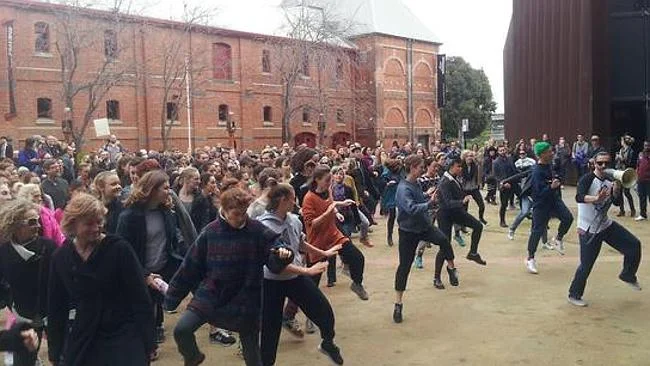
Culture Insight and Innovation News
Sensis has released their latest (super-rich!) statistical report on Australians’ use of social media. You may or may not be surprised to hear that the proportion of people using social is no longer growing (69% of us have a profile, same as last year) but we’re definitely using it more intensely than ever before...
Thank you for your support and feedback on our first issue, and welcome to all of you who signed up for this monthly dose of insight & innovation news.
May 2015 has been an eventful month for arts funding and technology, ensuring our second issue is chock full of fresh insight. If you enjoy it, and think others might, please feel free to share this post.
Digital innovation and the role of government
Sensis has released their latest (super-rich!) statistical report on Australians’ use of social media. You may or may not be surprised to hear that the proportion of people using social is no longer growing (69% of us have a profile, same as last year) but we’re definitely using it more intensely than ever before. In fact, almost half (45%) of us now check it first thing in the morning, and a similar proportion (41%) check it last thing at night. In terms of platforms, Facebook still dominates (check out the graph below) but some other services are growing faster, particularly among younger age brackets who favour visual platforms like Instagram and SnapChat.

Whilst social networking is stronger than ever before a new report from Ernst and Young says slow and expensive internet is now hurting ‘all aspects of business, government and the community’. 60% of digital opinion leaders surveyed for the report believed the Australian digital economy is less advanced than other leading countries. Despite some positive actions, such as establishment of the Digital Transformation Office (DTO), the report insists the Australian Government is not doing enough to drive digital innovation.
Earlier in May, Minister for Communications Malcolm Turnbull delivered a speech at the CeBIT e-government conference outlining plans for the DTO. Reading the transcript, I was shocked to learn that Australia ranks 29th out of 30 OECD countries on the proportion of large businesses that collaborate with universities on innovation. We are missing a trick!
Ironically, in the same month we learned that the Australian Government will no longer be funding academic commentary website The Conversation. Sad news when concise communication of academic research appears to be more important than ever before.
Arts + technology
Mid-month the Thinking Digital conference in Newcastle brought together a really diverse range of speakers to share their way of working with digital technology. The (great quality) livestream is still available to watch online. For creative types I recommend having a listen to data illustrator Stefanie Posavec, who I had the pleasure of working with on the Native magazine cover artwork, and Sam Aaron, who is the genius behind brilliant music coding program for schools, Sonic Pi. Hollie Goodier from BBC Digital also has some great stats about TV & digital audiences. Word is next year they are planning an arts specific conference…

Stefanie Posavec’s work Touching Air, based on data from large particulate (PM10) sensors
The luminous Martha Lane Fox has produced a new two-part radio series exploring how technology is changing the arts, which aired last week on BBC Radio 4. The first focuses on how musicians are going online to create and distribute their work as network speeds increase. The second is on the visual arts, and how artists like James Bridle are using the internet as a medium, a creative material and a means of collaboration. Both are available via the iPlayer – well worth a listen.
A host of fresh digital projects reached the public domain in May. Some of my favourites are the Lovereading Bookmap, a Google maps mashup which plots locations and places in literature on a map of the world (think Harry Potter at Kings Cross Station), and Citizen Ex, a piece of software which illuminates the jurisdictions we traverse when surfing the net.
Arts funding developments
Major arts funding changes are afoot in both Australia and the UK. Australian Minister for the Arts George Brandis will be re-appropriating $110m funding over the next fours years from his own arms-length funding body the Australia Council, to establish a new program within the ministry. The news came as a shock to the sector, sparking protests. RealTime has taken a closer look at the news.
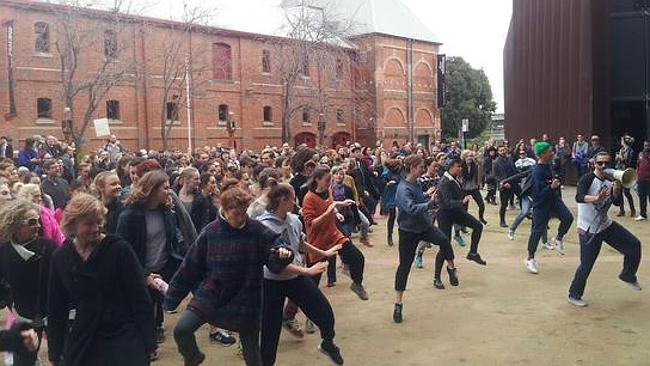
A dance protest at the Australian Centre for Contemporary Art. Twitter pictures: Chris Johnson
Meanwhile this week Darren Henley the new CEO of Arts Council England is expected to announce changes to geographic allocation of Lottery funding. The current 70% which is spent outside London will increase by at least another 5% within three years. The newly re-elected Conservative party have promised tax relief for the creative industries, whilst speculation abounds about whether they will maintain overall funding levels.
In the same month, an online platform that helps arts and heritage organisations with funding bids has won Nesta and the Open Data Institute’s (ODI’s) Heritage and Culture Open Data Challenge. Culture Everywhere is a web platform which helps users access publicly available data sets including the UK Census, Index of Multiple Deprivation and grant giving from Arts Council England. There’s a short video explaining the idea, and it’s already open for business (good timing in light of the above!).
In both countries, emphasis on alternative revenue streams will no doubt continue to grow. The Guardian has released a new resource on business plans, with tips for arts, culture and the creative industries, and this week’s Remix summit in Sydney will see hundreds gather to explore the latest thinking on culture, technology and entrepreneurship. I’m working at the event, so make sure to say hello if you’re heading that way.

About the Author
Tandi Williams
Managing Director
Patternmakers’ Founder and Managing Director Tandi Williams is an experienced consultant and arts and culture research specialist.
Categories
- 2016 5
- 2017 8
- 2018 12
- 2019 11
- 2020 3
- 2021 7
- 2022 23
- 2023 21
- 2024 1
- About Patternmakers 35
- Accessibility 4
- Arts 73
- Audience development 79
- Beyond the Bio 8
- COVID-19 70
- Capacity building 3
- Career Advice 9
- Case Studies 2
- Coronavirus 2
- Culture 72
- Culture Panel 1
- Dance 3
- Data art 2
- Data culture 69
- Digital art 4
- Education 2
- Evaluation 75
- First Nations 3
- Indigenous 2
- Innovation 78
- Interviews 3
- Manifesto 1
- Opportunities 4
- Our services 4
- Performing Arts 5
- Postcode Analysis 1
- Privacy 6
- Project updates 25
- Publications 1
- Research 99
- Resources 6
- Strategic Planning 5
- Tandi Palmer Williams 7
- Theory of Creativity Podcast 1
- Thought leadership 16
- Tips & Tricks 13
- Toolkit 5
- Top 5 2
- Touring 3
- Trends 3